¶ Two disastrous mistakes FDR made which changed the history completely
Like ever year on 7th on December, the US medias say Japanese attack on Pearl Harbor changed the US course completely. But the truth is, the change of its course was exactly what US democrat president Franklin Roosevelt(FDR) wanted and he made it that way.
The US had NO enemies, yet, FDR changed the course INTO a war by interfering with these two foreign wars, and played a useful fool for communist Stalin.
Germany vs British
Japan vs Chiang kai-shek
Germany and Japan were allied for anti-Comintern against Soviet from West and East.
Foolishly America kindly for Soviet interfered with Japanese and German affair and provoked these two nations to start a war, and destroyed them.
|
[First mistake] The US had no enemies. Yet FDR interfered with 2nd Sino-Japanese war by supporting Japanese enemy Chiang kai-shek, and pushed Japan to the edge where Japan had no choice but attack the US. [Second mistake] At the almost end of war, FDR knew Japan was asking for a peace talk, yet he ignored it and fled to Yalta, asked Stalin to violate the treaty with Japan and join a war against Japan by giving Soviet Manchuria and the financial support, which brought communisms into Asia and East Europe. He blew up a chance to settle a war he started with minimum casualties of civilians and soldiers without communists. Later it was found that there were communist spies in his administration. |
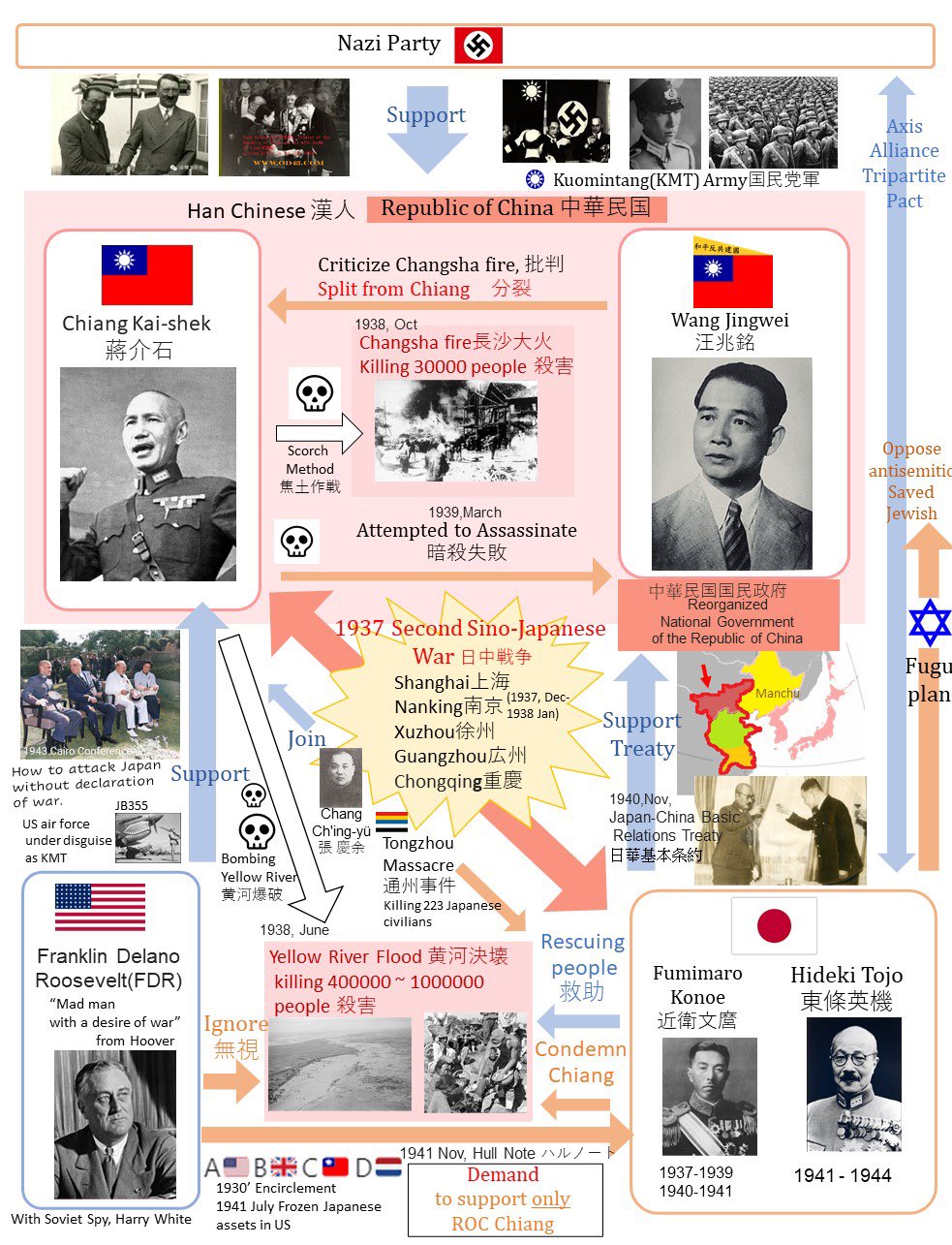
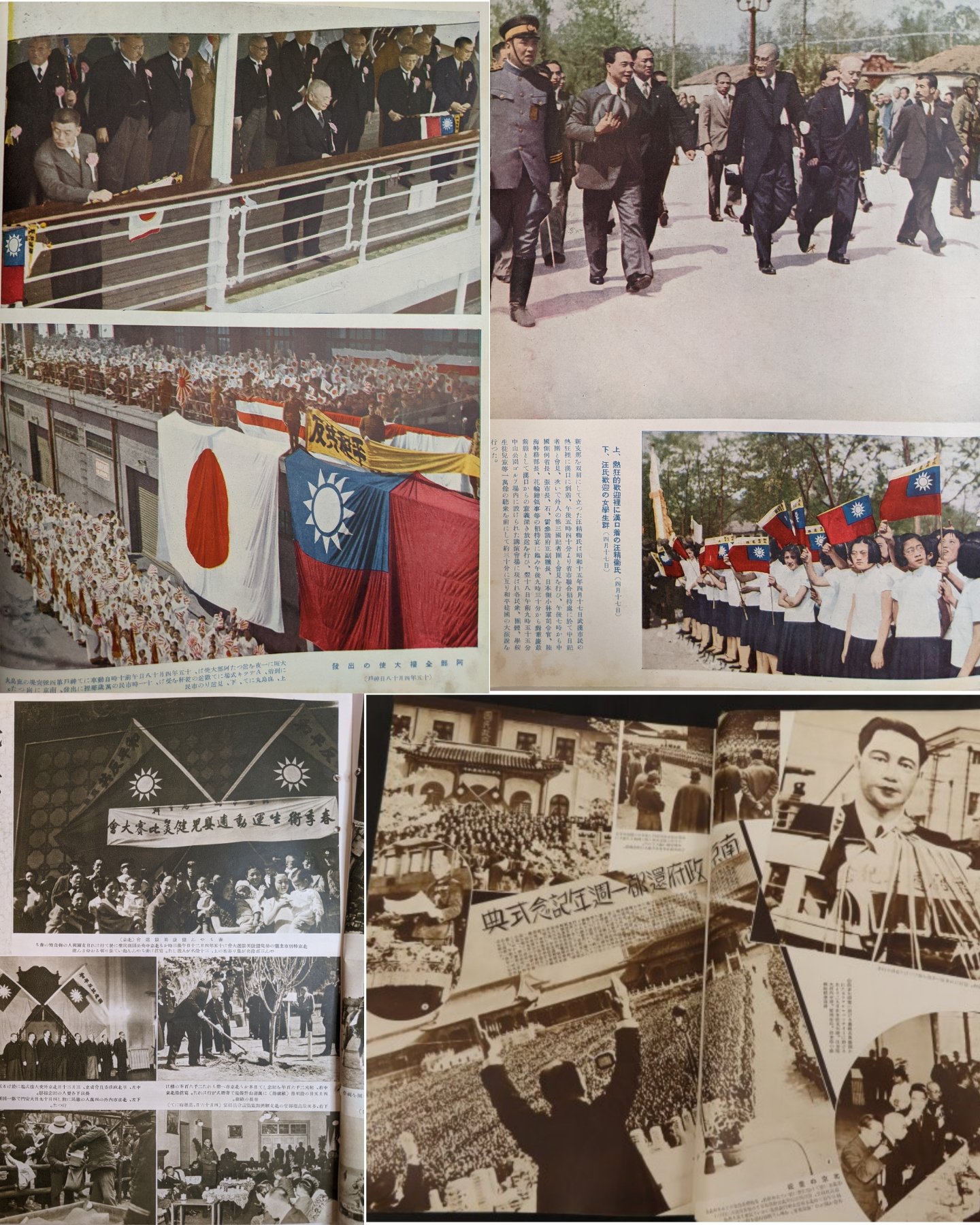
(Below) The situation BEFORE Pearl Harbor. Japan was in the middle of 2nd Sino-Japanese war fighting against Chiang kai-shek/Soong meiling (Chongqing government) and supporting Wang Jingwei (Nanking government). US FDR was the opposite.
¶ Who started Pacific War?FDR made Japan attack US
|
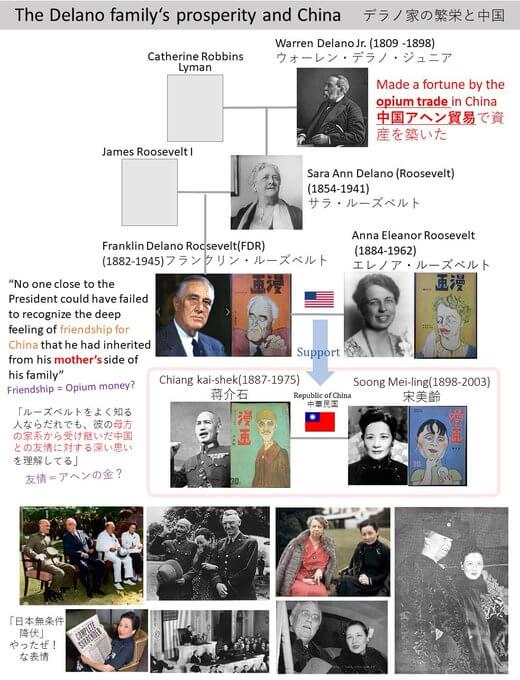
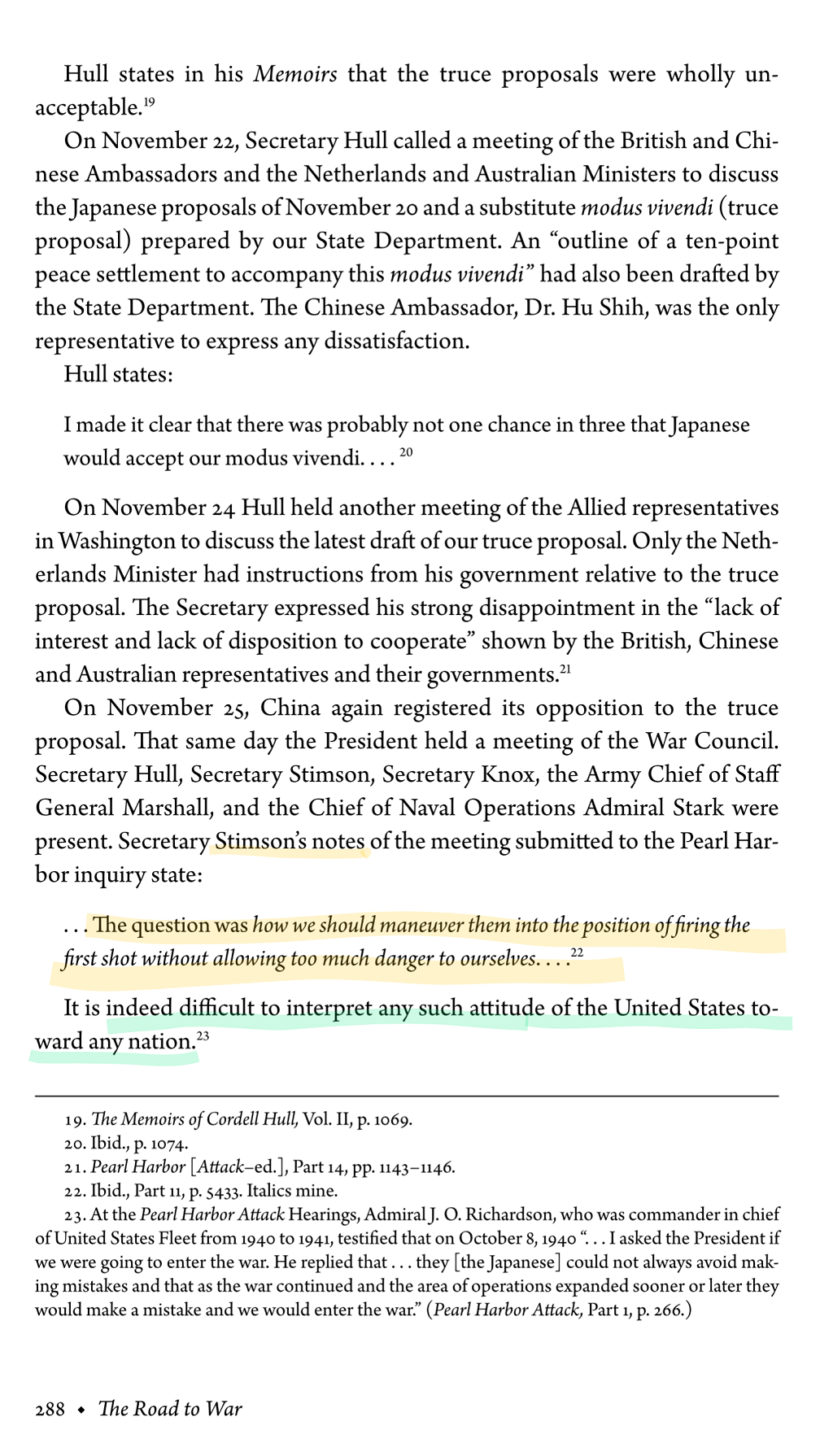
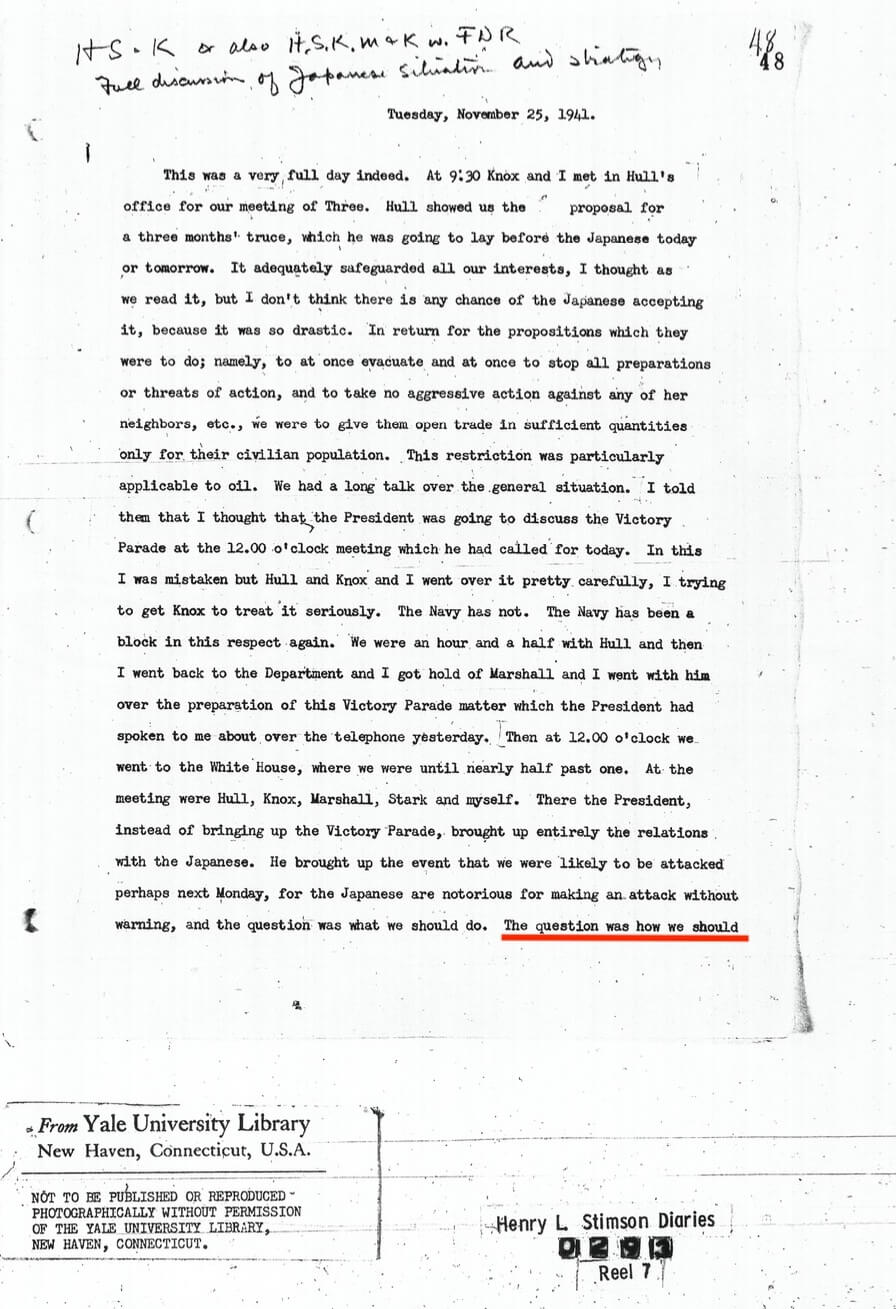
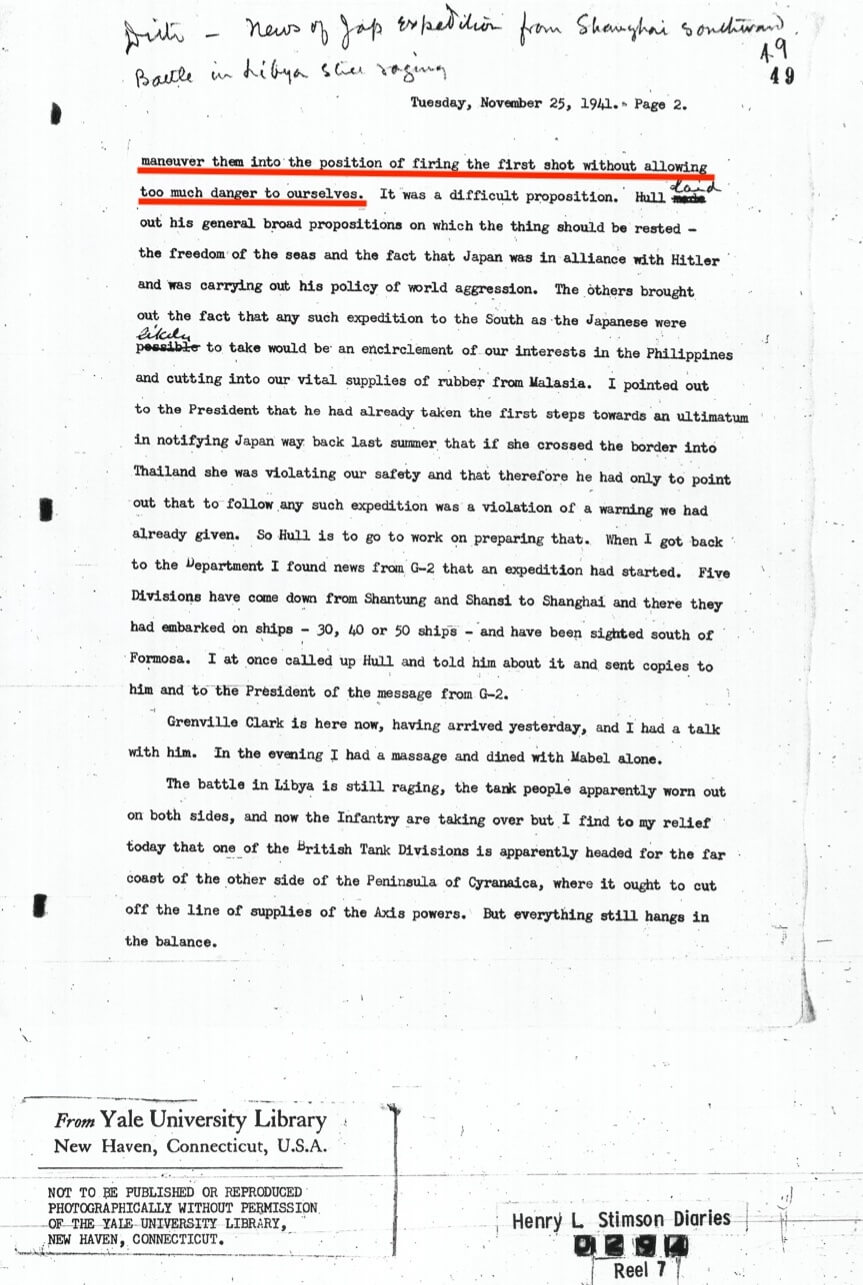
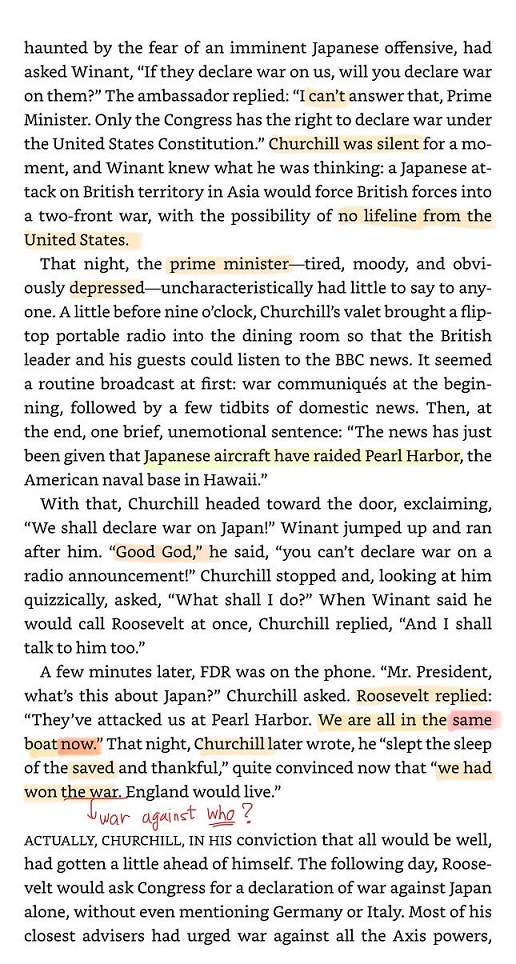
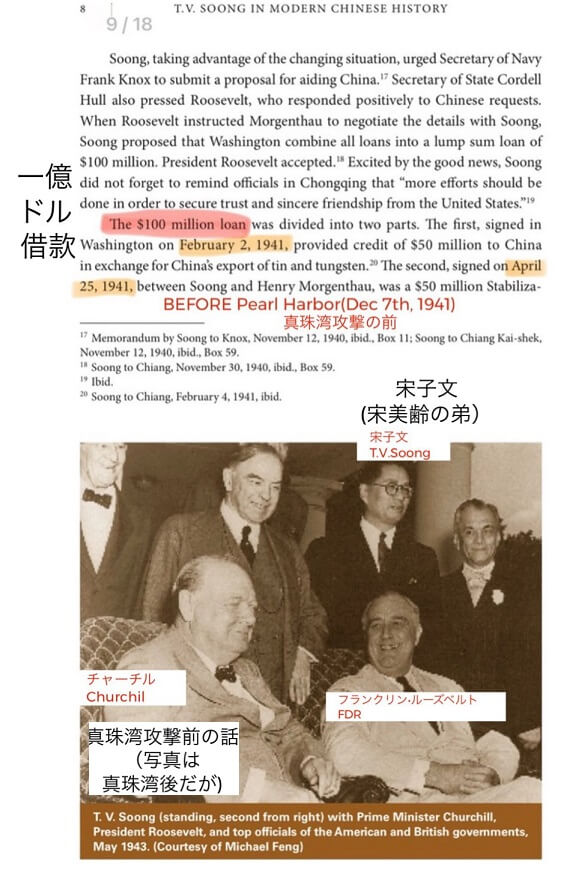
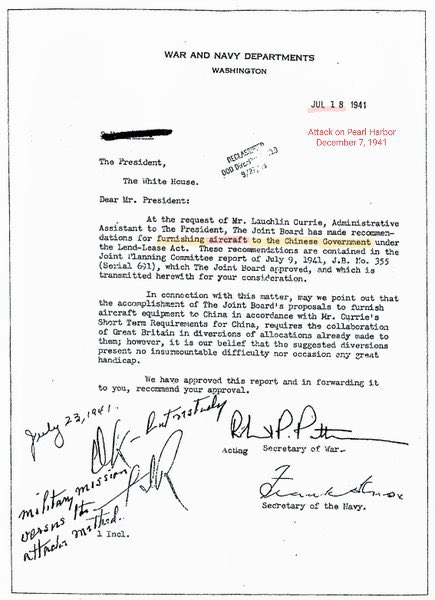
Summary FDR and Stimson were not into helping Jewish but wanted to save Churchill from Germany, but they couldn’t because of anti war US isolationists such as Charles Lindbergh. Back then even a few months before Pearl Harbor, the majority of Americans was against the immediate war against Germany. (Ref: Those Angry Days by Orson.) Therefore FDR used Japan, “Back door to war” as Stimson’s diary says “The question was how we should maneuver them into the position of firing the FIRST shot without allowing too much danger to ourselves”. (Ref: Freedom Betrayed: Herbert Hoover's Secret History of the Second World War and Its Aftermath, Back door to war: The Roosevelt Foreign policy by Charles) FDR supported Han Chinese Chiang Kai-shek/ Soong mei-ling on Republic Of China, the enemy of Japan at 2nd Sino-Japanese war, giving military/economic aid with $100 million loan and signed JB355 documents July 23, 1941 providing for 150 long-range bombers to raid Tokyo, Yokohama, Kyoto, Osaka, and Kobe with incendiary bombs in disguise as Chinese while FDR blocked the oil/rubber to Japan with British(Malaysia) and Dutch(Indonesia) so that Japan would lose 2nd Sino-Japanese war, and finally sent the ultimatum Hull note demanding Japan to support Chiang and betray Wang Jingwei, putting highly alerted Japan with no choice but attack the US. FDR, Simson and Churchill saw a war against Japan as co-occurrent event with a war against Germany. After they heard about the news of Pearl Harbor attack, first Stimson's reaction was a relief, not surprise or anxiety. “Now the US public is united”. Likewise, when Churchill heard about the attack on Pearl Harbor, he was extremely happy, even convinced he won a battle (against Germany). FDR called Churchill and said “we are on the SAME boat now.“ (Ref: Those Angry Days by Orson Ch.27) |
(Below) FDR the other side of the coin: How we were tricked into World War 2 by Hamilton Fish, page 131
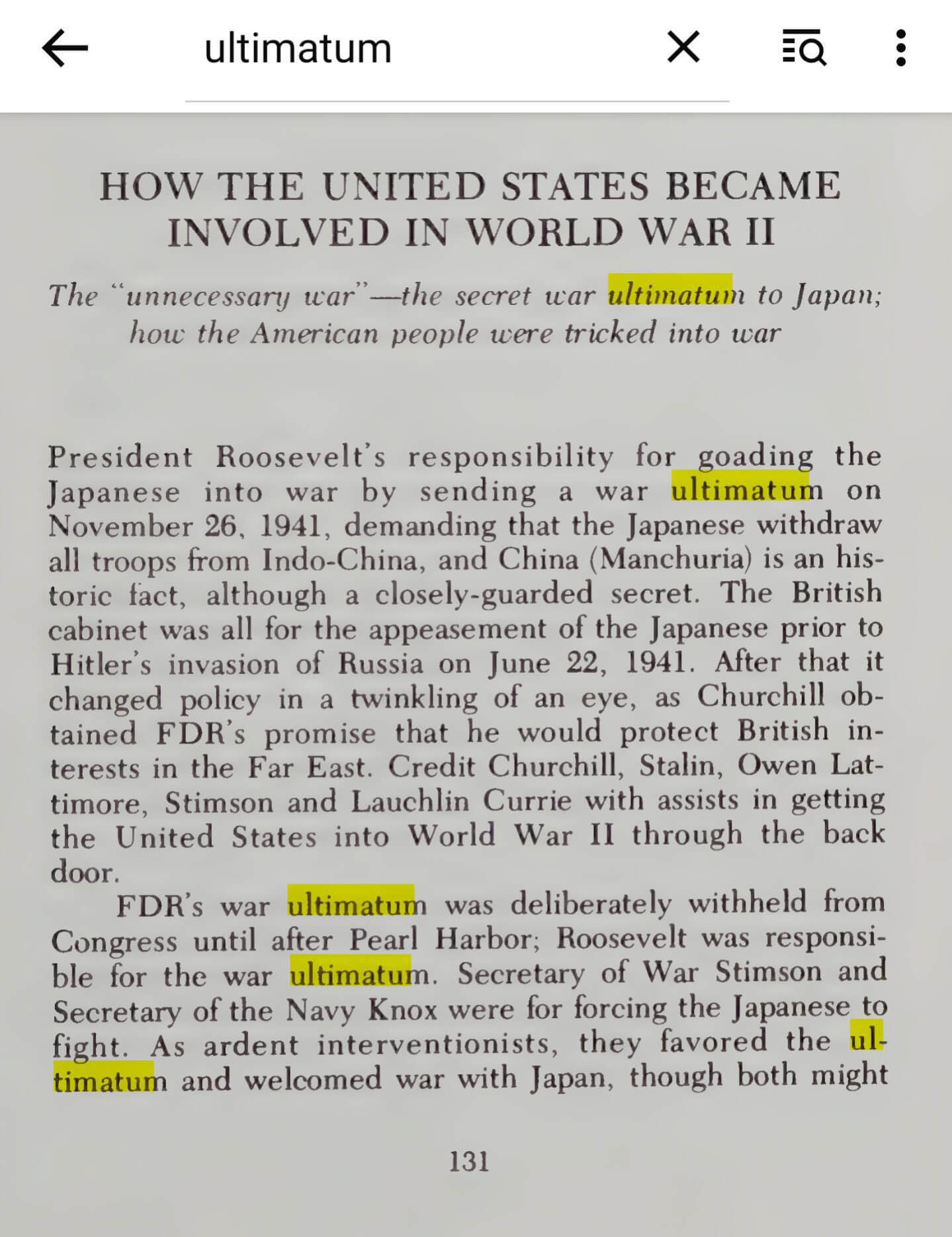
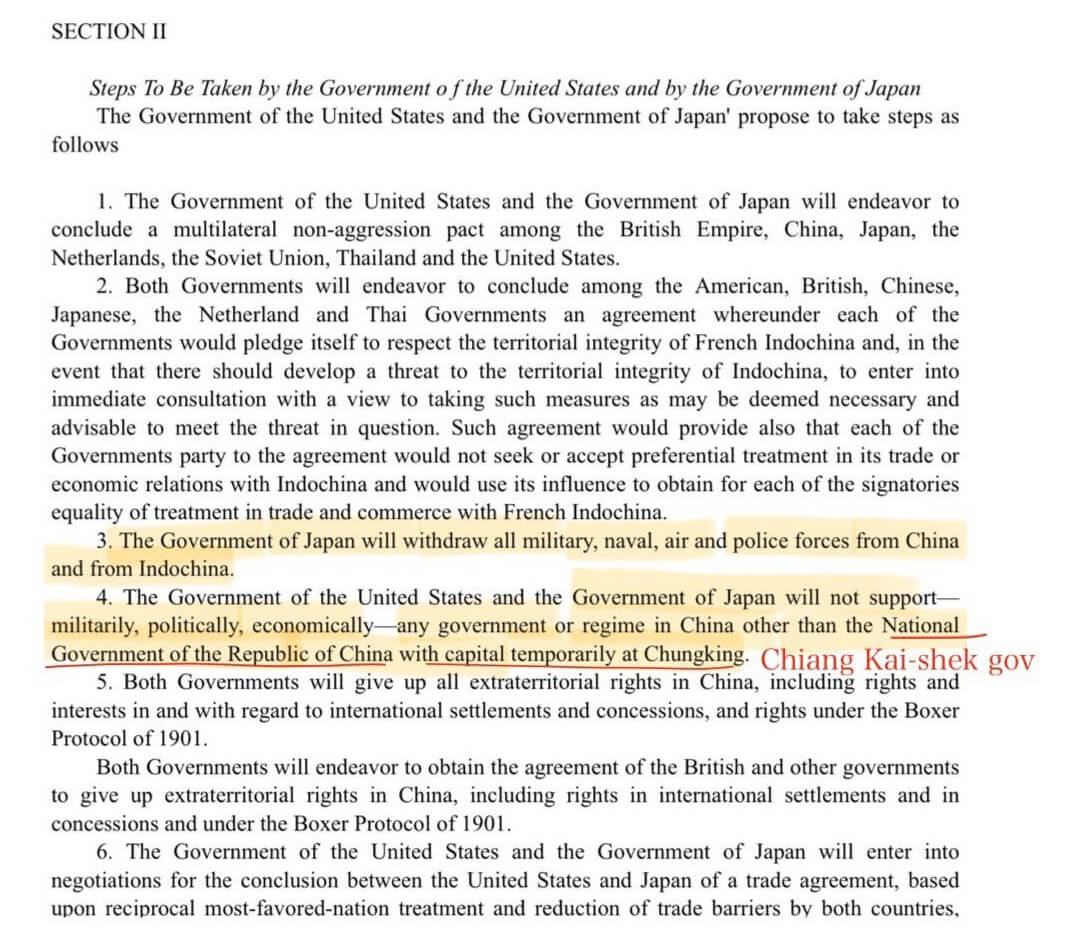
(Below) The ultimatum (Hull note) delivered on November 26, 1941, by Secretary of State Cordell Hull to Japan even though Japan made concession with two plans(A and B) for a last hope to avoid a war against the US. The highlighted parts below, the demand 3 and 4 were critical which made Japan with no choice but attack on Pearl Harbor. Basically FDR demanded Japan to accept the defeat on 2nd Sino-Japanese war and support the enemy, Chiang kai-shek/Soong mei-ling.
→ Should Japan accept it?
Impossible.
Withdrawing all Japanese military from China meant accepting the defeat of 2nd Sino-Japanese war. Japanese military had stationed in China legally to protect Japanese citizens in China under agreement of Beijin protocol since in the past Japanese had been murdered at Boxer rebellion in 1900, Nanking assault on Japanese consulate in 1927, Jinan Incident in 1928, and Tongzhou Massacre in 1937. Also, "China" in ultimatum was meant to include Manchoukuo (apparently Hamilton took that way too), and Manchoukuo is the nation of Manchus recognized by 19 nations, Han Chinese Chiang kai-shek trying to take. Japan must protect Manchoukuo until it gets strong enough to defend by its own.
Accepting FDR's demand to support only Chongqing government(Chiang kai-shek/Soong mei-ling) , and deny Nanking government(Wang Jingwei) means Japan will betray his ally, Wang Jingwei, who took a risk by taking Japanese side who would be arrested and executed by Chiang kai-shek if Japan accepted ultimatum. Hideki Tojo was close to Wang, Tojo would never let that happen, that would be a stigmatization on Japanese military history forever.
→ Should Japan just ignore it?
Japan couldn't just ignore the ultimatum either, since Japan was in the middle of war against Chiang kai-shek, and Japan was completely isolated with embargo by Ally forces, no oil or rubber from the US, Indonesia(Dutch) and Malaysia(British), as A(America) B(British) C(China) D(Dutch) encirclement. The longer Japan waited the less oil would be left to use on 2nd Sino-Japanese war while Chiang kai-shek was getting strengthened by the US financial and military support day by day. FDR even agreed on the plan JB355 bombing Japan with US airplanes under disguises of Chinese airplanes.
¶ Hoover's criticism against FDR
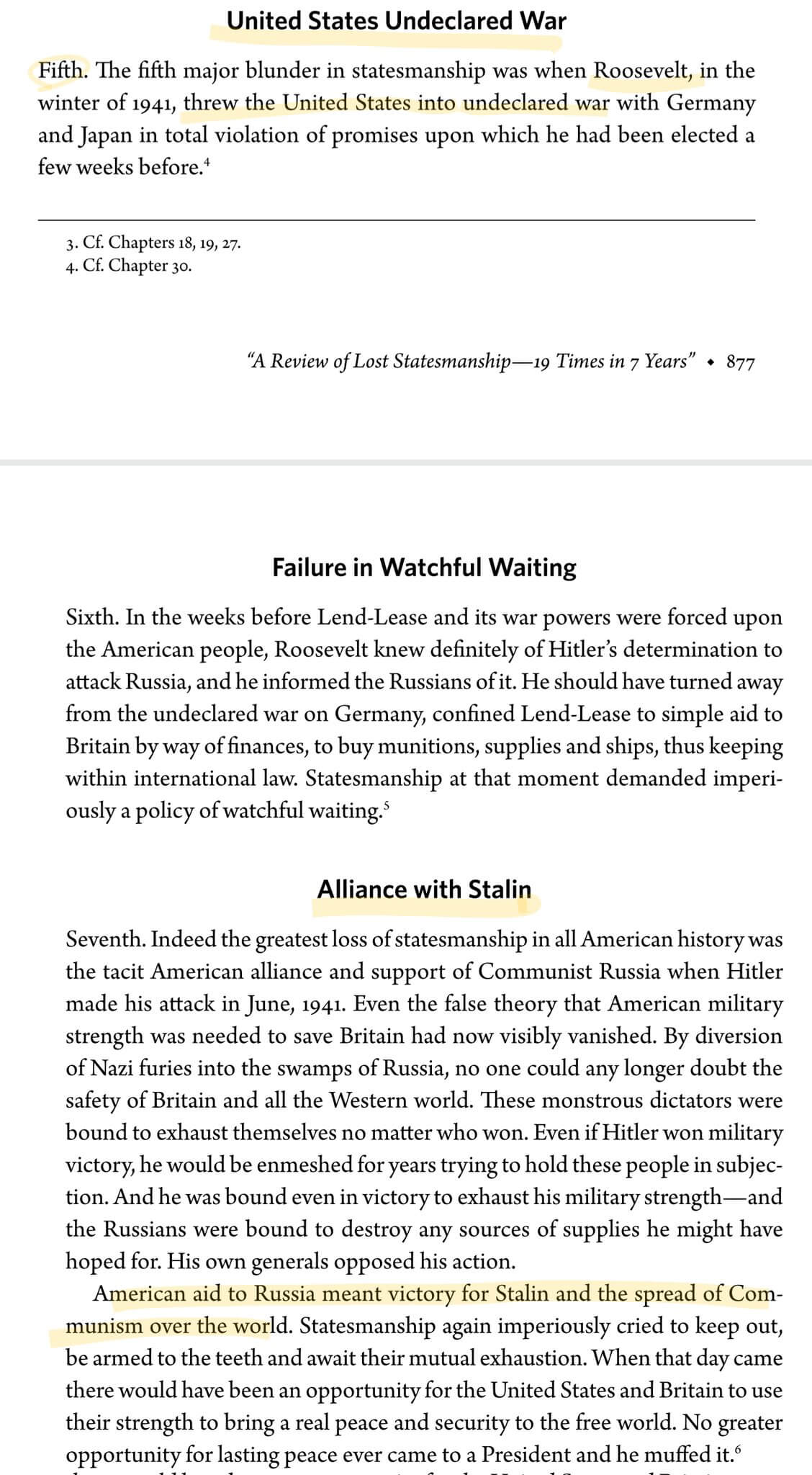
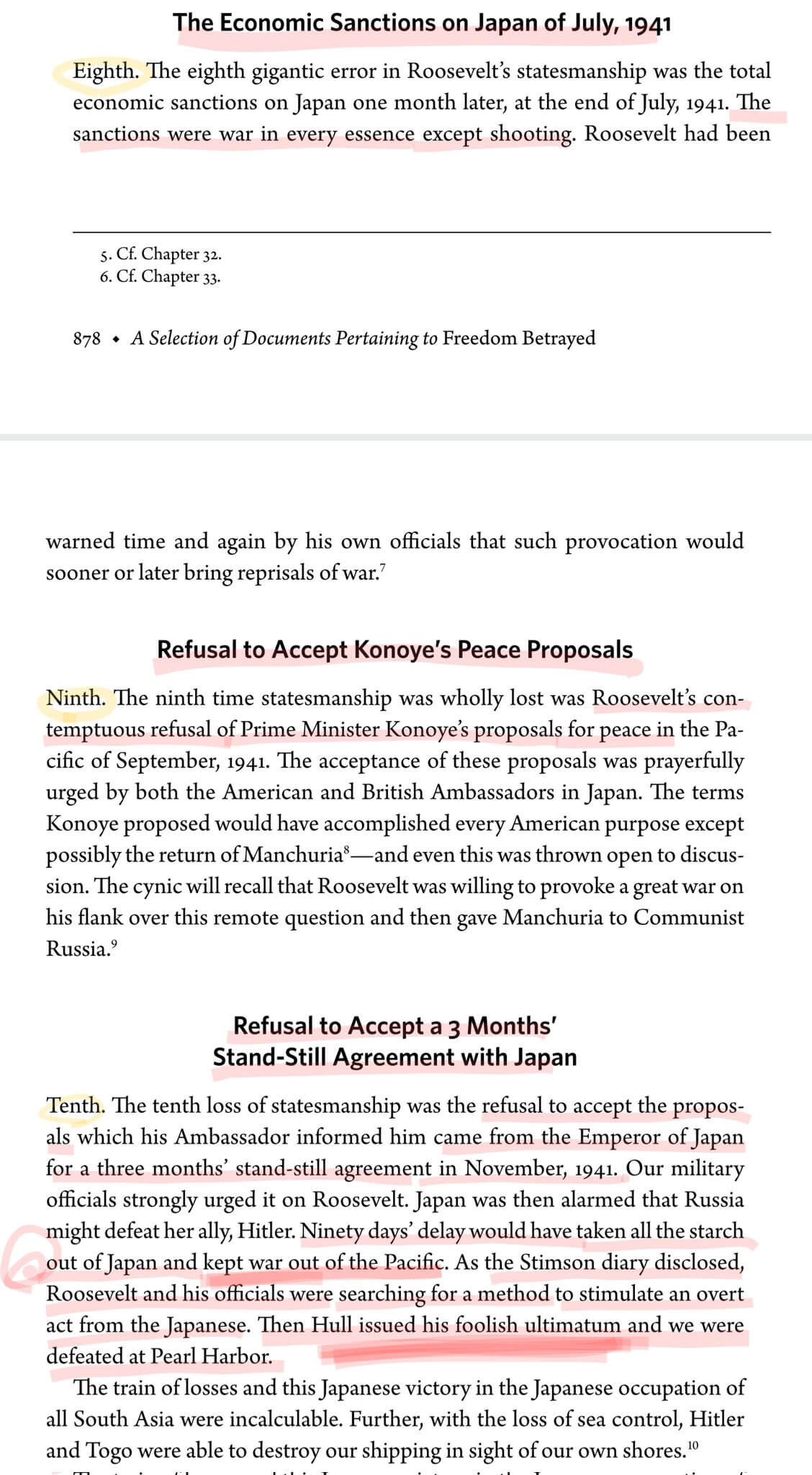
(Below) Ref: Freedom Betrayed: Herbert Hoover's Secret History of the Second World War and Its Aftermath,
¶ Stimson and his diary
Henry L. Stimson's diary saying “The question was how we should maneuver them into the position of firing the FIRST shot without allowing too much danger to ourselves” on November 25 in 1941 which is one day before Ultimatum(Hull note) was delivered to Japan on November 26 by Hull.
 |
 |
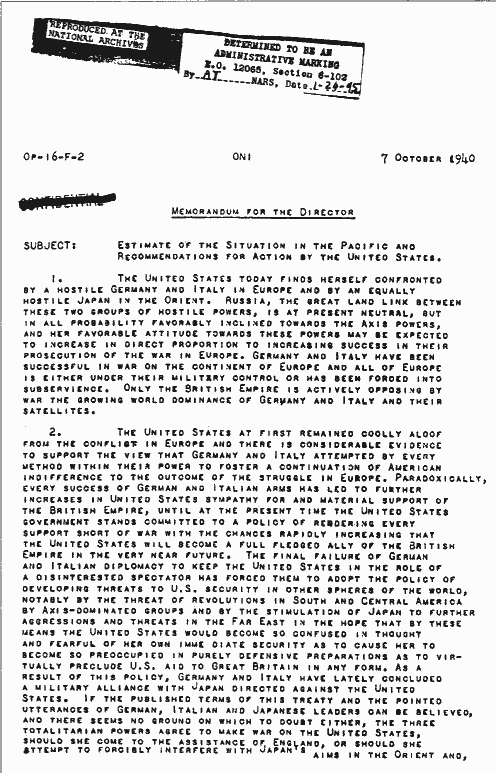
¶ McCollum memo, 7 October 1940
McCollum's memo was found, which is a tactic how to push Japan to the edge step by steps.
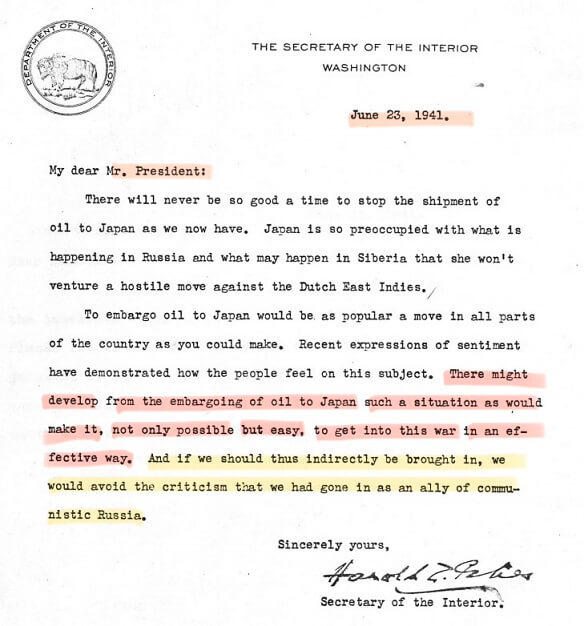
¶ Advice from Harold Ickes to Franklin D. Roosevelt, 23 June 1941
Harold Ickes gave the advice to Franklin D. Roosevelt, 23 June 1941, about using Japan by oil embargo in order for the US to get into a war (against Germany) easily and effectively, and avoid the criticism for the US helping communist Soviet.
¶ Churchill and FDR saw the wars against Japan and Germany as co-occurrent event
FDR and Churchill had met on 14th August 1941 at Atlantic Charter, and Churchill desperately wanted the US to join a war against Germany, but FDR couldn't give him a good response. But finally their plan worked. After hearing the attack on Pearl harbor by Japanese, not Germany, Churchill got happy and even convinced now he won the battle. And FDR replied “we are all in the same boat now”.
(Ref: Those Angry Days by Orson.)
¶ American public didn't want a war
Many Americans didn't want a war after experiencing a massive loss in WW1. It is ironic that the American anti-war movement ultimately led to Roosevelt's plan to have Japan involved in a war.
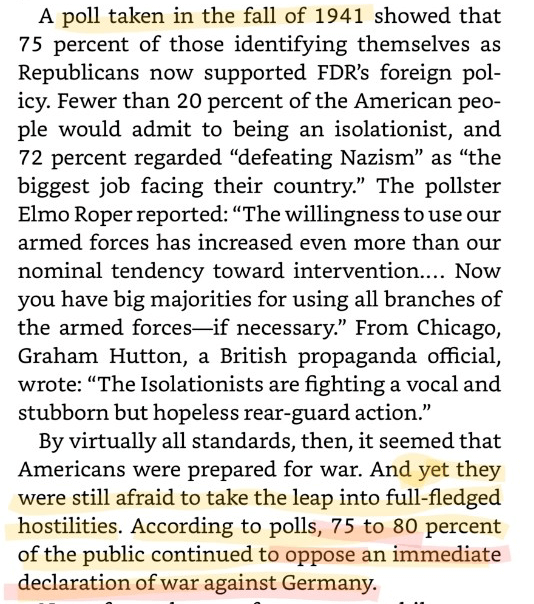
(movie) Anti-war Speech of Charles Lindbergh
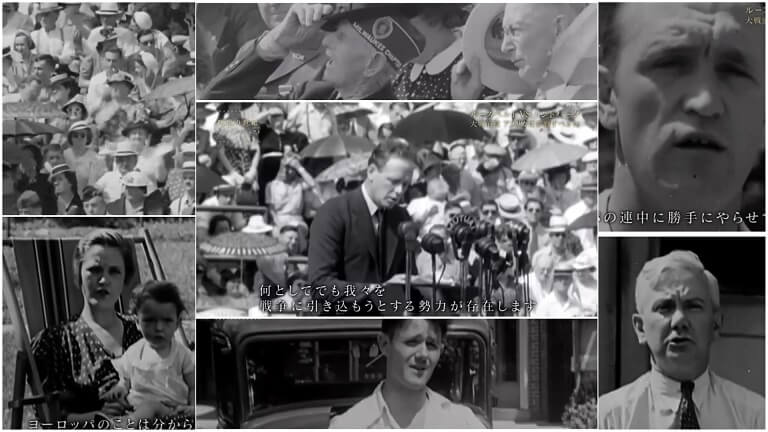
¶ American criticism for the US government supporting Han Chinese dictator Chiang kai-shek
Some Americans were against supporting Chiang kai-shek such as Ralph Townsend.
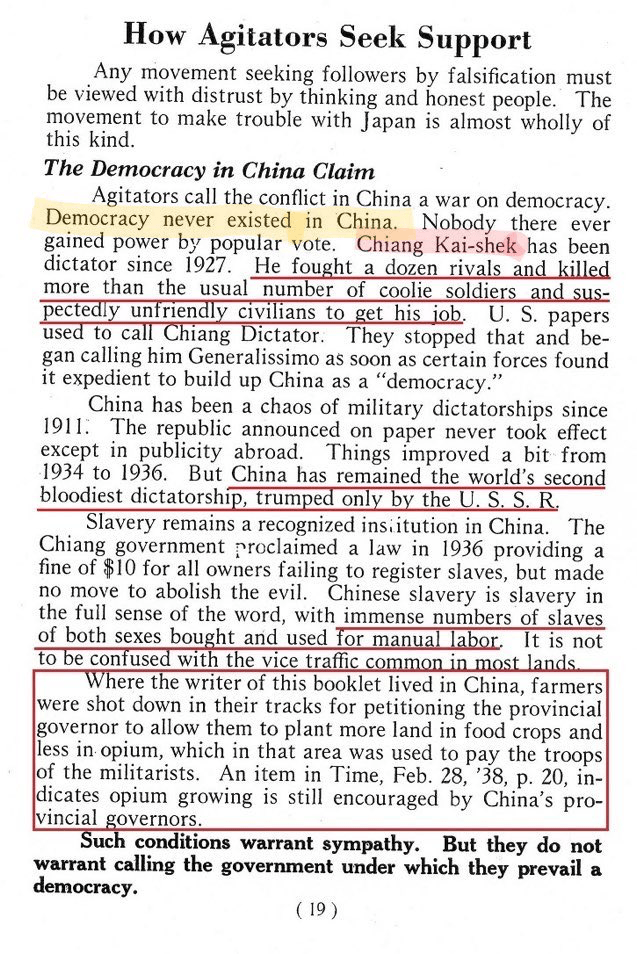
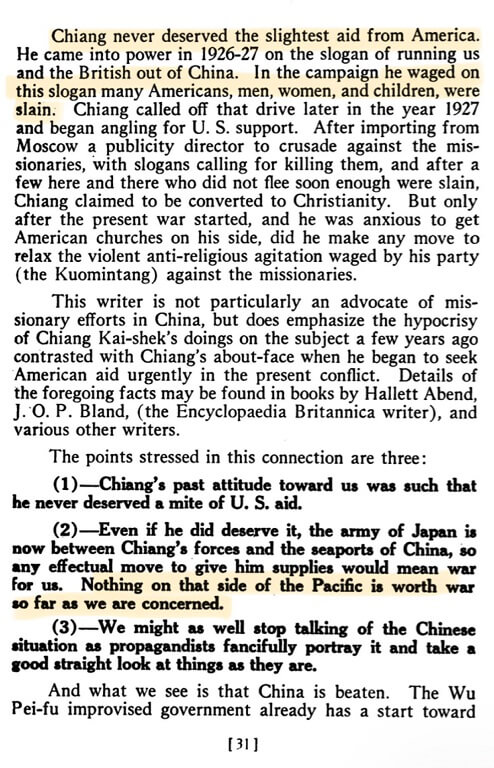
¶ How Anti-Japanese propaganda in US media fooled the American public into thinking “brutal Japanese” and “Poor Chinese”
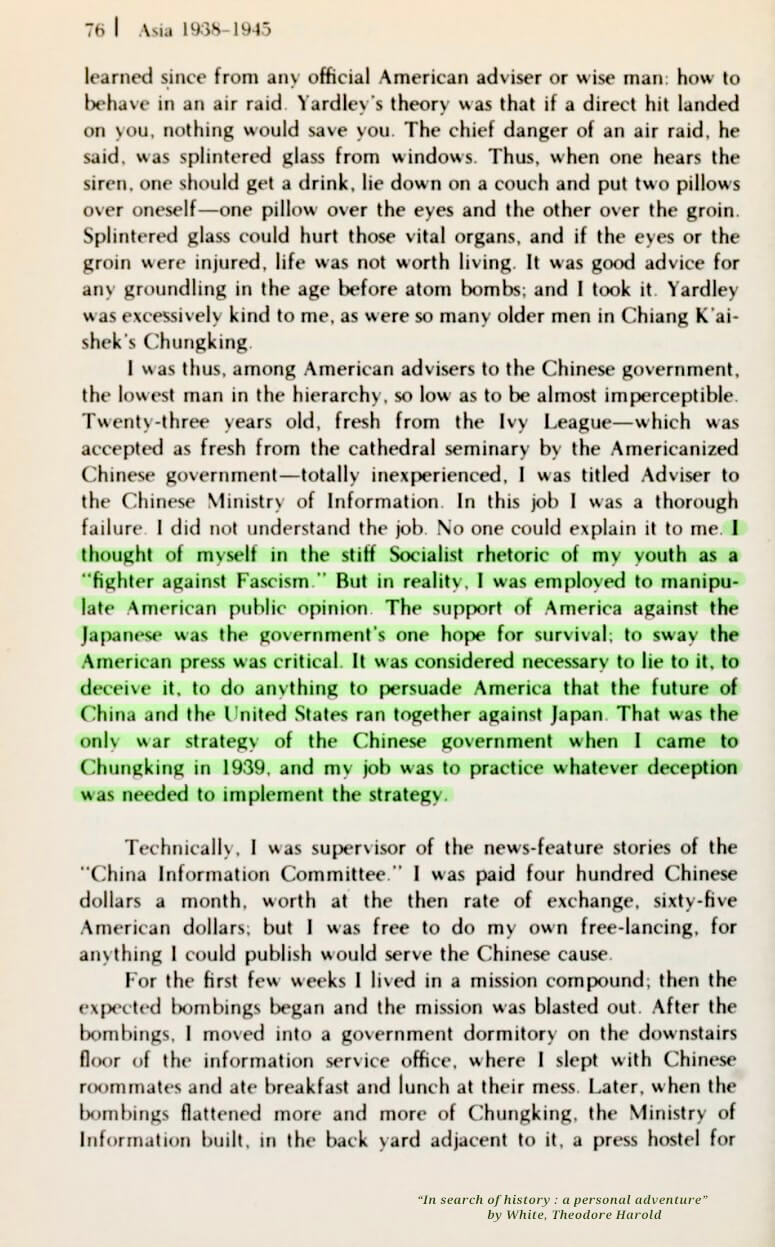
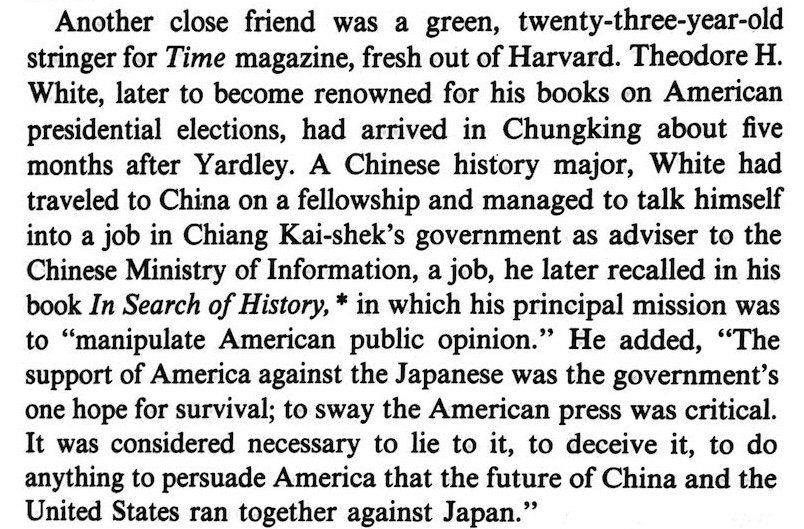
Japan was in the 2nd Sino-Japanese war. Many times, US media took the side of Chinese Chiang Kai-shek/Soong Meiling. When Japan attacked China, it reported with exaggeration while when Chiang committed crimes such as the Yellow River flood in 1938 or his execution of people, they stayed silent.
Theodore H. White In Search of History
James Bamford The Puzzle Palace: A Report on NSA, America's Most Secret Agenc
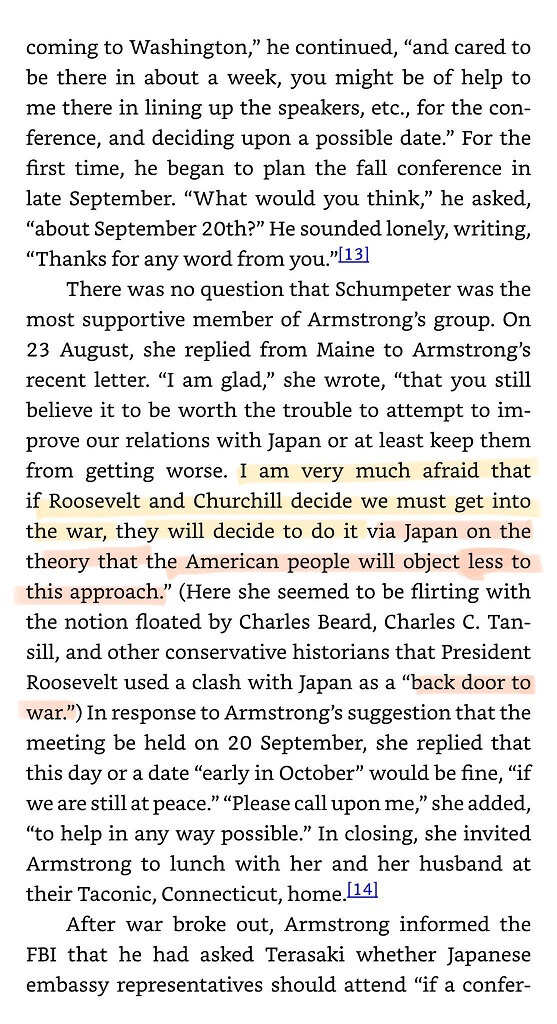
¶ Americans who noticed FDR 's move trying to use Japan to start a war
Interestingly there were some Americans who noticed FDR's move trying to use Japan to start a war. These individuals organized Committee on Pacific Relations(CRP), but it was too late.
¶ Japanese NEVER invaded French Indochina
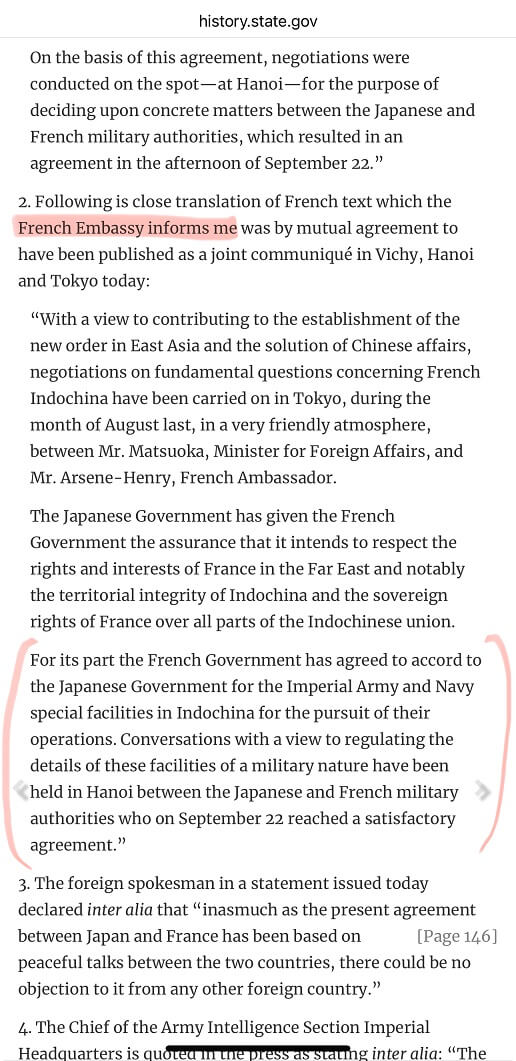
Some people attempt to justify US provoking Japan by saying Japan invaded French Indochina first since 1940. This is not correct. Japan was at 2nd Sino-Japanese war, and needed to cut off an aid pipeline over Indochina to Chiang kai-shek from outside. Indochina was a colony of France with Paris Peace Treaty, therefore Japan negotiated with French Vichy government and French agreed on Japanese military staying there. Some still say Vichy is controlled by Germany and not invalid, but that is not a problem of Japan.
¶ FDR's aid to Chiang kai-shek and interference with 2nd Sino-Japanese war BEFORE Pearl Harbor(1941/12/07)
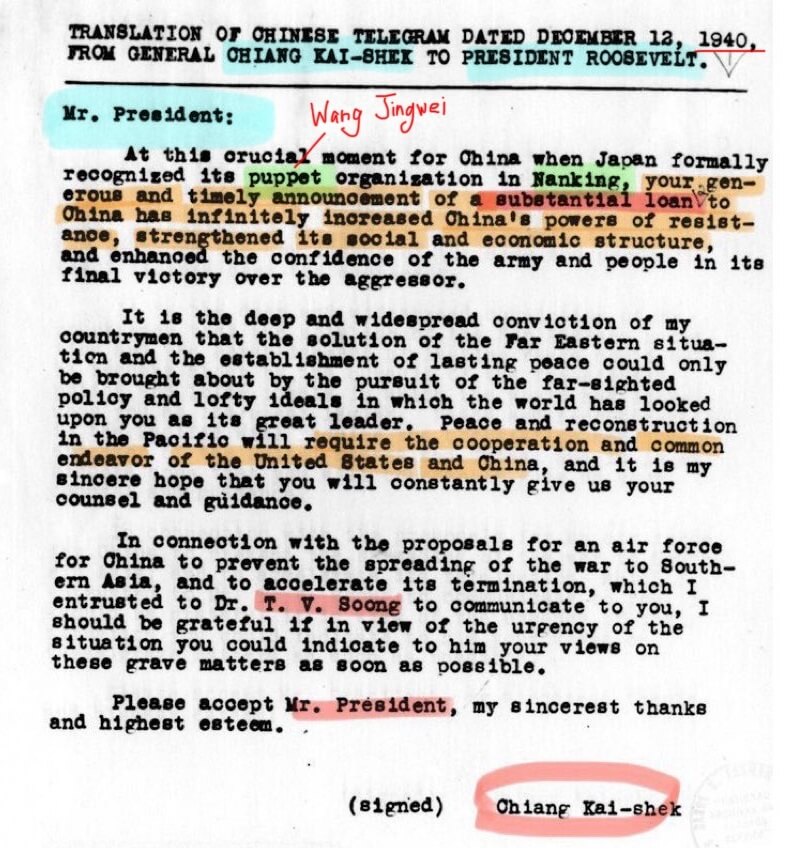
Chiang kai-shek ran away right before the battle of Nanking (南京) 12/07 in 1937 and relocated the capital to Chongqing/Chungqing (重慶) as a government of Republic Of China. Nanking was taken over initially temporal autonomous government. Chiang kai-shek sent an assassin to kill Wang Jingwei but it failed in 1939. Then in 1940 Wang Jingwei became a leader of Re-organized Republic Of China as a new Nanking government.
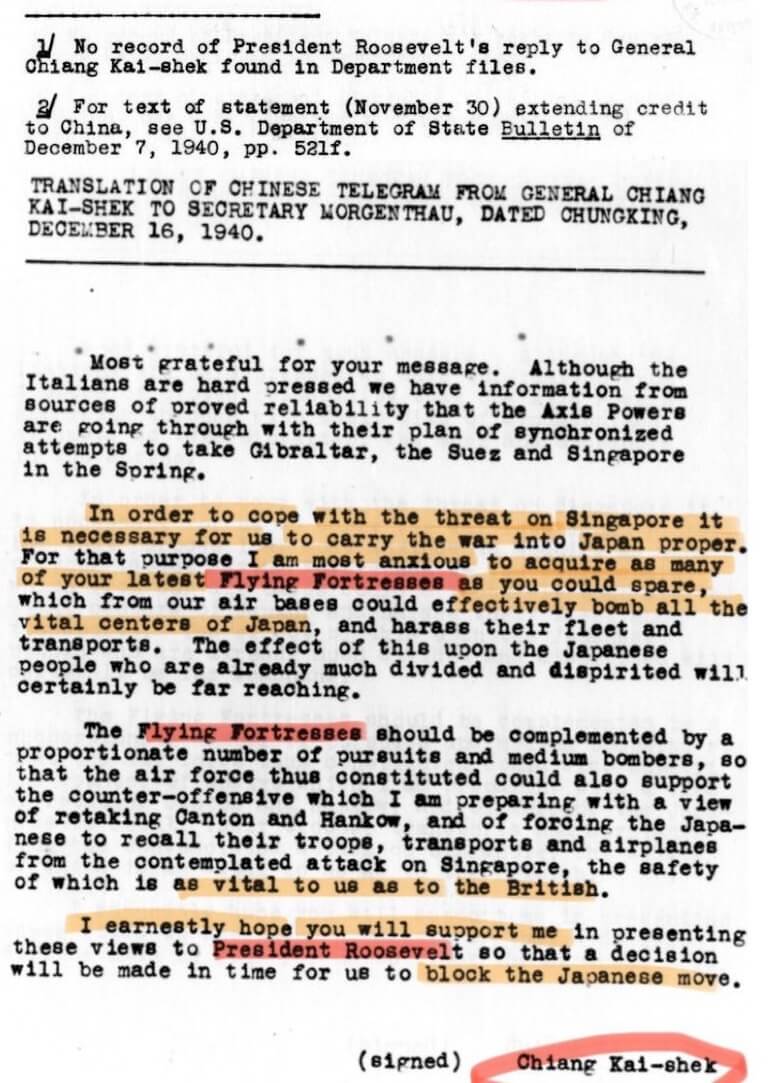
(Below) In 1940 Whining Chiang kai-shek sent a letter to FDR complaining about Wang Jingwei Nanking government calling it Japanese puppet (Chiang is the puppet of FDR) and asking for a further economic and military aid. FDR took completely Chang’s side, supported Chiang even further and demanded Japan to deny Wang Jingwei and support only Chiang with Ultimatum.
¶ Financial Aid
(Below) How FDR supported Chiang by T.V. Soong, a brother of Soong mei-ling BEFORE Pearl Harbor.
¶ Pre-Pearl Harbor American Volunteer Group (AVG) was not voluntary but official
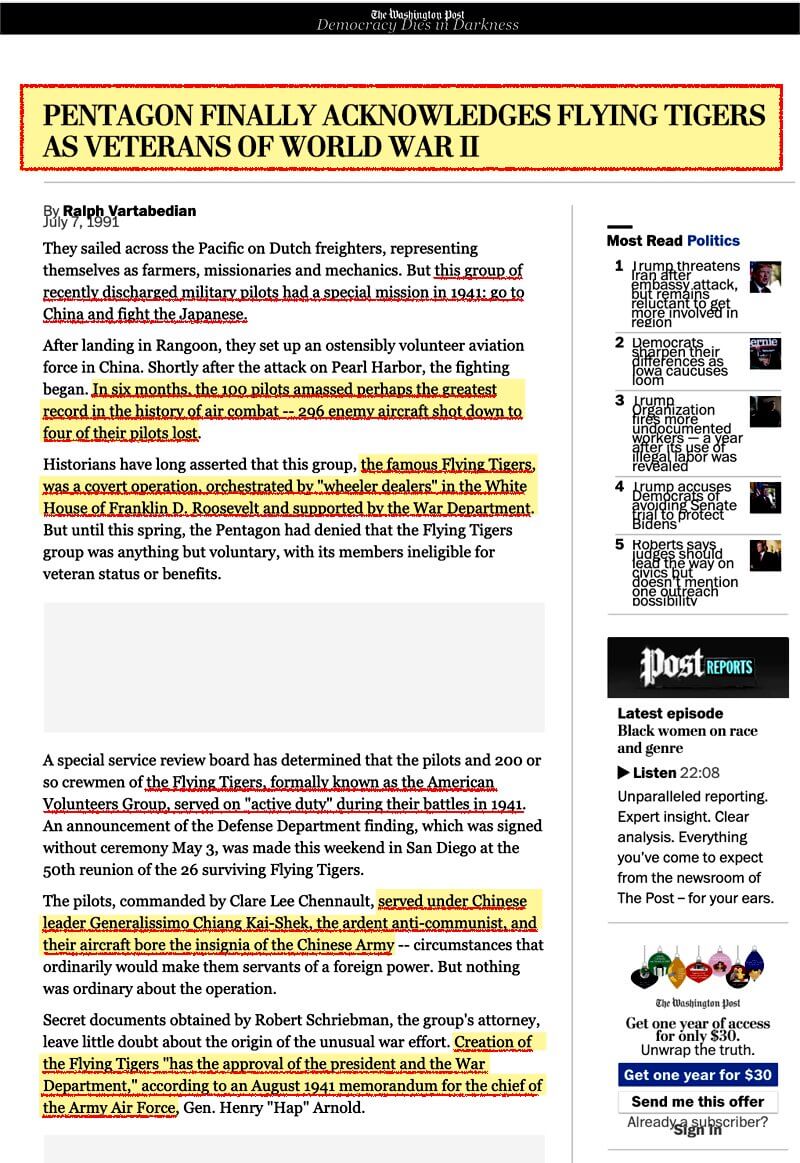
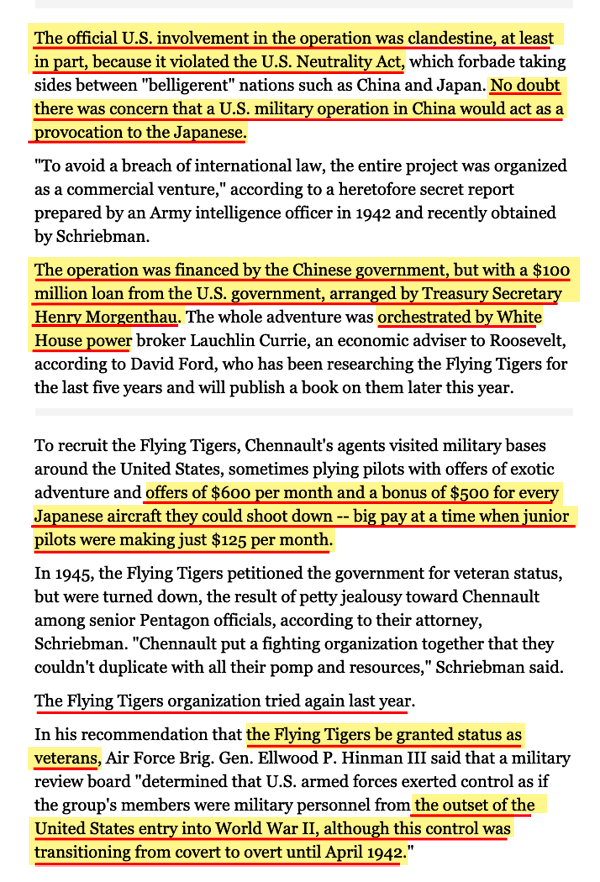
In July 1991, The Washington Post published a major news story by Ralph Vartabedian reporting that the Pentagon formally recognized the Flying Tigers as official, overturning decades of prior denial regarding their clandestine 1941 active duty BEFORE the attack on Pearl Harbor, which is December 7th in 1941. The US government was already officially involved in the act of war against Japan.
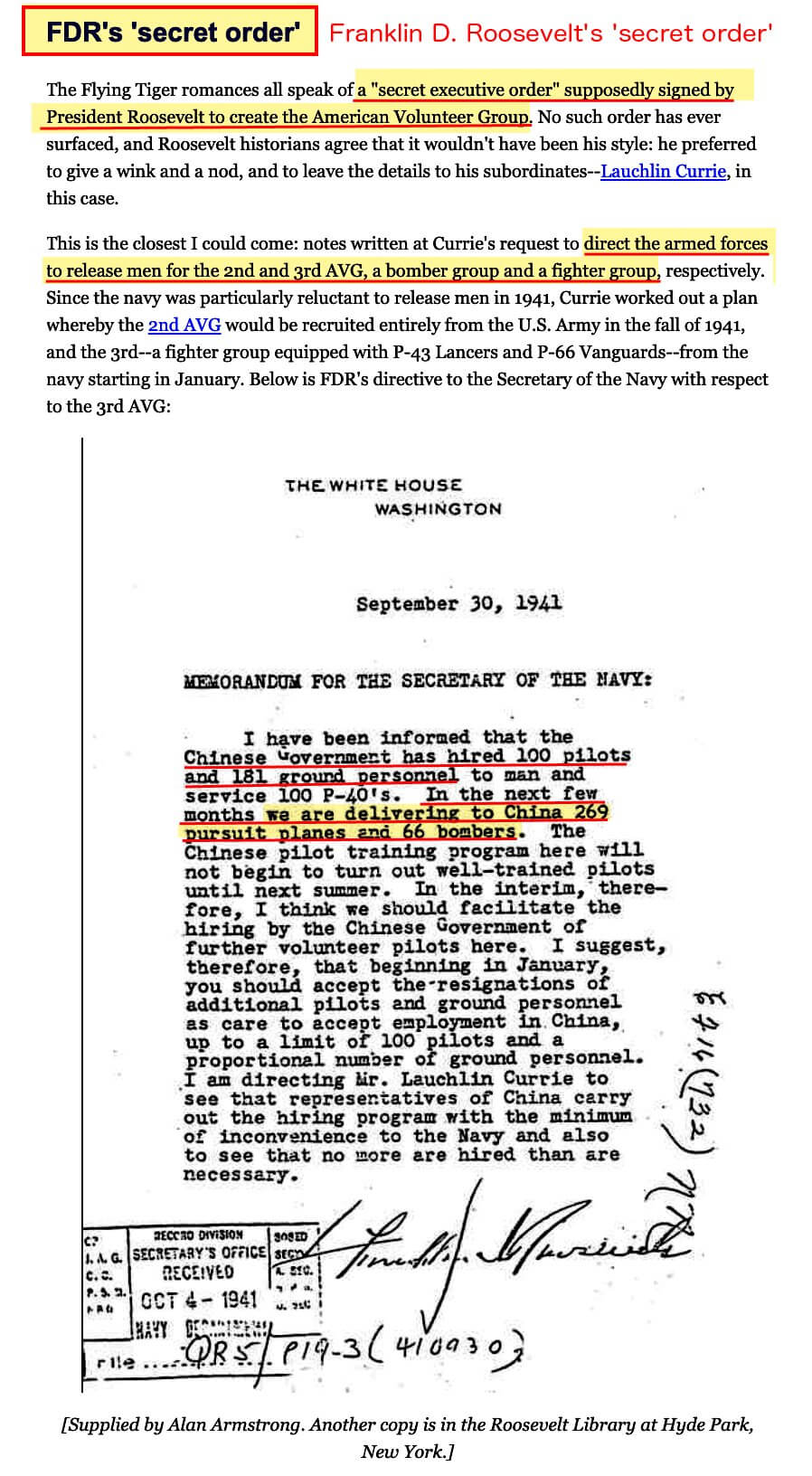
The internal memos written by FDR at Lauchlin Currie(Communist spy)'s request, directing the U.S. Armed Forces to release personnel for the 2nd and 3rd AVG in 1941.
¶ JB355 plan
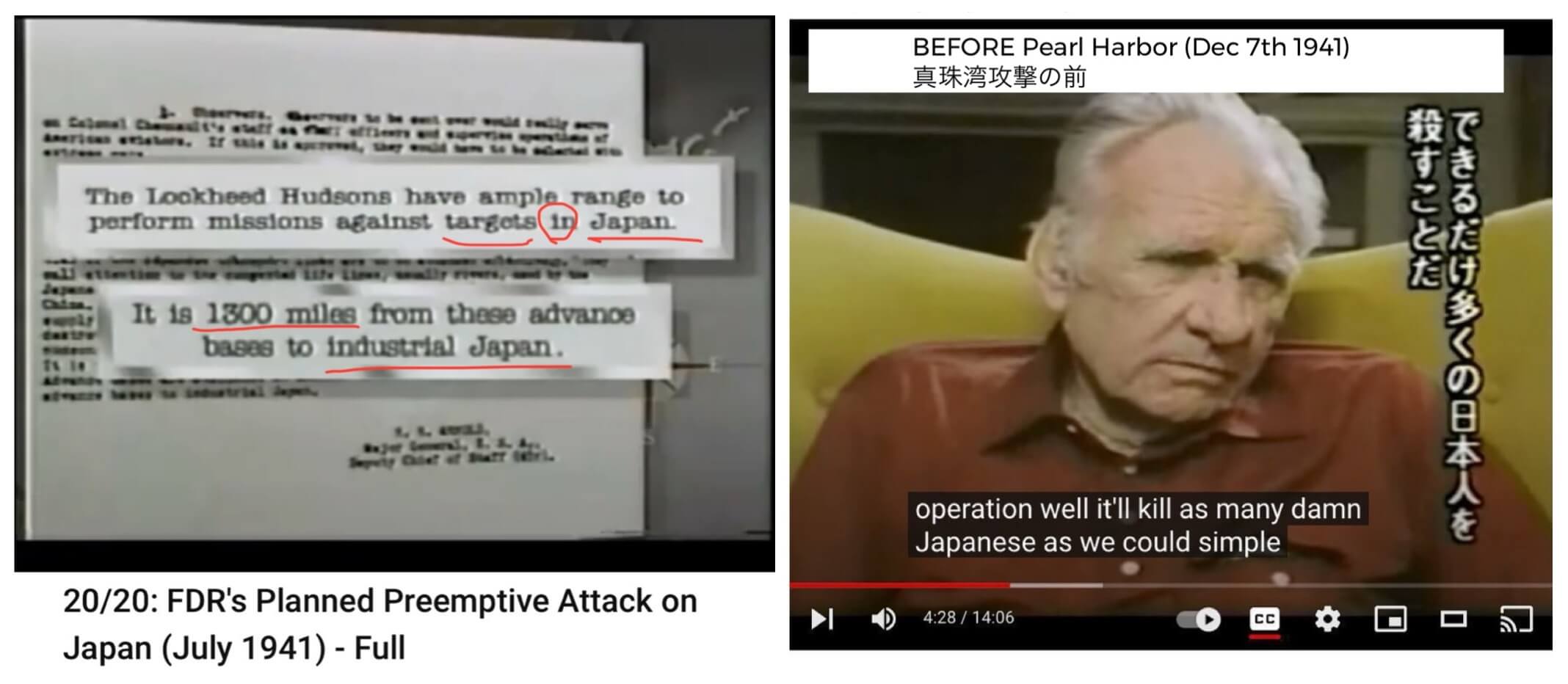
Before attack on Pearl Harbor which is 1941/12/07, or even before Japanese stationing in South French Indochina which is 1941/7/28, FDR signed JB355 plan on July 23, 1941 providing for 150 long-range bombers to raid Tokyo, Yokohama, Kyoto, Osaka, and Kobe with incendiary bombs in disguise as Chinese. This never happened because of the US aid to British fighting against Germany.
¶ How FDR cornered Japan and Japanese reacted the US interference and provocation BEFORE Pearl Harbor in Chronological order
Literally Japanese media watched every the US provocative move, and reported with anger and alerting as a new threat increased day by day.
1941/05/30 (6 month before Pearl Harbor)
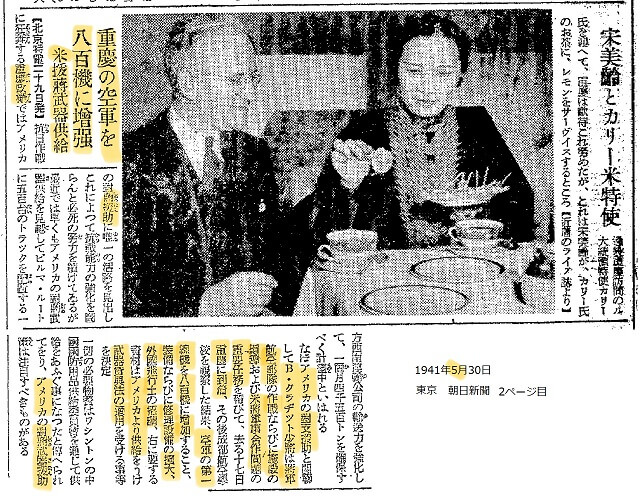
(Below) Japanese Asahi newspaper reported about Lauchlin Currie (later found out communist spy Venona: Decoding Soviet Espionage in America) visit to Chungking on March in1941 (See official doc) and Henry Black Clagett visit to Chungking on May in1941
|
|
(English translation) 1941/5/30 Asahi Japanese Newspaper Chongqing's Air Force Increased to 800 Aircraft U.S. aid and arms supply The Chongqing regime(Chiang kai-shek gov), which has been engaged in anti-Japanese operations, has found the only way to take advantage of the U.S. aid to Chiang Kai-shek and is making desperate efforts to strengthen its resistance capability through this aid. In anticipation of the supply of U.S. arms to Chiang, it is said that 500 trucks have been deployed along the Burma route, while plans are underway to strengthen the transportation capacity of the Southwest Transportation Company to secure 4,500 tons of arms per month. In connection with the U.S. assistance, Major General Henry Black Clagett arrived in Chongqing on the 17th with the important mission of instructing the Chiang Army Air Corps on operations and facilities, and on the problem of cooperation between the U.S. and Chiang forces. The materials required for this purpose were to be supplied by the U.S. and subject to the Lend Lease Act . It is reported that all necessary supplies were to be provided through the Chinese Defense Supplies Committee in Washington, D.C. The U.S. aid package for arms to Chiang Chiang was remarkable. Photo: Soong Mei-ling and U.S. Special Envoy Lauchlin Currie Chongqing welcomed President Roosevelt's envoy Currie on his visit to Chongqing, and this is Song Mei-ling serving Curry tea and lemon (from LIFE magazine in a recent arrival). |
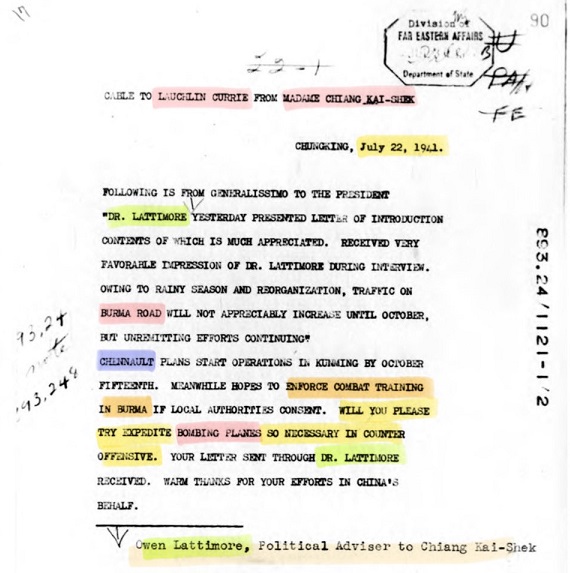
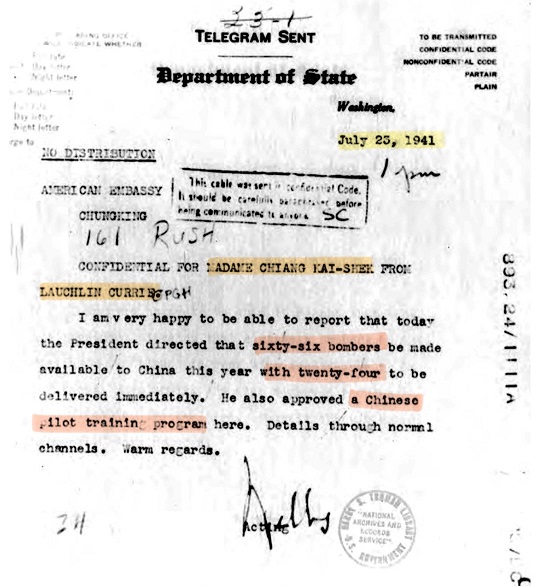
And now we know from a disclosed US document, what Soong meiling and Lunchin Currie were talking about.
(Below) US newspaper says Henry Black Clagett visit to Chungking on May in1941
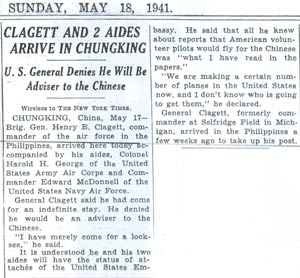
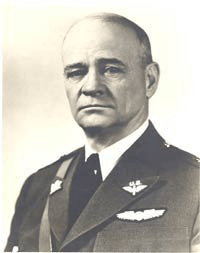
1941/06/23 Harold Ickes tells to Franklin D. Roosevelt about the idea using Japan by oil embargo in order for the US to get into a war (against Germany) easily and effectively.
1941/07/09 (5 month before Pearl Harbor)
(Below) Japanese Asahi newspaper reported about the US providing Billions Yuan military supply
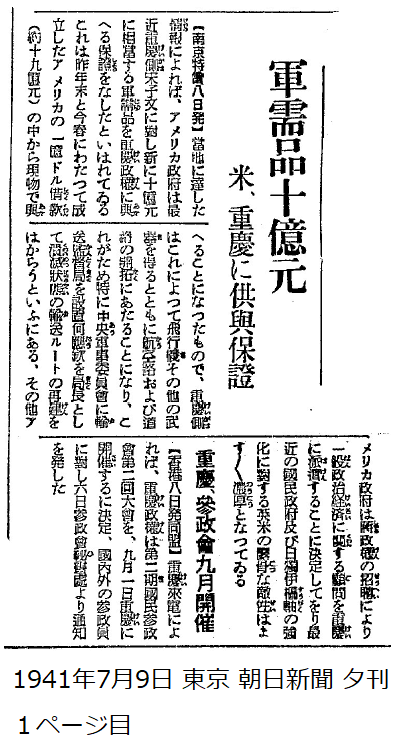 |
1941/7/9 Asahi Newspaper Billions of Yuan in Military Supplies Provided to Chongqing by U.S. Nanjing Special News Agency, August 8 According to information reaching this office, the U.S. government has recently assured Chongqing's T. V. Soong that it will provide the Chongqing administration with military supplies worth 1 billion yuan. The U.S. loan of 100 million dollars (about 1.9 billion yuan), which was approved at the end of last year and this spring, is to be given in kind, and the Chongqing side will use it to acquire airplanes and other weapons and to develop air routes and roads. He Yingqin, the director of the bureau, was to rebuild the devastated transportation routes. The U.S. government also decided to dispatch a general political and economic advisor to Chongqing at the invitation of Chiang Kai-shek. The overt hostility of Britain and the U.S. toward the Nationalist government (Wang Jingwei?) and the strengthening of the Japanese-German-Italian Axis was becoming more and more intense.
|
1941/5/13 (7 months before Pearl Harbor)
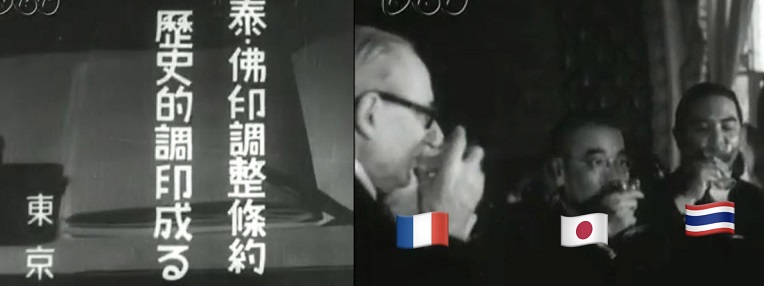
(Below) Japan played a role as a mediator for the conflict between French Indochina and Thai. Then as shown below next, US/British went embargo on both French Indochina and Thai as a retaliation. The US/British were the bullies against anything Japan does.
1941/07/22 (5 month before Pearl Harbor)
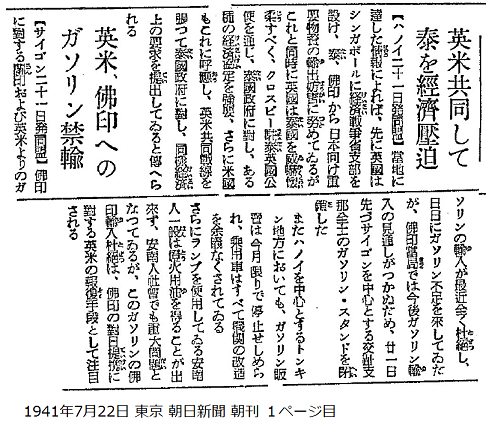
(Below) Japanese news report how British and the US went far to pressurize Thailand to follow their economic policy against Japan. They also put embargo against French Indochina as a retaliatory measure for trading with Japan.
 |
|
1941/7/22 Asahi Newspaper Tokyo on page 1 The United Kingdom and the United States Jointly Pressurize the Economy of Thailand (Hanoi, Feb. 21, Doumei news report) According to local information, the British have established a branch of the Ministry of Economic Warfare in Singapore to obstruct the export of important goods from Thailand, France, and India to Japan. The U.S. and Britain are reported to have joined forces to make the same economic demands of the Thai government. British and U.S. Embargo on Gasoline to French Indochina (Saigon, 21th Doumei news report) The import of gasoline from France and India, as well as from the U.K. and the U.S., has recently been completely cut off, and gasoline shortages are increasing day by day. In the Tonkin region centering on Hanoi, gasoline sales have also been suspended until the end of this month, and all passenger cars have been forced to have their engines modified. Furthermore, Annamese (安南人) who use lamps are unable to obtain oil for lighting their lamps, which has become a serious problem in Annamese society, and the suspension of French and Indian imports of gasoline has attracted attention as a retaliatory measure by the UK and US against the French Indochina alliance with Japan. |
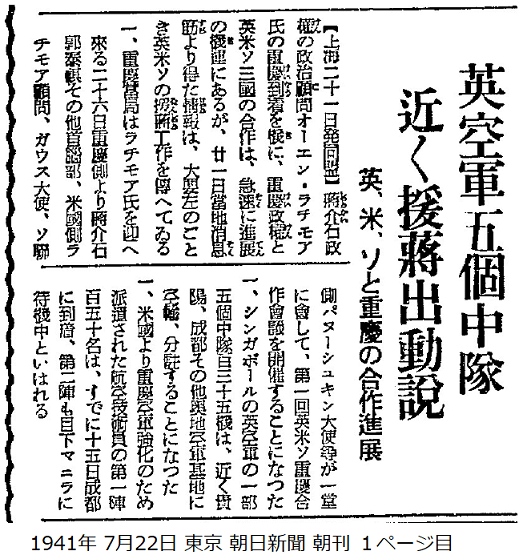
(Below) Japanese news report the coalition force among British, the US, Soviet and Chongqing(Republic of China) was formed and the representatives from each nation are gathered in Chongqing such as Owen Lattimore from the US'(later found out communist spy), Alexander Panushkin from Soviet, and Chiang from China.
 |
|
1941/07/22 Asahi Newspaper Nearly Five Squadrons of British Air Force Reportedly Dispatched to Aid Chiang Cooperation Progressing Between Britain, U.S., Soviet Union, and Chongqing (Shanghai, 21st, Doumei report) With the arrival in Chongqing of Owen Lattimore, political advisor to the Chiang Kai-shek administration, cooperation between the Chongqing government and the three nations of Britain, the United States, and the Soviet Union is rapidly gaining momentum. Information obtained from sources on the 21st indicates the following British, American, and Soviet efforts to aid Chiang Kai-shek: 1. On the 26th, when Latimore arrives, the Chongqing authorities will convene the first British-American-Soviet-Chongqing Cooperation Conference. Attendees will include Chiang Kai-shek, Guo Qinqi, and other top officials from the Chinese side; Advisor Latimore and Ambassador Gauss from the American side; and Ambassador Panushkin(Alexander Panushkin) from the Soviet side. 2. A portion of the British Air Force in Singapore, consisting of five squadrons totaling 135 aircraft, will soon be airlifted and deployed to air bases in Guiyang, Chengdu, and other inland locations. 3. The first group of 150 aviation technicians dispatched from the United States to strengthen the Chongqing Air Force has already arrived in Chengdu. The second group is reportedly currently awaiting instructions in Manila. |
1941/07/23 FDR signed JB355 plan, sending the US airplane in disguise of Chinese, and attack Japan.
1941/07/29 (4 month before Pearl Harbor)
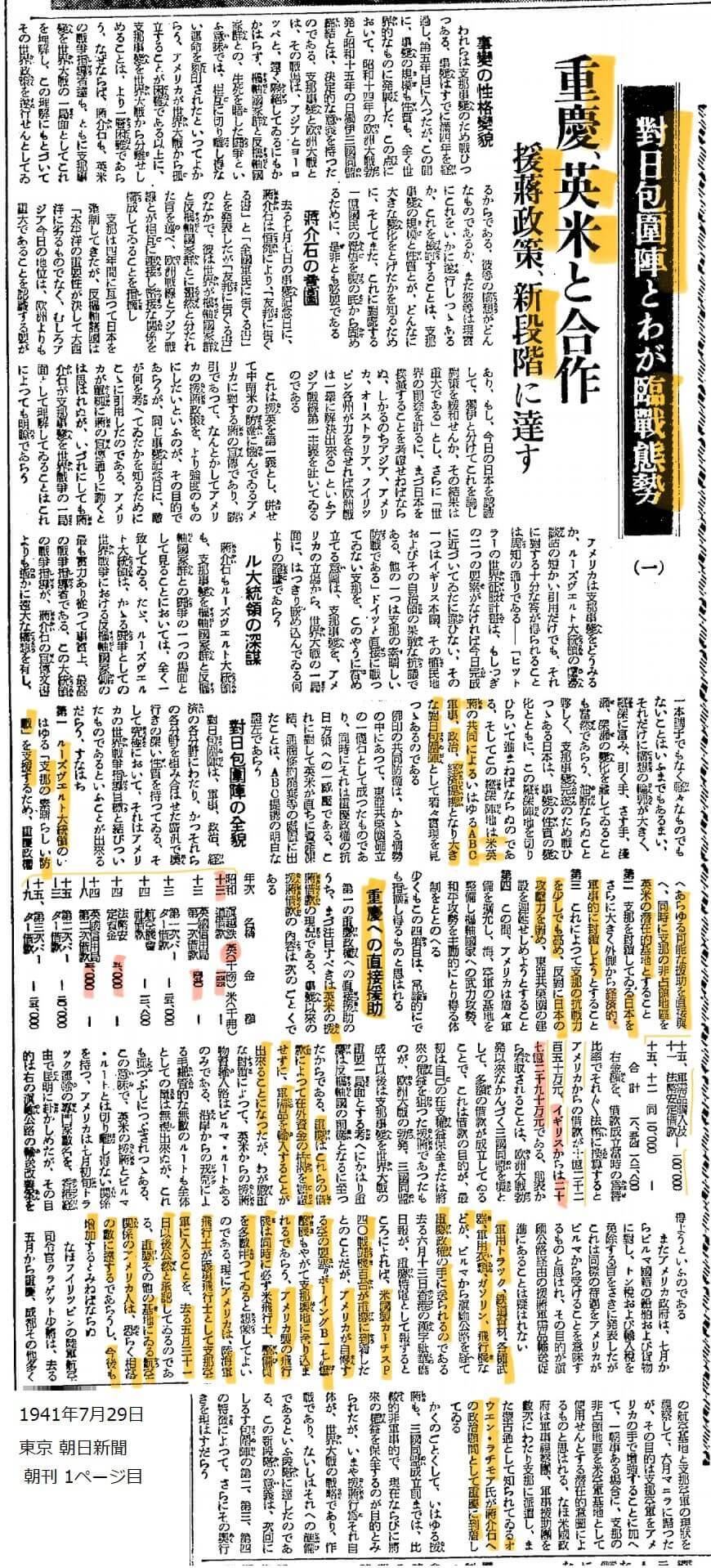
Japanese Asahi newspaper reported about the recent FDR's policy and the new step of a coalition between British, the US, and Chongqing(Republic of China) against Japan.
 |
|
1941/07/29 Asahi Newspaper (beginning is omitted) President Roosevelt's Deep Plot Both Chiang Kai-shek and President Roosevelt were in complete agreement in viewing the Second Sino-Japanese War as a scene in the struggle between the Axis powers and the anti-Axis powers. President Roosevelt, however, was the most capable and, in effect, the best war leader of the anti-Axis powers in the world war as such a struggle. It goes without saying that the war leadership of President Roosevelt has a far grander concept than that of Chiang Kai-shek's propaganda, and is neither straightforward nor lighthearted. It is therefore not surprising that the contours of the plan are large, deep, and varied, and that there are many different pulls and changes in the shallows and depths of the sea. Japan, which is fighting to complete the Second Sino-Japanese Incident, must advance by opening up this deep-vertical position as the nature of the incident changes. This deep vertical position would be the so-called ABC (America British China) military, political, and economic alliance between the U.S., Britain, and Chiang Kai-shek, and was steadily being realized as a major encirclement of Japan. The joint defense by France Indochina was one of the cornerstones of the establishment of the East Asia Co-prosperity Sphere under these circumstances, and at the same time, it was an impetus to the anti-Japanese measures of the Chongqing regime. The fact that Britain and the U.S. immediately responded to this by freezing assets and canceling trade treaties is clear evidence of the ABC alliance. The Siege on Japan The siege against Japan is wide-ranging and profound in nature, spanning military, political, and economic fields and combining all of these fields. Ultimately, it can be said to be linked to the U.S. goal of leading the world war. In other words First. To provide all possible assistance directly to the Chongqing regime in support of President Roosevelt's so-called “Great Defense of China,” while at the same time making unoccupied areas of China potential bases for Britain and the U.S. Second. To attempt to blockade Japan, which has blockaded Shina, economically and militarily from an even greater outside distance. Third. To raise the war fighting capability of China as much as possible and, on the contrary, to weaken Japan's attack and delay the construction of the East Asia Co-prosperity Sphere. Fourth. During this period, the U.S. will steadily replenish its military forces, develop its naval and air bases, and establish a system that will enable it to take the lead in an armed offensive against the Axis powers and in a peace offensive. At least these four items can be pointed out even by common sense. Direct Aid to Chongqing The first item of direct aid to the Chongqing regime that deserves attention is the current status of the Anglo-American loan for aid to the Chongqing regime. The details of the loans to Chongqing since the Incident are as follows. (Omitted graph) The loan from the U.S. and the loan from the U.K. amounted to 1,022.5 million yuan (in ROC currency) and 2,729 million yuan, respectively, when the loan was converted into yen at the exchange rate prevailing at the time the loan was established. The purpose of the loans was initially to preserve the country's own interests in China or to provide assistance for the future interests of the country, but after the outbreak of World War II in Europe and the formation of the Tripartite Pact, the idea of Shina Jihen 支那事変 (2nd Sino-Japanese war) as an important phase of the World War II shifted, and the Chongqing Incident became a major factor in the war. However, after the outbreak of World War II in Europe and the formation of the Tripartite Pact, the idea that the Second Sino-Japanese War was an important phase of the world war was replaced by the idea that the Second Sino-Japanese War was an important phase of the world war, and Chongqing became the vanguard of the anti-Axis powers. Chongqing was able to import munitions without worrying about depletion of overseas funds through these loans, but due to our strict blockade, the import route for reinforcement supplies from Britain and the US was the Burma route. The numerous capillary routes from the coast by junks could not be ignored as a whole, but they were also being crushed with a fine-tooth comb. In this sense, there is an inseparable relationship between the Anglo-American aid to Chiang Kai-shek and the Burma route. In early July, the U.S. sent several trucking experts to Kunming via Hong Kong in order to obtain ideas on how to improve transportation along the Burma Road. The U.S. government also announced that from July, Burmese ships and cargoes would be exempted from tax per ton and import tax, which would mean that the U.S. would receive similar treatment from Burma. There is no doubt that the purpose of this was to promote the transportation of relief Chiang munitions via the 滇緬公路 (Burma Road). Military trucks, railroad materials, weapons, military clothing, gasoline, airplanes, etc. will be sent from Burma to the Chongqing regime via the 滇緬-burma road. According to a report in the June 13 issue of the Hong Kong-based Chinese newspaper “Huaqiao Nippo” (Chongqing Special Dispatch), one hundred US-made Curtiss P40 fighter jets have arrived in Chongqing, and the “Boeing B17” bombers, America's pride and joy in the sky, will also be sent to the interior of China in the near future. American-made planes must be sent to Chongqing at the same time as American planes. It is safe to imagine that American-made planes are always accompanied by a large number of U.S. aviators and maintenance personnel. In fact, the U.S. has openly approved the entry of Army and Navy aviators into the Chinese Air Force as volunteer airmen since May 31 of last year. The number of Americans in Chongqing and other air bases who are involved in aviation is probably considerable, and must be expected to increase in the future. Major General Henry Black Clagett, Commander of the Army Air Forces in the Philippines, visited Chongqing, Chengdu, and many other air bases and the current status of the Chinese Air Force from last May, and returned to Manila in June. It is believed that the purpose of the tour was to strengthen the Chinese Air Force in the hands of the U.S. and to potentially use non-occupied areas of China as U.S. Air Force bases in the event of an emergency. In addition, the U.S. government dispatched military inspectors and military aid missions to China several times, and Mr. Owen Lattimore, known as an expert on Mongolia, arrived in Chongqing as a political advisor to Chiang Kai-shek. Thus, Chiang's so-called reinforcements, which until the formation of the Tripartite Pact had been relatively non-military and aimed at preserving present and future interests, had now reached the stage where the act of reinforcement itself was a strategy, a campaign, or a preparation for a world war. The significance of this new stage will be further illustrated by the second, third, and fourth characteristics of the siege, which will be shown in the next article. |
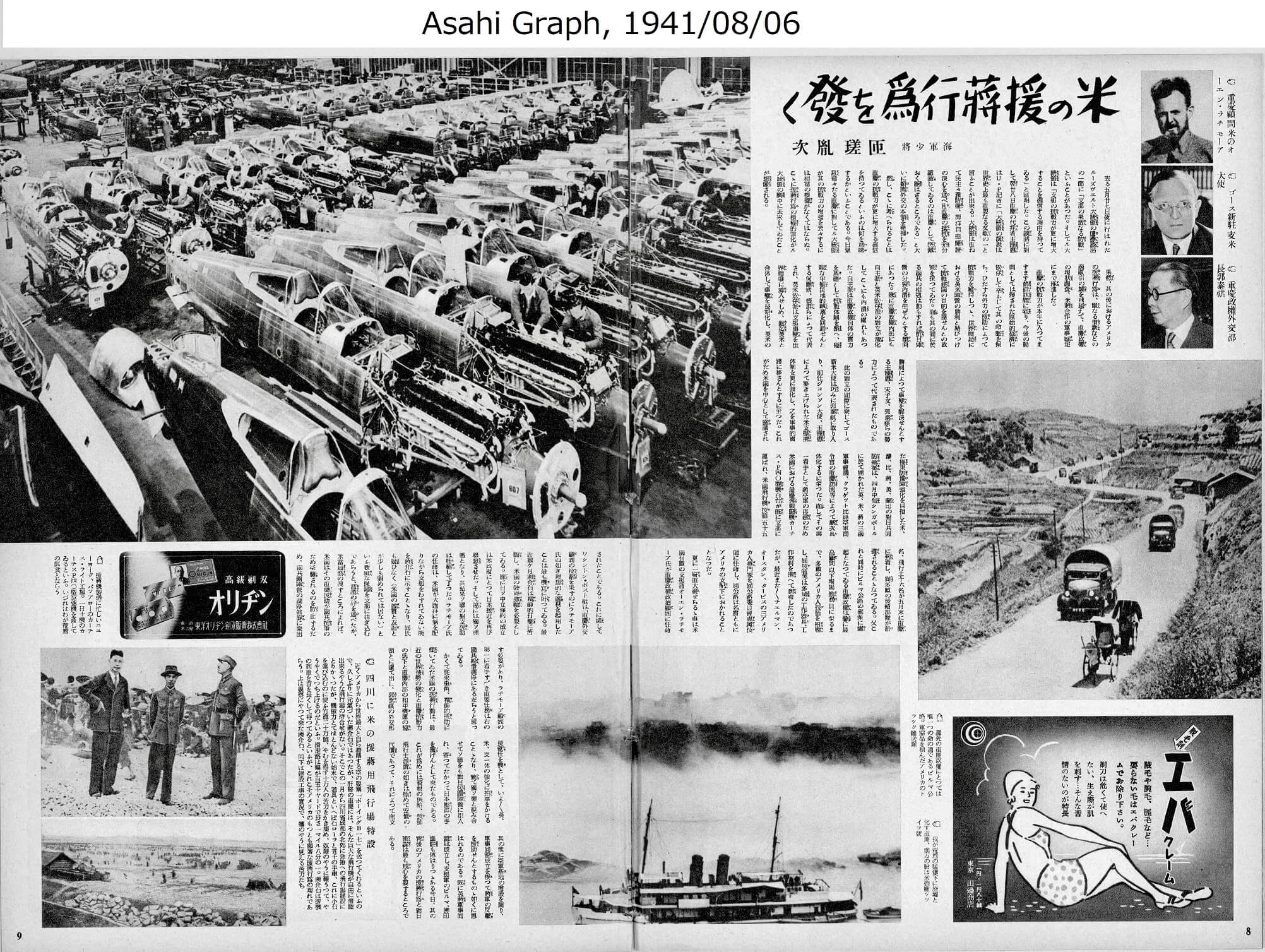
1941/08/06 Journal Asahi Graph shows an interesting map showing how Japan viewed the US and British joint manipulation and interference 4 month before Pearl Harbor by getting Dutch on their side, and pressuring Thai and French Indochina for Chiang kai-shek and Soong mei-ling. (The original is Japanese only, I added English and photos of faces).
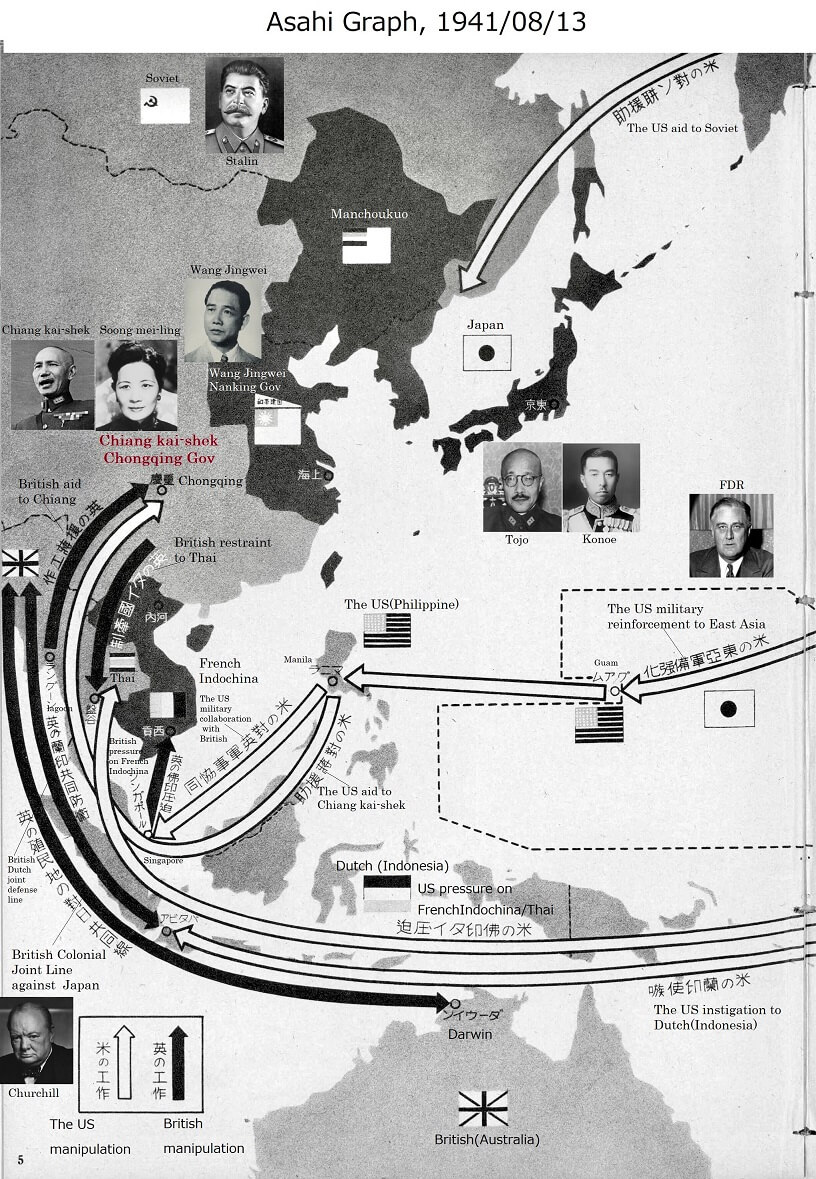
It also shows the US aid to Chiang kai-shek. The left top photo showing curtis p40 fighter planes for Chiang kai-shek, the left bottom shows air field which is capable for these airplanes can land. The top right shows the photo of Owen Lattimore, the advisor of Republic of China. Right middle, the road for aid to Chiang, the bottom shows Chiang's Chongqing city with the US ship front.
1941/08/07 Japanese Foreign Minister Teijirō Toyoda asked Ambassador to the United States Kichisaburō Nomura to propose to the U.S. side a meeting between Prime Minister Fumimaro Konoe and FDR. In light of the deteriorating relations between Japan and the United States, Minister Toyoda had begun to believe that a direct meeting between the leaders of the two countries would be the key to resolving the situation.
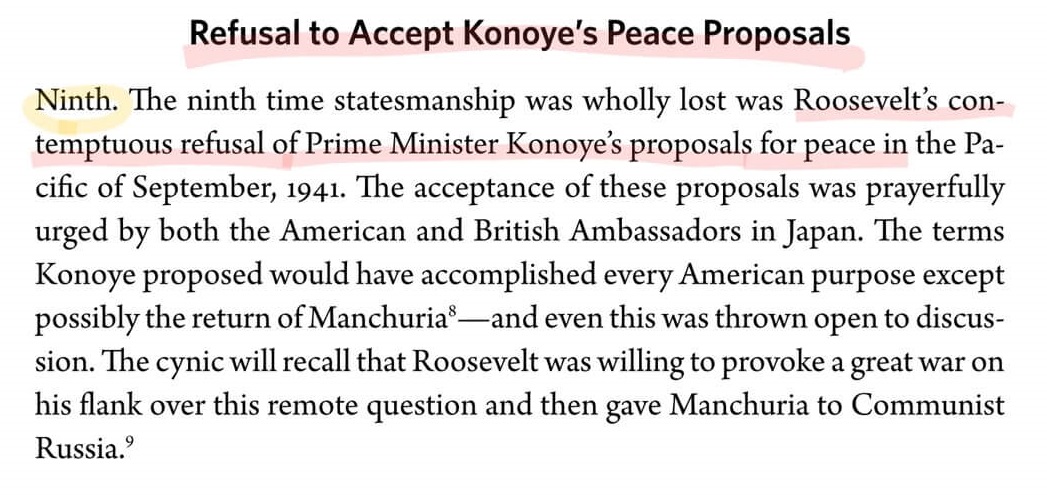
1941/08/28 Japanese attempt to avoid a meaningless war, the request of meeting from Konoe to Franklin Roosevelt.
At the August 28, 1941 meeting with US Secretary of State Hull Ambassador Nomura delivered to Hull the “Konoe Message”. Document 1 is the telegram from Ambassador Nomura to Foreign Minister Toyoda, reporting this incident. Asserting the importance of the “Konoe Message” a direct meeting with US President Roosevelt was requested but it was explained that somehow due to the President’s scheduling the matter was not noticed until the following day. Furthermore, in the “Konoe Message” Prime Minister Konoe indicated to President Roosevelt the deteriorating state of affairs between Japan and the United States and strongly recommended a joint summit between the nations in an effort to improve the relationship. This information was not officially given to the President until the following day, August 29.
¶ Final hope for a peace by Japan to avoid a war against the US
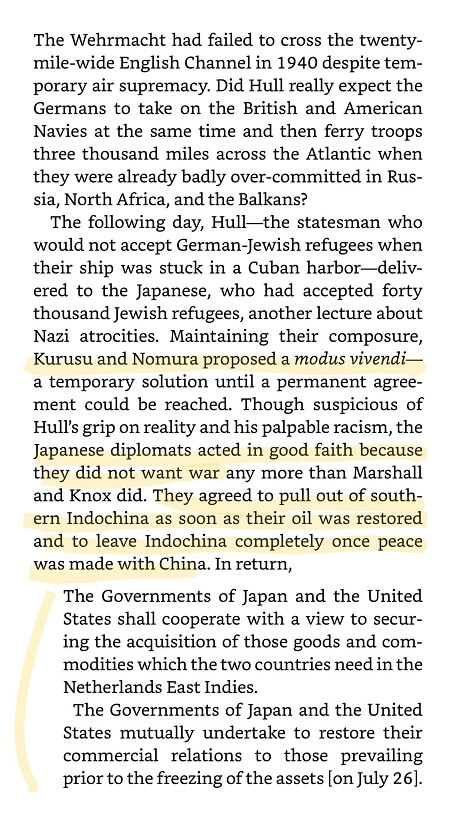
1941/11/5 Japan made concessions to the US, by proposing plan A and B on both Japan agreed on withdrawing from French Indochina.
Source: Japanese government site for historical archives
|
On November 5, Showa 16 (1941), the 7th Imperial Conference was held, and two draft sets of demands (Draft A and Draft B) to be presented to the United States were finalized. Document 1 contains the full text of these Plan A and Plan B proposals. Under Plan A: sent to the US on 1941/11/7 (1) Japan would demand the application of the principle of non-discrimination in trade throughout the entire Pacific region and in China, based on the premise that this principle applies worldwide; (2) regarding the interpretation of the Tripartite Pact between Japan, Germany, and Italy, it would be clarified that there would be no arbitrary expansion of the “right to self-defense,” and that the interpretation would continue to be based on the Japanese government’s own interpretation as before; (3) Regarding the withdrawal of troops, while Japan would maintain a garrison in North China, parts of Mongolia, and Hainan Island for approximately 25 years following the conclusion of a peace treaty between Japan and China, it would aim for complete withdrawal from all other areas within two years; furthermore, Japan would withdraw immediately from French Indochina as soon as the Sino-Japanese War is resolved or peace is established in the Far East. Under Proposal B: sent to the US on 1941/11/20 it was stated that (1) Japan and the United States would not make any military advances into Southeast Asia or the South Pacific regions other than French Indochina; (2) the two countries would cooperate with each other to ensure the procurement of supplies in Dutch Indochina; (3) the two countries would restore trade relations to the state they were in prior to the freezing of Japanese assets in the United States; (4) The United States shall not take any action that hinders peace efforts between Japan and China. If these four points are agreed upon, Japanese troops stationed in southern French Indochina will withdraw to northern French Indochina as necessary. |
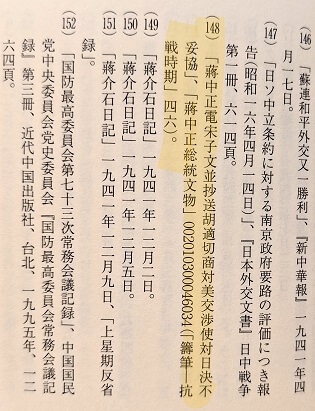
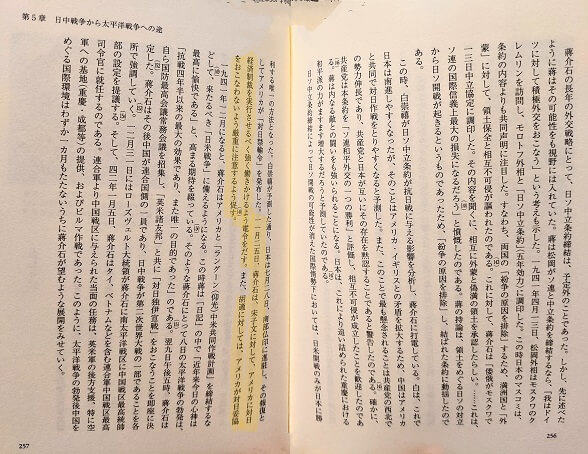
1941/11/25 Chiang kai shek's pressure on the US
Chiang Kai-shek issued a telegram order to T.V. Soong, urging him to strongly lobby the United States to enforce economic sanctions against Japan. He urged Hu Shih to strictly caution the United States against making any concessions to Japan. [Chiang Kai-shek's Diplomatic Strategy and the Sino-Japanese War] 「 蒋介石の外交戦略と日中戦争( 家近亮子 )
 |
 |
1941/11/25 On the same day
Stimson wrote his diary saying “The question was how we should maneuver them into the position of firing the FIRST shot without allowing too much danger to ourselves”.
¶ This is the end!! …FDR refused Japanese proposal and provoked even further
…. Japanese last hope for a peace with Plan A/B was completely scattered.
1941/11/26 Ultimatum(Hull note) was delivered to Japan .
1941/12/07 Japanese attack on Pearl harbor
1941/12/08 Next day of Pearl harbor
|
Japanese prime minister Hideki Tojo , made an announcement to the public on the next day of Pearl Harbor. 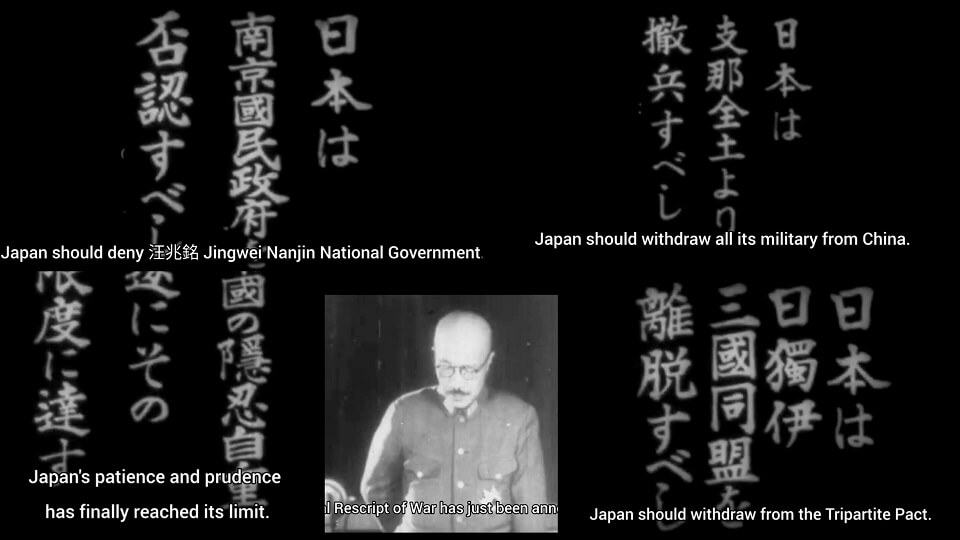 |
¶ Why war? Japanese were not hostile to the US either but rather boosting the US economy
Japanese were not hostile to the US and Japanese military was engaged in 2nd Sino-Japanese war, couldn't afford to fight for another war even when Japanese knew Chiang was supported by the US, British, Soviet, and Germany.
¶ When was the last time Japan brought the damage to the US? Panay Incident in 1937
There was one incident that deteriorated the relationship with the US and Japan, the attack on Panay. Japanese aircraft attacked the US boat Panay on 12th December in 1937 killing 3 people right before Japanese entered Nanking city on 13th. Japanese government instantly apologized and Japanese people sent the donation and flowers to the US embassy in Japan. This is a tragedy but one should also note the fact that Chiang kai-shek KMT the US supported bombed accidentally several times killing hundreds of people including Americans in Shanghai in 1937 on August such as the bomb on Great world entertainment center/Cathey Pacific hotel 14th, USS on 20th, and SS President Hoover ship on 30th.
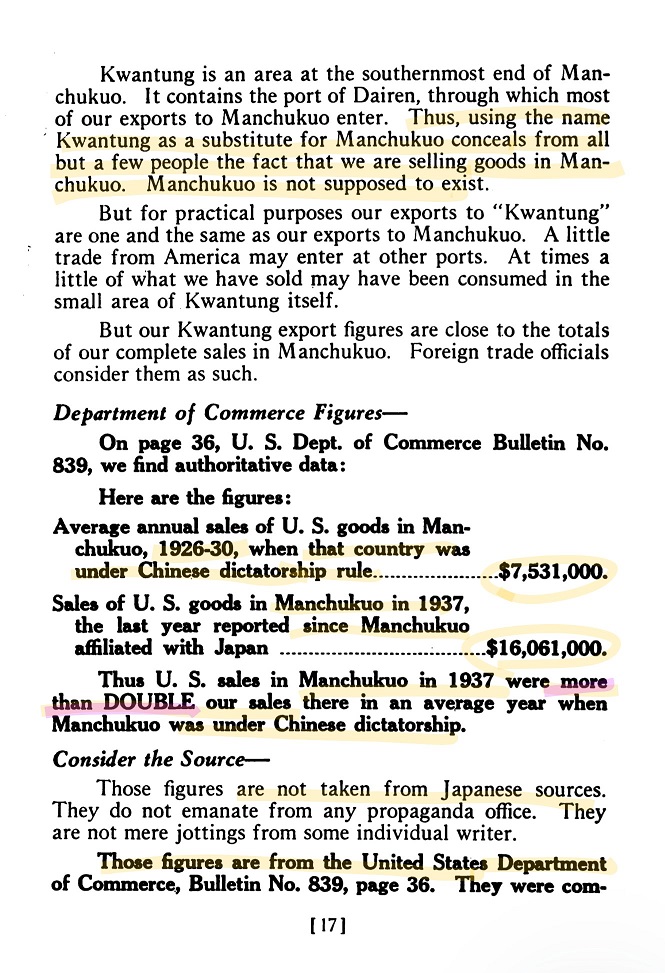
¶ Boosting the US economy in Manchuria Japan brought a peace and order
Japanese was actually boosting the US economy in the development of Manchoukuo. This has been mentioned by Ralph Townscend.
¶ Communist spies/sympathizers in FDR's cabinet
There were many Soviet spies/sympathizers close to FDR, leading the US to destroy Japan, a breakwater against communism in Asia. True war winner is not the US who started the unnecessary war against Japan, but Communist.
(Ref: Venona: Decoding Soviet Espionage in America , Operation Snow: How a Soviet Mole in FDR's White House Triggered Pearl Harbor)
| Harry Dexter White | He wrote a draft of final provocation to Japan, Ultimatum Hull note leading a war between the US and Japan. Later he committed a suicide. |
| Lauchlin Currie | He sent the US aircrafts and military support to Chiang kai-shek by Soong meiling. After FDR's death he lost his position and later he escaped to Columbia. |
| Alger Hiss | He worked and led the US to make concessions to Stalin at Yalta conference. |
| Owen Lattimore | Although he was not considered as a spy, he had been a advisor to Chiang kai-shek promoting the US help before Pearl Harbor. |
| Atomic bomb engineers | The engineers working for Manhattan project leaked the information of developing atomic bombs to Soviet. Soviet was able to build its own earlier by Korean war. (Venona) |
¶ Who violated Paris Peace Treaty?
There is an interesting dialogue when people are discussing for Paris Peace treaty in 1928.
|
Senator SWANSON. Suppose a country is not attacked. Suppose there is an economic blockade, and they carry out their obligations under the League of Nations for an economic blockade; would this treaty interfere with it? Secretary KELLOGG. There is no such thing as a blockade without you are in war. Senator SWANSON. That is a debatable question. Senator REED of Missouri. It is an act of war. Secretary KELLOGG. An act of war, absolutely. If an act of war is committed in violation of the treaty, the other parties are released as to the treaty breaking nation |
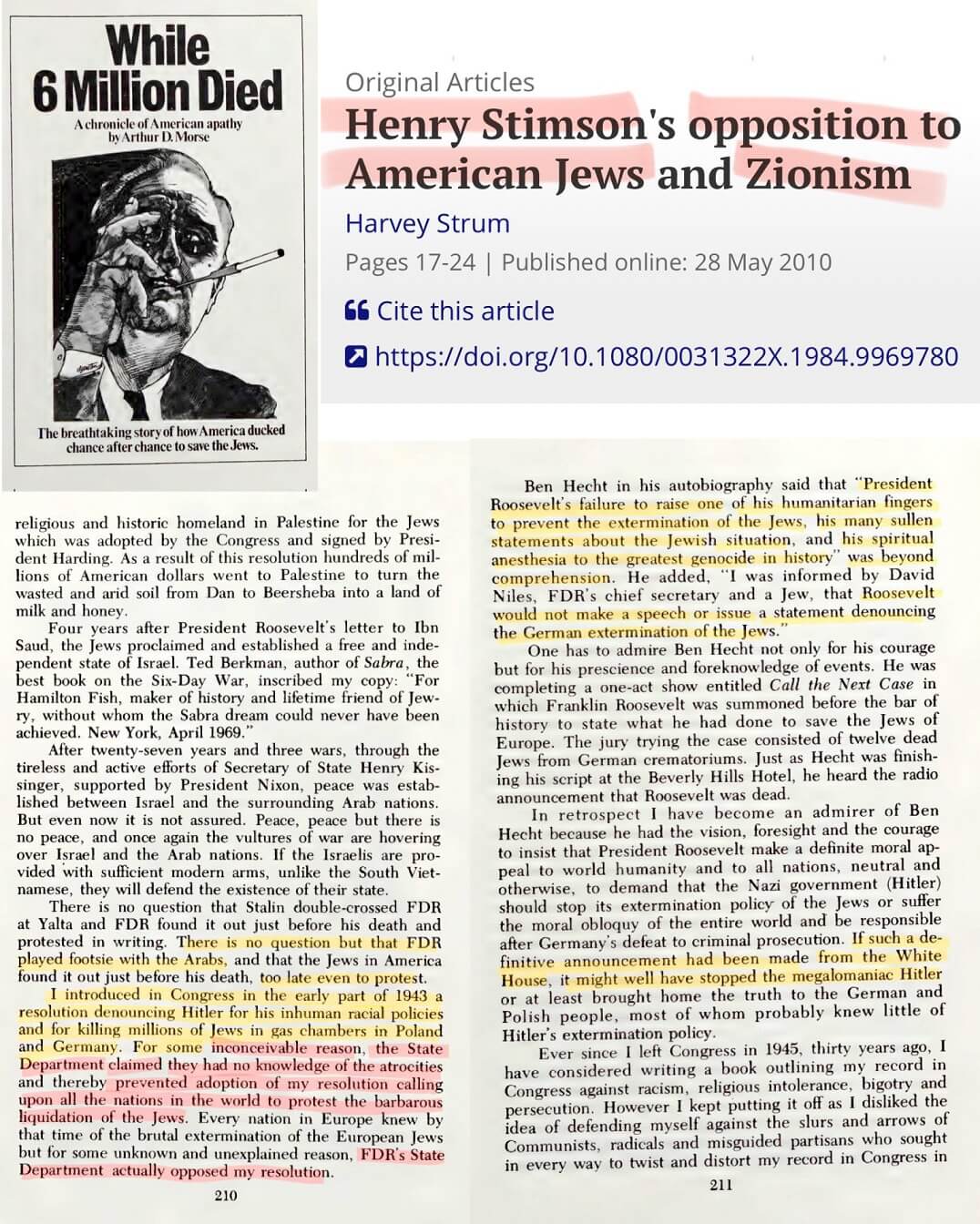
¶ FDR administration was not into saving Jewish. It was Japanese who saved Jewish
Although the US fought against Germany, FDR was not into saving Jewish. He wanted to save Churchill. Ironically Japan allied with Germany to match against communism from Europe and Asia, Japan actively saved Jewish.
See how Class A criminal Matsuoka Yosuke, Higuchi Kiichirō opposed anti-sentiment and saved Jewish.
¶ Second disaster by FDR, Yalta conference leading to a rise of communists in Asia
FDR was brainwashed by communists. FDR is the first president who recognized Soviet as a nation in 1933. US financial support to Stalin was 👉$11.3 billion (equivalent to over ($180) billion in 2026). His administration had communist spies such as Harry Dexter White who wrote Ultimatum leading to US destroying Japan, the enemy of communists. (Ref: Operation Snow: How a Soviet Mole in FDR's White House Triggered Pearl Harbor)
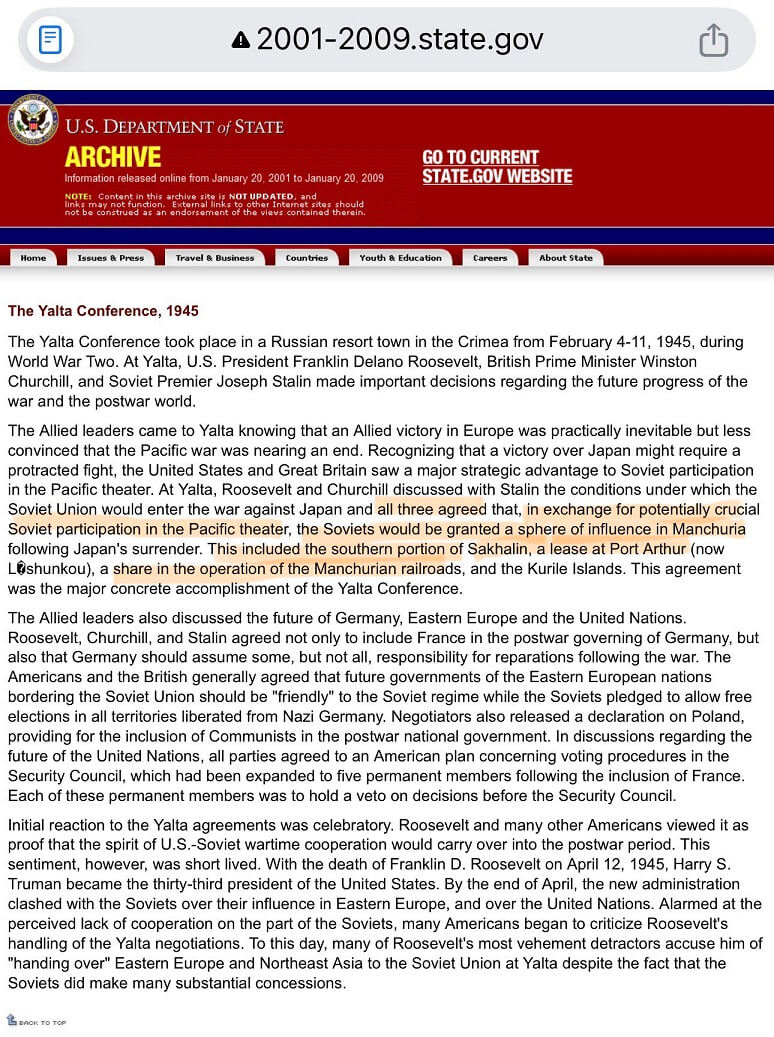
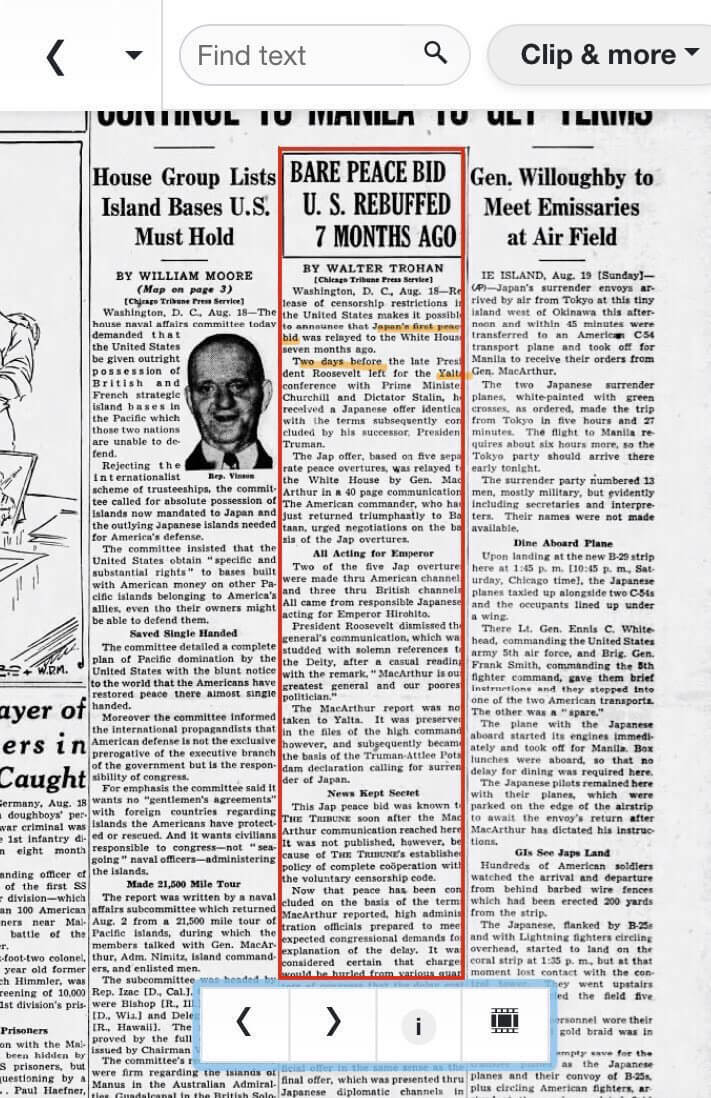
At the almost end of WW2 on February 4–11 in 1945, there was Yalta conference where FDR, Churchill, and Stalin met. Only two days before FDR left US for Yalta, he learned Japan was working for a negotiation (Chicago Tribune 19th Aug in 1945 below), he ignored it. He blew a chance to settle Pacific War within Allied forces without communist, minimizing a casualty of war. Instead, he went to Yalta and made a big compromise to Stalin by giving a financial support and giving Manchuria where Manchoukuo is, and asked to join a war against Japan.
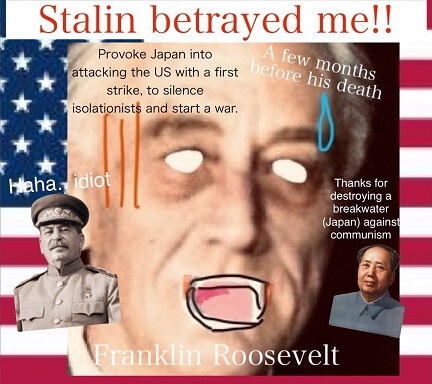
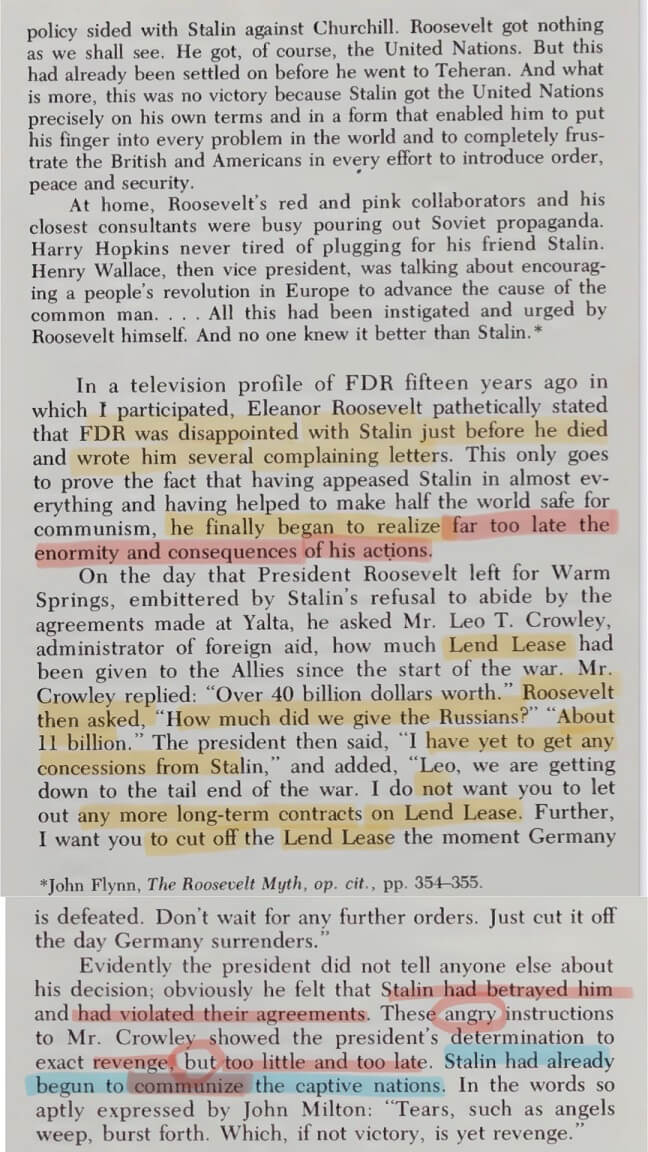
Later Stalin betrayed FDR by turning his neighbor area as communist, later FDR got angry and died with sickness.(Ref: FDR the other side of the coin by Hamilton Fish ). Since Japan allied with Germany for anti commintern, it was FDR who was “a useful fool” and helped communism spread in Asia and East Europe with many communists spies in his cabinet leading to another wars such as Korean/Vietnam war where the US killed 20 percent of Koreans and dropped bomb most in Vietnam.
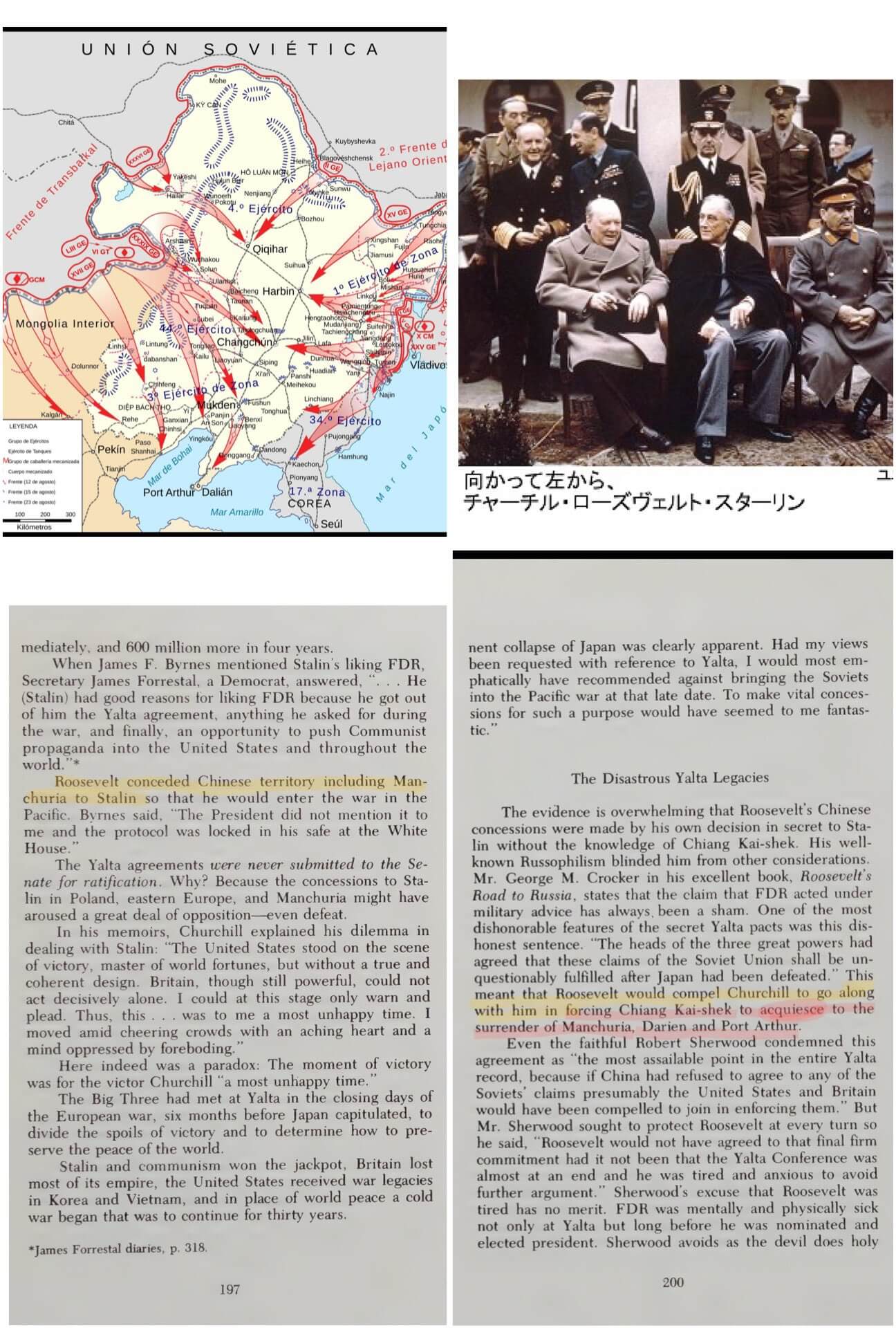
(Below) Two days before FDR left US for Yalta, FDR knew Japanese wanted a peace talk, yet he ignored.
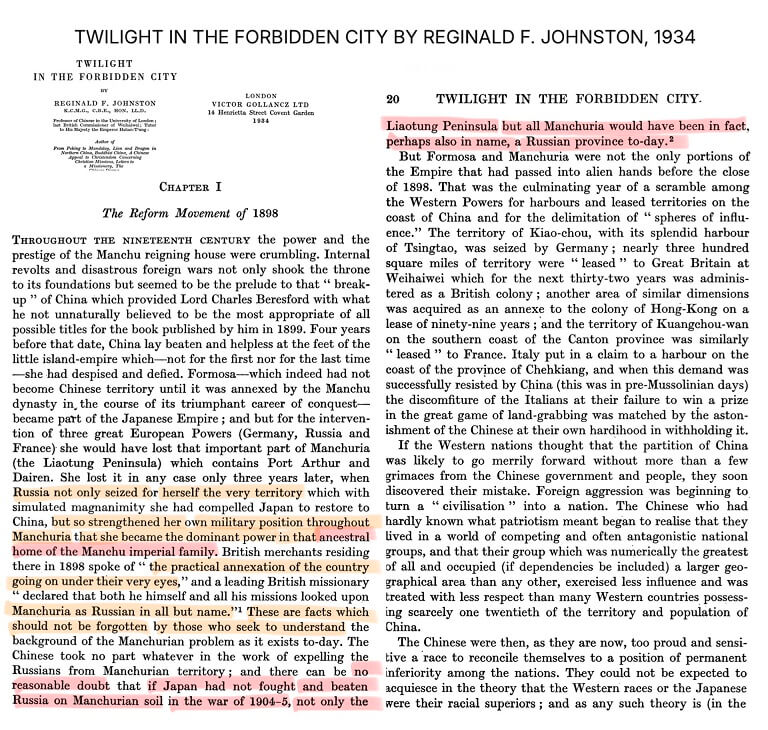
FDR giving Manchuria to Stalin, not Manchus or not even Han Chinese Chiang kai-shek when the US had blamed Japan for invasion of Manchuria and called Puyi a puppet, is utterly hypocritic, selfish, and dishonest.
(Below) Ralph Townsend criticized his government as below.
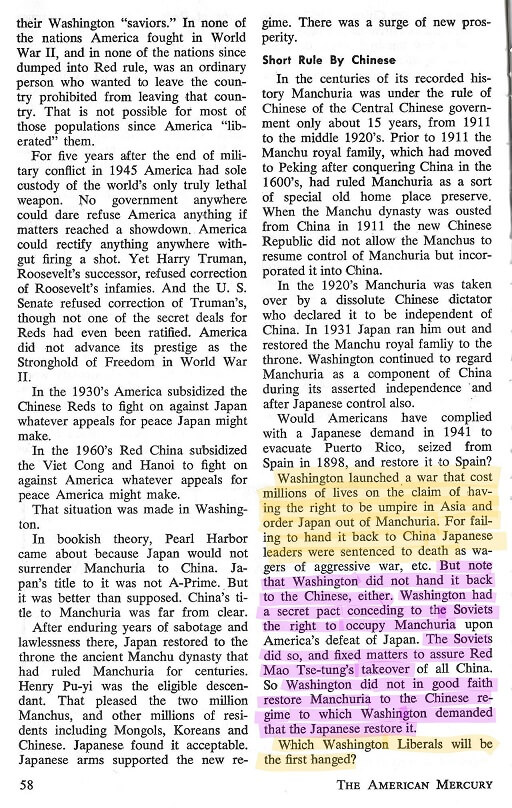
It is ironic that the US helped Soviet finally take Manchuria, which had been protected by Japanese with Manchu emperorPuyi after Soviet took outer Manchuria.
(Below) The moment he came to realize he was deceived by Stalin and his foolish dream of the leader of the new world order with Soviet fell apart.
¶ FDR's foolish dream
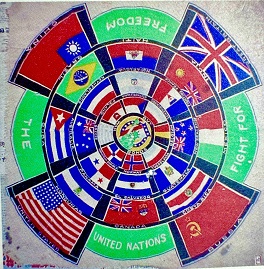
The old man with a wheel chair, FDR foolishly dreamed of being a leader of new world order, United Nation with Chiang kai-shek(incapable dictator/ mass murderer in Yellow River Flood in 1938) and Stalin (mass murderer communist). US taxpayer paid to Support them whole a lot.
¶ Japanese officer was confused, and sent a letter to FDR right before he died at Iwo Jima
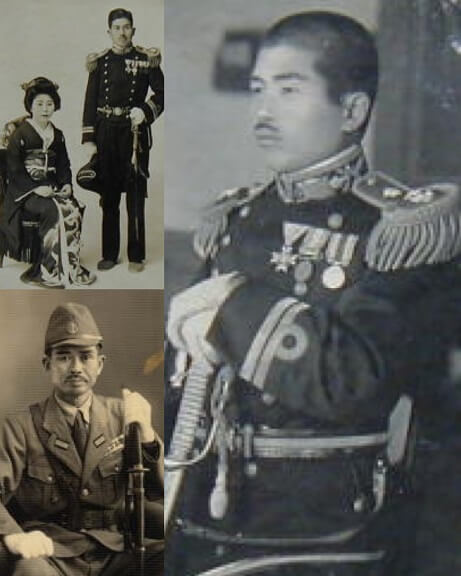
Japanese Admiral Rinosuke Ichimaru (市丸利之助, 1891/9/20 –1945/3/26) wrote a letter to FDR in the final days of battle in Iwo Jima, and gave to English version to other Japanese soldier. After they died, the US found the letter and it was published in the New York Herald Tribune on 11 July, one week before the Potsdam Conference, and is today kept at the U.S. Naval Academy in Annapolis, Maryland. The US found his sword as well and sent back to his family in Japan. Since FDR died 12th April, probably he didn't read it.
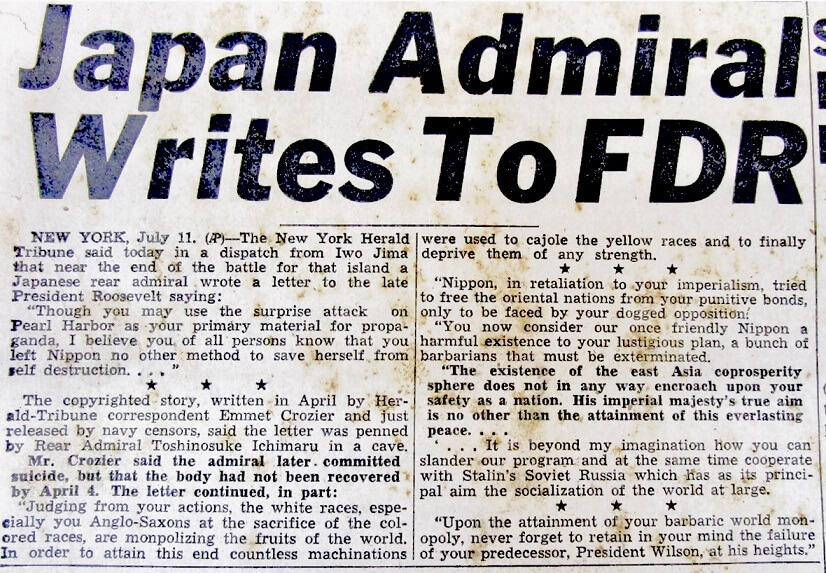
|
A letter to FDR(ルーズベルトニ与フル書) source (translated by Sgt. Hirofumi Mikami, a Nisei soldier born in Hawaii serving under Ichimaru on Iwo Jima) A Note to Roosevelt Rear Admiral R. Ichimaru of the Japanese Navy sends this note to Roosevelt. I have one word to give you upon the termination of this battle. Approximately a century has elapsed since Nippon(Japan), after Commodore Perry’s entry to Shimoda, became widely affiliated with the countries of the world. During this period of intercourse Nippon has met with many national crises as well as the undesired Sino-Japanese War, Russo-Japanese War, the World War, the Manchurian Incident, and the China Incident. Nippon is now, unfortunately, in a state of open conflict with your country. Judging Nippon from just this side of the screen you may slander our nation as a yellow peril, or a blood thirsty nation or maybe a protoplasm of military clique. Though you may use the surprise attack on Pearl Harbour as your primary material for propaganda, I believe you, of all persons, know best that you left Nippon(Japan) no other method in order to save herself from self-destruction. His Imperial Highness, as clearly shown in the “Rescript of the Founder of the Empire” “Yosei” (Justice), “Choki” (Sagacity) and “Sekkei” (Benevolence), contained in the above three fold doctrine, rules in the realization of “Hakko-ichiu” (the universe under His Sacred Rule) in His Gracious mind. The realization of which means the habitation of their respective fatherlands under their own customs and traditions, thus insuring the everlasting peace of the world. Emperor Meiji’s “The four seas of the world that are united in brotherhood will know no high waves nor wind” (composed during the Russo-Japanese War) won the appraisal of your uncle, Theodore Roosevelt as you yourself know. We, the Nippon-jin(Japanese), though may follow all lines of trade, it is through our each walk of life that we support the Imperial doctrine. We, the soldiers of the Imperial Fighting Force take up arms to further the above stated “doctrine”. Though we, at the time, are externally taken by your air raids and shelling backed by your material superiority, spiritually we are burning with delight and enjoying the peace of mind. This peacefulness of mind, the common universal stigma of the Nippon-jin, burning with fervour in the upholding of the Imperial Doctrine may be impossible for you and Churchill to understand. I hereupon pitying your spiritual feebleness pen a word or two. Judging from your actions, white races especially you Anglo-Saxons at the sacrifice of the coloured races are monopolizing the fruits of the world. In order to attain this end, countless machinations were used to cajole the yellow races, and to finally deprive them of any strength. Nippon(Japan) in retaliation to your imperialism tried to free the oriental nations from your punitive bonds, only to be faced by your dogged opposition. You now consider your once friendly Nippon a harmful existence to your luscious plan, a bunch of barbarians that must be exterminated. The completion of this Greater East Asia War will bring about the birth of the East Asia Co-Prosperity Area, this in turn will in the near future result in the everlasting peace of the world, if, of course, is not hampered upon by your unending imperialism. Why is it that you, an already flourishing nation, nip in bud the movement for the freedom of the suppressed nations of the East. It is no other than to return to the East that which belongs to the East. It is beyond our contemplation when we try to understand your stinted narrowness. The existence of the East Asia Co-Prosperity sphere does not in anyway encroach upon your safety as a nation, on the contrary, will sit as a pillar of world peace ensuring the happiness of the world. His Imperial Majesty’s true aim is no other than the attainment of this everlasting peace. Studying the condition of the never ending racial struggle resulting from mutual misunderstanding of the European countries, it is not difficult to feel the need of the everlasting universal peace. Present Hitler’s crusade of “His Fatherland” is brought about by no other than the stupidity of holding only Germany, the loser of the World War, solely responsible for the 1914-1918 calamity and the deprivation of Germany’s re-establishment. It is beyond my imagination of how you can slander Hitler’s program and at the same time cooperate with Stalin’s “Soviet Russia” which has as its principle aim the “socialization” of the World at large. If only the brute force decides the ruler of the world, fighting will everlastingly be repeated, and never will the world know peace nor happiness. Upon the attainment of your barbaric world monopoly never forget to retain in your mind the failure of your predecessor President Wilson at his heights. -Rear Admiral Ichimaru |
¶ How Truman dropped Atomic bombs in Hiroshima/Nagasaki
As FDR knew it, Truman also knew Japan was working for a peace talk. Japan was asking Soviet to be a mediator to talk to the US, not knowing at Yalta FDR already had asked Stalin to break a treaty with Japan and join a war against Japan in exchange of giving Stalin Manchuria.
Not only Truman ignored Japanese attempt for a talk, he even mentioned Japan wouldn't surrender when atomic bombs were dropped and he would tell Soviet when to attack Japan, suggesting he wanted to drop atomic bombs before Japanese surrendered.
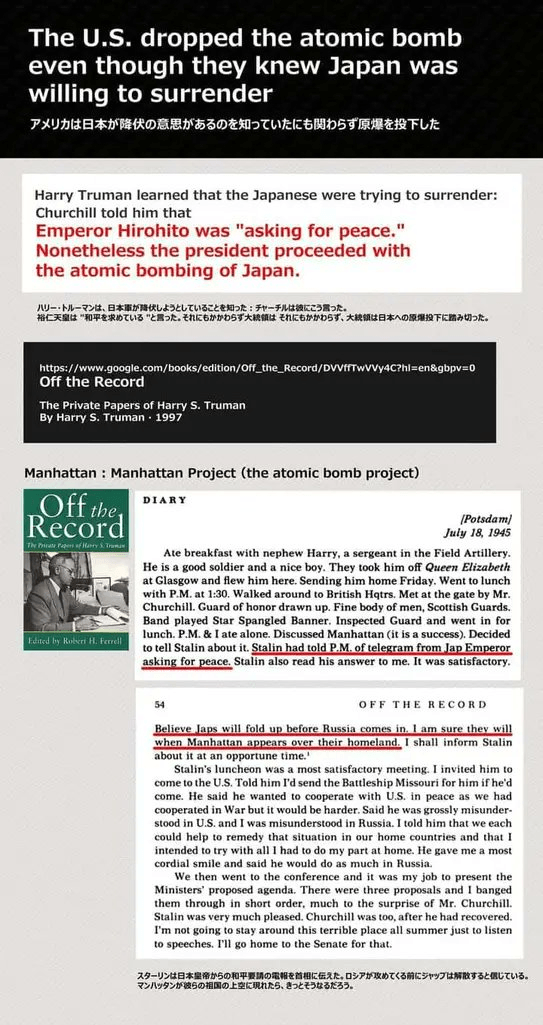
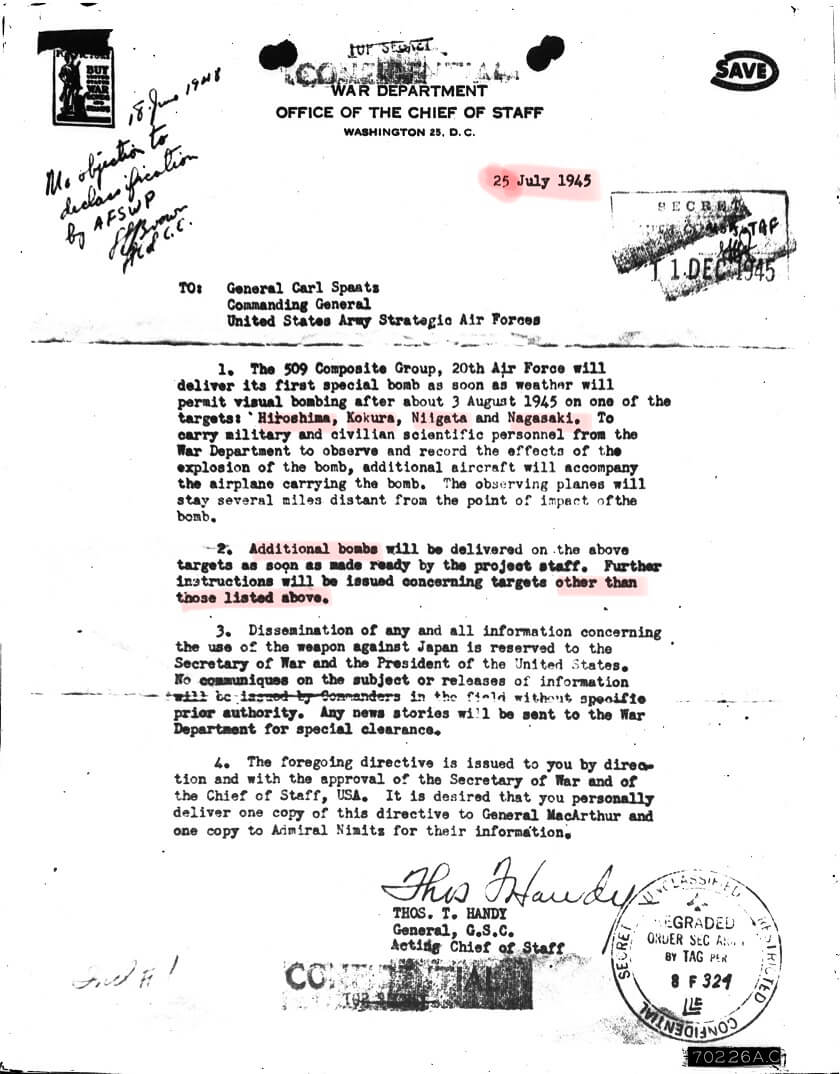
Indeed Truman ordered to drop atomic bombs in one of cities, Hiroshima, Kokura, Nigata and Nagasaki on July 25 one day before Potsdam declaration on Jul 26.
It means Truman already decided to drop atomic bombs or Japan had about 8 days time limit to respond since It says after “about after on August 3rd”.
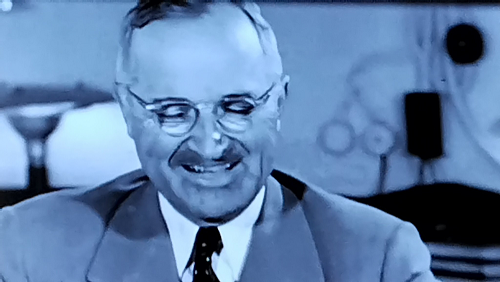
At the announcement of dropping atomic bombs, there was a moment he smiled between talking, which usually is cropped when you see these videos.
¶ When Americans came to realize Chiang Kai-shek/Soong Mei-ling were not worth fighting for
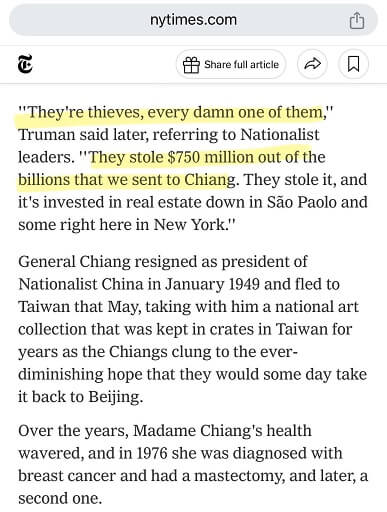
FDR chose wrong people as ally and enemy in Pacific war. Was fighting for Chiang kai-shek(coward)/Soong mei-ling(monster) worth it costing the lives of American youth and all other casualties in Asia? NO!!! After FDR's death, next democrat president Truman found out the true identity of Chiang kai-shek/Soong family who used their financial aid for a real estate in Sao Paolo and New York, and he called them THIEVES!! Chiang kai-shek was a dictator, not democratically chosen by ordinary Chinese people and Chiang kai-shek and Soong meiling were responsible for killing a million of Chinese with Yellow River Flood in 1938 while Soong meiling posted NYT the irrelevant article about what the Powers should be, as if she doesn’t care about the fact that she and her husband just killed massive Chinese people in a flood.
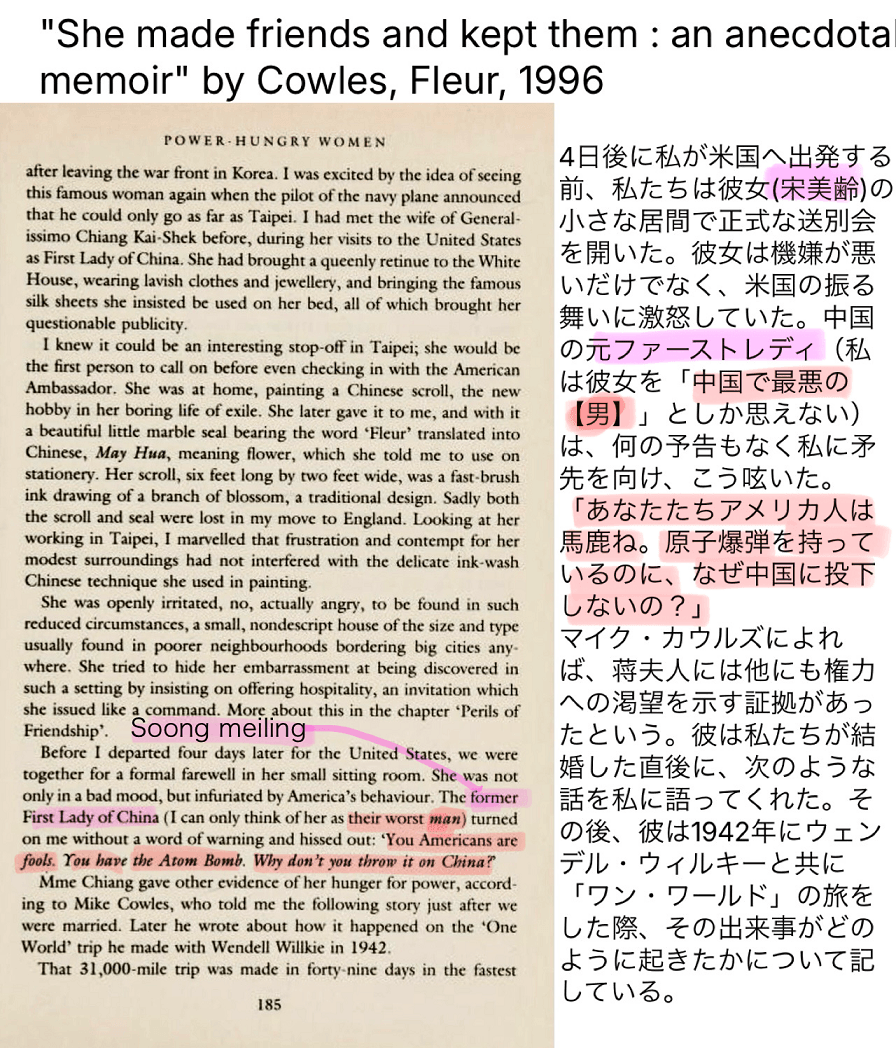
After WW2, Chiang kai-shek/Soong meiling were defeated by Mao, on December 10th in 1949 they escaped to Taiwan which was already modernized by Japanese, and committed 228 Incident killing Taiwanese.
Once again Soong meiling revealed her true identity. She criticized the US for not using atomic bomb against China to win a war against ccp. She doesn't care about ordinary Chinese people over herself. What she had been asking the US for is not a help for Chinese people but a help for herself.
¶ “Get rid of him”, Two US attempts to assassinate Chiang kai-shek
The US doesn’t know what the hell they are doing. They demanded Japan to support Chiang Kai-shek which brought a war against Japan. And now saying that get rid of him?? Totally clueless.
1st plot
Before the Cairo Conference, Stilwell had told Carl F. Eifler, the senior American intelligence officer in China, that to fight the war successfully there, "it would be necessary to get Chiang out of the way." Eifler determined that a botulinum toxin, which would have been undetectable in an autopsy, would be an effective weapon. But Stilwell changed his mind, and didn't.
2nd plot
During the Cairo Conference in November 1943, Roosevelt met privately with his senior commander in China, Maj. Gen. Joseph Stilwell. "Big boy," Stilwell said when he got back to China's wartime capital Chongqing, quoting Roosevelt to his chief of staff, Gen. Frank "Pinky" Dorn, "if you can't get along with Chiang and can't replace him, get rid of him once and for all. You know what I mean. Put in someone you can manage."
Stilwell, who made no secret of his contempt for Chiang, told Dorn to "cook up a workable scheme and await orders." Dorn did just that, devising a plan that would have been worthy of a mass-market thriller. Stilwell would take Chiang on a flight to Ramgarh in northeast India to inspect Chinese troops being trained there, as part of the effort to improve the Nationalists' backward army. The pilot would pretend to have engine trouble and order his crew and passengers to bail out. Chiang would be escorted to the door of the plane wearing a faulty parachute and told to jump. "I believe it would work," Stilwell told Dorn.
¶ Cost of FDR's decision and its outcome
The loss of lives of the US soldiers/civilians
The loss of lives of Japanese soldiers and civilians after air raid/atomic bombs in Hiroshima Nagasaki
The loss of lives of People in Asia
Execution of members of anti-communist Wang Jingwei Nanking government(better or worse Wang died from a wound by assassin sent by Chiang kai-shek before the end of WW2)
Manchus losing their fatherland, Manchuria (Mongolians were able to keep their land because it was Satellite state of Soviet who was war winner nation)
Spread of Communists in East Asia(and East Europe)
Korean war
Vietnam war
The birth of North Korea
The birth of CCP
¶ Change of heart: Hypocritical US policy switching Chiang kai-shek to Mao CCP
Henry Kissinger's Secret Trip (July 1971): Kissinger made a clandestine visit to Beijing, code-named "Operation Polo," to meet with Premier Zhou Enlai under Nixon administration.
(Video) CBS interviewed with Chiang kai-shek. The man who was not capable of anything on 2nd Sino-Japanese war but running away , and killing his soldiers and people. The US helped him, and the US demanded Japan to support him. Now he criticizes the US for stop helping him, by citing Chinese old saying “friends should be faithful to each other”. This is completely laughable what has he ever done for the US?
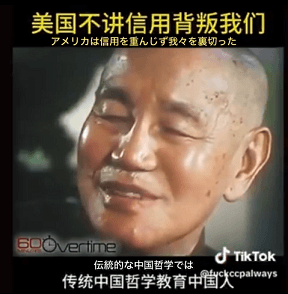
Japan was faithful to Wang Jingwei, refused FDR’s demand to deny him, and attacked the US until its bitter end. On the other hand the US, after Chiang kai-shek passed away in 1975, in 1979 Democrat president Carter officially terminated the relationship with Republic of China and switched to Mao People's Republic of China, completely forgetting that his democratic leader FDR once sent an ultimatum to Japan not to support any government other than Chiang’s Republic of China, which led to the attack on Pearl Harbor 38 years ago.