Related Important Links
|
結論 支那が最初に毒ガスを使ったのは、1929年11月、国民軍に対して。 毒ガスは、支那が1937年9月に先に日本軍に仕掛けてきた。日本は報復として1938年5月から使用。 違法のダムダム弾も、支那が1932年に日本軍に仕掛けてきた。同時に支那は、これらを日本がやったと世界に宣伝していた。 催涙ガスは、日本は1937年7月28日に使用許可が出たが使用せず。10月中旬から使用。 大東亜戦争では、イギリスが先に毒ガスを使用、その後、日本も報復として使用。 |
|
Conclusion First use of poison gas use by Chinese KMT is on November, 1929, against the Kuominchun rebels Chinese KMT was the first to use poison gas against Japanese on September, 1937. Japan began using it in retaliation starting in May 1938. Chinese KMT also used illegal dum-dum bullets against Japanese in 1932. At the same time, China was telling the world that Japan was responsible for these acts. Japan received authorization to use tear gas on July 28, 1937, but did not use it at that time. Its use began in mid-October. During the Greater East Asia War, Britain was the first to use poison gas; Japan subsequently used it in retaliation. |
1927/04/28
|
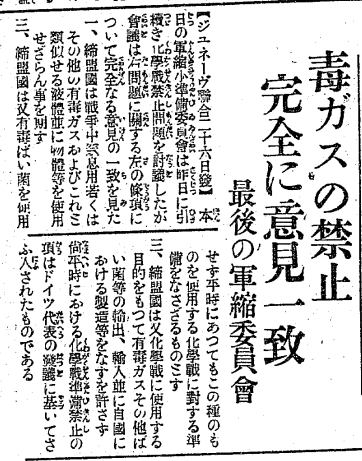
1927年(昭和2年)04月28日 東京 朝刊 3ページ , 2段 , 記事 毒ガスの禁止 完全に意見一致 最後の軍縮委員会 有毒ばい菌の使用も禁止 |
|
April 28, 1927 (Showa 2) Tokyo Morning Edition, Page 3, 2 columns, Article Ban on Poison Gas: Complete Consensus Reached at Final Disarmament Committee Meeting Use of Toxic Bacteria Also Banned |
 |
1929/11
|
The first KMT poison gas use confirmed here is November 1929, against Kuominchun rebels. TORTURED CHINA Hallett Abend 1930, page 192 Government. This charge brought from the German Legation to the German Consulate-General in Shanghai the following cable of official denial: With regard to rumors circulated in the Shansi press and in other Chinese and foreign papers about the alleged shipments of poison gas from Germany to General Chiang Kai-shih, the German Legation has received official confirmation from Berlin that the manufacture of poisonous gas is strictly forbidden in Germany, and any violators are punished with the utmost vigor of the law. But nevertheless it is an established fact that Nanking is not only experimenting with the use of poison gas, but that the Nanking forces even tried to use it in Honan in November, 1929, in the campaign against the Kuominchun rebels. The wind changed, however, and with disastrous results to the Nanking forces engaged. At the Lunghua Arsenal, at Shanghai, experiments are being made under the direction of German experts in the manufacture of poison gas bombs, and it is known that gas masks are being manufactured there on a large scale. |
|
|
1933/5/19
|
1933年 5月19日 以下の内容の要約 満鉄鉄道を襲う匪賊を追い払うのに、催涙ガスを使うのは警察的行為で、法律的には問題無い。しかし支那側は、毒ガスを購入したとの情報もあり、日本がガスを使えば、支那側が、毒ガスを使う口実に使うかもしれないので、情勢が安定するまで、催涙ガス使用を見合わせよ |
|
May 19, 1933 Summary of the following content The use of tear gas to drive off bandits attacking the South Manchuria Railway is a police action and is legally permissible. However, there is information that the Chinese side has purchased poison gas, and if Japan were to use tear gas, the Chinese side might use this as a pretext to use poison gas; therefore, the use of tear gas should be suspended until the situation stabilizes. |
|
|
¶ 1937 KMT China first used poison gas against Japan
Just as a biological warfare, the Kuomintang army used poison gas themselves while claiming to the world that Japan had done so.
1937/8/27
|
️1937年 8月27日 同盟旬報 毒ガス使用を誣ふ(しふ:嘘を宣伝すること) ワシントン【八・二七】日支紛争激化と共に支那側の宣伝は愈々(ますます)露骨を加えて来たが、二七日ワシントン支那大使館は、日本軍は南口付近の戦闘において毒ガスを使用したと発表した。 |
|
️August 27, 1937, Alliance Weekly False Allegations of Poison Gas Use Washington [August 27] As the Japan-China conflict intensifies, Chinese propaganda has become increasingly blatant; on the 27th, the Chinese Embassy in Washington announced that Japanese forces had used poison gas during the fighting near Nan Kou. |
|
|
1937/8/30
China Spreads Rumor That Japanese Army Used Poison Gas
|
1937年8月30日 情報委員会八・三〇 情報第九號 南口戦で毒瓦斯使用説 ー同盟特情**不発表ー モスクワ 二十九日 荻野同盟特派員発 タス通信社は二十九日、モスクワ駐在支那大使館はソヴエト外務人民元委員部に対し、日本軍が、去る二十四日より、南口付近に於いて、毒瓦斯を使用した旨通告したと発表した。 |
|
Information Committee August 30, Information No. 9 Allegations of Poison Gas Use in the Battle of Nankou南口 —Alliance Special Report **Not for Publication**— Moscow, the 29th—Reported by Ogino, Alliance Special Correspondent On the 29th, TASS reported that the Chinese Embassy in Moscow had notified the Soviet People’s Commissariat for Foreign Affairs that Japanese forces had used poison gas in the vicinity of Nankou 南口 since the 24th. |
|
|
1937/8/31
|
Chinese KMT propaganda , accusing Japan for the poison gas and bacteria attack, just like they did with a false accusation of Japanese use of Dum-Dum bullet in Shanghai Incident (1932). This Chinese way, they accused others then they did what they accused. This is the sign that Chinese was going to use the poison gas and bacteria attack, which they did. See also Chinese Biological warfare. 我方に対し 毒ガス、細菌使用等 頻りに悪性逆宣伝。実は支那側で使用の前触れ。 残忍な反面果然暴露。 【東京卅日(三十日)】日本軍の攻撃により、敗戦に次ぐ敗戦のために既に自暴自棄となってゐる南京政府(蒋介石)で、国内的には無辜の同胞を殺害の恐怖政治を執行すると共に、対外的には、日本軍が毒ガス及び細菌を使用してゐるという如き、途方もない悪性な逆宣伝を第三国人を目標として盛んに行ってゐるが、既に濟さん支那一派の逆宣伝に苦い経験を満喫してゐる。 我陸軍では、支那人が人道上許すべからず悪逆行為、例えば、毒ガス戦、細菌戦をなすに際しては、必ず先手をうって、日本が先づ始めたと宣伝して、然る後にこれを行うを常套手段としてゐる。過去の実例に鑑み、南京政府及び支那軍に対し、厳重警戒してゐる。 支那側が如何に悪性巧妙なる逆宣伝をなしてゐるか、例えば、第一次上海事変(1932)当時に、ダムダム弾を使用事件の如き、その一例で、支那側が国際連盟に日本軍のダムダム弾使用を提出したるころには、勿論、日本はこれを使用せず、逆に日本軍の負傷者が支軍のダムダム弾に依る残酷なる負傷を受けてをり、亦、日本軍が分捕った弾薬中にも多数のダムダム弾を発見したといふ実情であった。今回の毒ガス、及び、細菌の逆宣伝も、右のような意味に於いて、支那側が自らこれが使用を始めんとする前提と見られ、此の點と共に警戒を要するわけである。而も、支那軍が既に焼夷弾を上海方面で使用し居るは明かな事実で、八月十五日頃より使用したるものの如く、二十七日、わが碇泊艦艇を空襲する支那飛行機の使用爆弾は、幸い、全部不命中であったが、明らかに焼夷弾を混用してゐた。又、支那側の細菌戦企圖に就ては、支那軍風評の供述もあり、性質極めて残忍な反面を暴露してゐる。支那の軍隊が人道も正義もなく、ただ破壊と残虐をほしいままにして、慊らざる(あきたらざる)であろう事は、容易に考へられるところである。 |
|
Burajiru Jihō (São Paulo), 1937.08.31 (Chinese KMT) Directed at us Frequent malicious disinformation campaigns alleging the use of poison gas and bacteria. In reality, these are precursors to their own use by the Chinese side. Their cruelty has, as expected, been exposed. [Tokyo, the 30th] The Nanjing government(Chiang kai-shek), already in a state of despair due to one defeat after another at the hands of the Japanese Army, is carrying out a reign of terror domestically by killing innocent compatriots. At the same time, it is vigorously conducting outrageous and malicious propaganda campaigns targeting third-country nationals, claiming that the Japanese Army is using poison gas and bacteria. However, we have already had our fill of bitter experience with the counter-propaganda of Mr. Ji and his faction in China. It is a standard tactic of the Chinese that, whenever they commit atrocities that are unacceptable on humanitarian grounds—such as poison gas warfare or biological warfare—they invariably take the initiative by first spreading the claim that Japan started it, and only then carry out the act. In light of past examples, we are maintaining strict vigilance against the Nanjing government and the Chinese military. Just how malicious and cunning the Chinese side’s counter-propaganda is can be seen, for example, in the First Shanghai Incident (1932)—such as the incident involving the use of dum-dum bullets—is a case in point. By the time the Chinese side submitted a complaint to the League of Nations alleging that the Japanese military had used dum-dum bullets, Japan had, of course, not used them; on the contrary, the reality was that Japanese soldiers had suffered cruel injuries inflicted by dum-dum bullets fired by Chinese forces, and a large number of dum-dum bullets had also been discovered among the ammunition captured by the Japanese military. The recent propaganda attacks (against Japanese) regarding poison gas and biological weapons can also be viewed, in the same vein, as an indication that the Chinese side intends to begin using such weapons itself; this is another reason why we must remain vigilant. Furthermore, it is a clear fact that the Chinese army has already been using incendiary bombs in the Shanghai area; as was the case with their use beginning around August 15, the bombs dropped by Chinese aircraft during an air raid on our anchored ships on the 27th—though fortunately none hit their targets—clearly included incendiary bombs. Furthermore, regarding the Chinese side’s intentions to wage biological warfare, there are reports from Chinese military sources that expose an extremely cruel side of their nature. It is easy to surmise that the Chinese military, devoid of humanity or justice, will continue to indulge in destruction and cruelty without restraint. |
¶ 1937/9 Chinese KMT first poison gas use against Japanese
First Japanese report about Chinese KMT use of poison gas attack against Japan on September 1937
1937/9/17-18
|
1937年9月21日 朝日新聞 東京/朝刊 6頁 6段 記事 時局豆読本 またまた違法 クサミガス ▽…一たまりもない退却の置土産に井戸の中に毒物を投入したり、ダムダム弾を使ったり、国際法も何のその、それこそ敗戦支那の面目躍如たるものをみせてゐる敵軍は、十七八日両日の上海戦北塘口附近の激戦で、嚔性(くしゃみせい)の毒ガスを散布して、又々国際法規を無視した挙に出た。 ▽…放射されたと見る間に「異様の臭気と黒黄色の煙幕が立ちこめ」たと報道されてゐますが、この嚔性(くしゃみせい)毒ガスは、その名の示す如く、鼻でかぐとたまらなく、嚔(くしゃみ)を起こさせるもので、ヂフェニール・クロールアルシンといふのと、ヂフェニール・シャンアルシンといふのと、アダムサイトというのの三種が主なものです。 ▽…フェニール・シャンアルシンといふのは、常温では個体で、韮(ニラ)みたいな臭気があり、空気中、一万七千分の一の濃度で、一分間に生命を奪ひ、また、一千万七千分の一の濃度で、鼻、咽喉、肺等を焼くように刺激した嚔(くしゃみ)を出させ、あるひは、激烈な嘔吐を催させます。 ▽…ヂフェニール・シャンアルシンも、これと稍(やや)同じであるが、その程度はこれよりも尚強烈で、アダムサイトは、その毒性は前二者の中位であります。 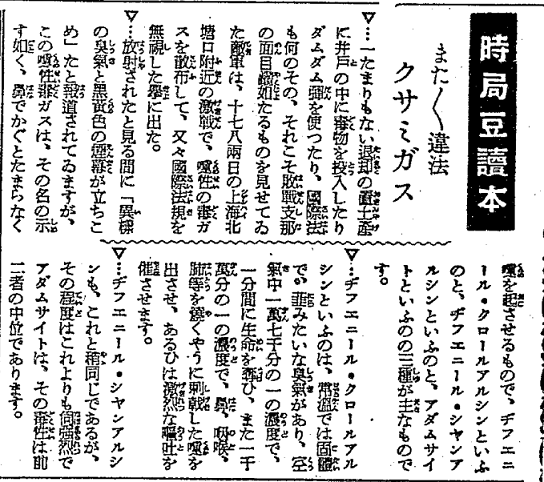 |
|
September 21, 1937, Asahi Shimbun, Tokyo / Morning Edition, Page 6, Column 6, Article: “A Brief Guide to Current Affairs” Illegal Once Again: Smelly Gas ▽…As a parting gift during their hopeless retreat, the enemy forces—who have shown no regard for international law by dumping poison into wells and using dum-dum bullets, thereby truly demonstrating the true nature of a defeated China—once again disregarded international law by dispersing irritant gas during the fierce battles near Beitangkou(北塘口) in the Shanghai sector on the 17th and 18th(1937). ▽…Reports indicate that “a strange odor and a blackish-yellow smoke screen filled the air” almost immediately after it was released; this sneezing-inducing (sneezing-inducing) poison gas, as its name suggests, is unbearable to inhale through the nose and causes sneezing; the three main types are diphenyl chloroarsine, diphenyl xantharsine, and adamsite. ▽…Diphenylchloroarsine is a solid at room temperature and has an odor similar to that of Chinese chives; at a concentration of 1/17,000 in the air, it can kill within one minute, and at a concentration of 1/10,007, it causes a burning sensation in the nose, throat, and lungs, triggering sneezing or, in some cases, violent vomiting. ▽…Diphenylshanarsin is somewhat similar to this, but its effects are even more intense; as for adamsite, its toxicity falls between the other two. |
|
東京朝日新聞/朝刊 2頁 11段 記事 1937年9月24日 少し読みにくいが、ニ十ニ日 とある。 卑劣、支那軍遂に毒ガス彈發射 皇軍將士咽喉を痛む 【場行鎭にて上村特派員二十三日發】 劉行鎭方面の支那軍は皇軍の猛撃に堪りかねてか、二十二日 (1937) の夜襲において「ホスゲン・ガス」らしき毒ガスを使用し、卑劣にも我が將士を傷つけんとしたことが明らかとなった |
|
Tokyo Asahi Shimbun / Morning Edition, Page 2, Column 11, Article September 24, 1937 Despicable: Chinese Forces Finally Fire Poison Gas Shells; Imperial Army Soldiers Suffer Sore Throats [Sent from Ba Xingzhen by Special Correspondent Uemura on the 23rd] It has become clear that the Chinese forces in the Liu Xingzhen sector, perhaps unable to withstand the Imperial Army’s fierce assault, used what appears to be “phosgene gas” during a night raid on the 22nd (1937) in a despicable attempt to injure our officers and soldiers. Specifically, approximately fifty blank high-explosive shells fell that night, but at that time, the sound and whine of the incoming projectiles differed significantly from those of ordinary high-explosive shells or fragmentation shells; since numerous soldiers near the distant impact sites invariably suffered throat injuries, our side immediately recognized them as a type of poison gas shell and responded by simultaneously activating gas masks. As a result of detailed observation and investigation of the fragments from the fired shells, we have generally concluded that it was “phosgene gas.” The unit immediately sent all relevant data to the rear, and a rigorous scientific investigation is currently underway. |
|
|
This article also says September 22nd in 1937.
|
敵不法、毒ガス弾使用 (上海 二十三日 同盟) 連日にわたる我猛攻に耐えかね、敵は二十二日夜 (1937) 遂に、国際公約上厳禁されている毒ガス弾を使用する暴挙に出たので、我が軍将士は極度に憤慨している。 |
|
Enemy’s Illegal Use of Poison Gas Shells (Shanghai, the 23rd, Alliance) Unable to withstand our relentless attacks over several consecutive days, the enemy finally resorted to the outrageous act of using poison gas shells—which are strictly prohibited under international conventions—on the night of the 22nd (1937) , causing extreme outrage among our military officers and soldiers. |
|
|
1937/10/7
|
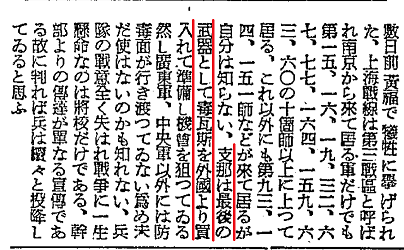
10月07日 朝日新聞 支那は最後の武器として毒瓦斯を外国より買い入れて準備し機会を狙っている。 |
|
October 7, Asahi Shimbun China has purchased poison gas from foreign countries as a last resort, stockpiled it, and is biding its time for the right opportunity. |
 |
1937/10/15
|
[件名番号: 035] 外国無線局発信電報 支那が、国際連盟に、日本軍が、1937年10月3日から、 ダムダム弾 や毒ガス を使用してると宣伝 [Case No.: 035] Telegram Sent by a Foreign Radio Station China has claimed to the League of Nations that Japanese forces have been using dum-dum bullets and poison gas since October 3, 1937. |
1937/10/15
|
1937年10月17日 東京/夕刊 1頁 9段 支那のデマを反駁 |
1937/10/16
|
1937年10月17日 東京/朝刊 2頁 11段 記事 果然! 毒ガス弾 敵陣地で発見 逆宣伝の本体暴露/赤十字代表に説明 October 17, 1937, Tokyo / Morning Edition, Page 2, Column 11, Article Just as Expected! Poison Gas Shells Discovered in Enemy Positions—The True Nature of Propaganda Exposed / Explanation Given to Red Cross Representative 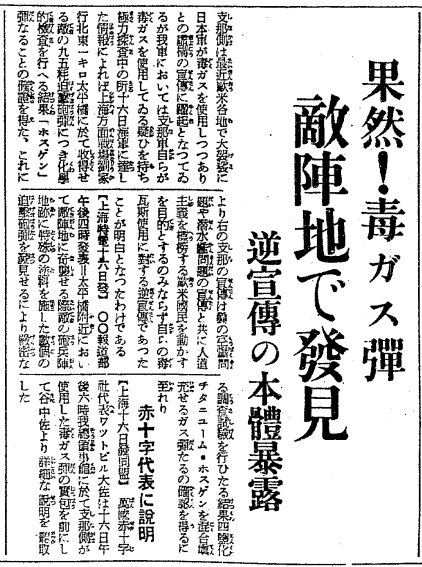 |
1937/10/16
|
A poison gas factory of the Kuomintang Army investigated by the Japanese military. They received technical guidance from Chinese nationals who had studied in the United States, as well as from American and German engineers. |
|
極秘 陸軍省受領 陸支密受第三七三七号 方軍参二密第四四号 支那側毒瓦斯等製造工場ノ件通牒 昭和十二年十月二十三日 北支方面軍参謀長 岡部直三郎 陸軍次官 梅津美冶郎殿 昭和十二年十月二十二日方参二電第四〇六号ニ依ル首題ノ件別冊写ノ通送付ス 壱部軍事課保管 極秘 |
|
Matter Concerning Factories in China Producing Poison Gas, etc. Top Secret; Received by the Army Ministry; Army-China Secret No. 3737; Fang Army Staff Office No. 2 Secret No. 44 Circular Regarding Factories Producing Poison Gas and Other Substances on the Chinese Side October 23, Shōwa 12. To: Vice Minister of the Army, Miyajiro Umezu, from Naozaburō Okabe, Chief of Staff, North China Area Army Pursuant to Field Staff Section 2 Telegram No. 406 dated October 22, Shōwa 12, a copy of the separate volume regarding the subject matter is hereby forwarded as attached. One copy to be retained by the Military Affairs Section. Top Secret |
|
方軍一直一野化報第七号 昭和十二年十月十六日 第一野戦化学実験部情報第四号 河南省鞏県兵工分廠ニ就テ 第一 概要 一、隴海線孝儀駅付近ニ在ル軍政部鞏県兵工分廠ニ於テハ毒瓦斯、瓦斯弾類及防毒面ヲ製造セリ 二、製造毒瓦斯ノ主ナルモノハ塩化「アセトフエノン」「アダムサイト」及「イペリット」ニシテ此等三種ノ製造工場ノ他塩素及硫酸工場各一ヲ有シアリ 「イペリット」ハ昨年五月ゴ迄ニ、約三十五噸製造セシモノノ如シ 瓦斯弾類製造ノ為ニハ塩化「アセトフエノン」弾、及「イペリット」弾、塡〇工場各一ヲ有シアリ 三、上記毒瓦斯ノ製造、及、瓦斯弾ノ製造ハ、始メ米国技師ノ指導スルトコロナリシモ、近年ハ、専ラ、支那人技師之ニ當リアリ |
|
Army General Headquarters Field Chemical Report No. 7, October 16, Showa 12; First Field Chemical Experiment Division Intelligence Report No. 4: Regarding the Gongxian Military Engineering Branch Plant in Henan Province I. Overview 1. The Gongxian Military Engineering Branch Plant of the Ministry of Military Affairs, located near Xiaoyi Station on the Longhai Line, manufactured poison gas, gas shells, and gas masks. 2. The primary toxic gases manufactured were “acetophenone” chloride, “adamsite,” and “mustard gas”; in addition to the production facilities for these three types, there was one chlorine plant and one sulfuric acid plant. It appears that approximately 35 metric tons of “mustard gas” had been produced by May of last year. For the manufacture of gas shells, there was one filling plant each for “acetophenone” chloride shells and “mustard gas” shells. 3. The production of the aforementioned poison gases and gas shells was initially said to have been carried out under the guidance of American engineers; however, in recent years, this work has been handled exclusively by Chinese engineers. |
|
之ニ當リアリ 志那人技師ノ主ナルモノ次ノ如シ 黄朝輝 広東省人、華僑ニシテ、滞米十三年ニ及フ。昭和八年「コロンビヤ」大学科学工業科ヲ卒業セリ 蒋國華 佛國ニ留学セシ者ニシテ、曾テ(かつて)、師範大学ノ教職ニ在リタリ 馬紹援 北京精華大学化学科ノ特約講師ヲ兼任ス 張震且 北京大学化学科出身、 等 三、防毒面製造工場ハ、獨國(ドイツ)技師 Meister ナル者之カ指導ニ當レリ、工場ノ各種機械及、工具類ハ、大部分国産品ナルヲ以テ、設備費ハ、僅カニ約三十五万圓ヲ、要シタルニ過キス、近年、土耳古國(トルコ)ト同規模ノ工場ヲ、獨國ヨリ購入セシ、ニ百五十万元以上ヲ要セリト謂フ。 四、昨年十月上旬、兵工分廠技師、馬紹援ノ書翰ニ依レハ、同廠ハ、拡張中ナルカ如シ。 五、支那著名ノ化学者タル北京大学化学科主任教授、會昭掄ハ昨年七月四日 |
|
This is indeed the case. The principal Chinese engineers are as follows: Huang Chaohui(黄朝輝): A native of Guangdong Province and an overseas Chinese who has resided in the United States for thirteen years. He graduated from the Department of Science and Industry at Columbia University in Showa 8. Jiang Guohua(蒋國華): A former student in France who previously held a teaching position at a normal university Ma Shaoyuan(馬紹援): Concurrently serves as a special lecturer in the Department of Chemistry at Beijing Jinghua University Zhang Zhenqie(張震且): A graduate of the Department of Chemistry at Peking University, etc. 3. The gas mask manufacturing plant was established under the guidance of a German engineer named Meister. Since most of the plant’s machinery and tools were domestically produced, the equipment costs amounted to no more than approximately 350,000 yen. In recent years, a plant of the same scale as Turkey was purchased, from Germany reportedly cost over 2.5 million yuan. 4. According to a letter from Ma Shaoyuan, an engineer at the Military Engineering Branch Factory, dated early October of last year, it appears that the factory is currently undergoing expansion. 5. Hui Zhaolun, a renowned Chinese chemist and Chair of the Department of Chemistry at Peking University, on July 4 of last year |
1937/10/17
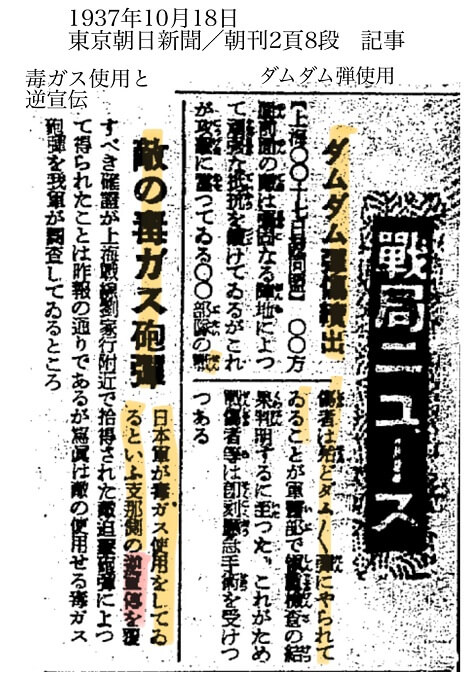 1937年10月18日 東京/朝刊 2頁 8段 戦局ニュース ダムダム弾傷続出 【上海〇〇十七日発 同盟】〇〇方面前面の敵は強固なる陣地によって頑強な抵抗を続けているが、これが攻撃に当たってゐる〇〇部隊の戦傷者は、殆ど、ダムダム弾にやられてゐることが軍医部で慎重検査の結果、判明するに至った。これがため戦傷者等は、即刻手術を受けつつある。 敵の毒ガス砲弾 日本軍が毒ガス使用をしてゐるという支那側の逆宣伝を覆すべき確証が、上海戦、劉家行附近で拾得された。敵迫撃砲弾によって得られたことは昨報の通りであるが、写真は敵の使用せる毒ガス砲弾を我軍が調査してゐるところ |
|
October 18, 1937, Tokyo / Morning Edition, Page 2, Column 8, War News A Series of Dam-Dam Bullet Wounds [Shanghai, the 17th—Dōmei] While enemy forces on the front lines of the 〇〇 Sector continue to offer stubborn resistance from fortified positions, careful examinations by the Medical Corps have revealed that nearly all combat casualties among the 〇〇 Unit currently under attack have been caused by dum-dum bullets. As a result, the wounded are undergoing immediate surgery. Enemy Poison Gas Shells Conclusive evidence refuting Chinese propaganda claims that the Japanese Army is using poison gas was recovered near Liujiaying (劉家行) during the Battle of Shanghai. As previously reported, this evidence was obtained from enemy mortar shells; the photograph shows our troops examining the poison gas shells used by the enemy. |
1937/10/19
|
Japanese military document informing Chinese KMT propaganda accusation of the use of poison gas against Japan at League of Nations. 第四三頁 陸軍省受領 陸支密@三六六六号 支@第二〇五 支那側ノ瓦斯弾使用宣伝ニ関スル書類送付ノ件 昭和十二年十月十九日 中華民国在勤帝国大使館附武官 原田熊吉 陸軍省副官 櫛淵@一殿 首題ノ件ニ関シ別冊(五部)ノ通リ送付ス 追而支那側ノ@監ニ提訴セル日本軍ノ毒瓦斯使用 ノ内容(上海領事@通報)参考ノ為添付ス @部保管(@@) 二部保管(@@@) 支那側ノ連盟ニ提訴セル日本軍ノ毒瓦斯 使用ノ内容 患者ハ、着明ヲ伴フ結膜炎ノ著名ナル徴候ヲ呈ス。彼等ハ〇・二糎ヨ リ五糎マテノ直径ヲ有スル「フリクテナエ」ニ蓋ハレタリ。ソノ中若 干ハ既ニ乾燥シハシメタレト、他ノモノハ第二次伝染ト化膿ノ徴候ヲ 示ス。患者ハ銅色ナリ。但シ或モノハ黒ク変色シ居レリ。持久的 |
1937/10/24
|
1937年10月24日 東京/朝刊 2頁 11段 記事 敵、毒ガス弾製造 毒ガス工場 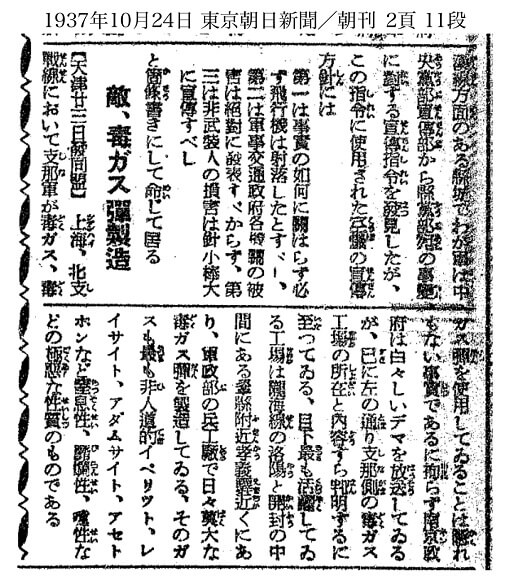 |
1937/11/02
|
敵毒ガス弾発射1937年11月3日 東京/朝刊 2頁 11段 記事 支那軍はすでに数次に亘りホスゲン窒息性毒ガスを発射... 田上部隊前面にさく裂した毒ガス弾は猛毒性を有し ....馬〇頭が忽ち窒息戦死した。 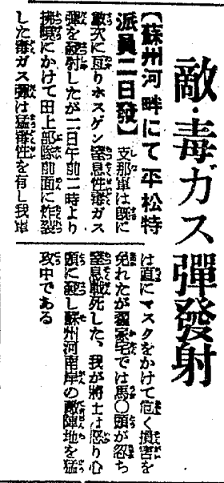 |
1937/11/24
|
1937年11月25日 東京/朝刊 3頁 4段 記事 毒ガス製造の鞏県兵工廠粉砕 陸軍機・隴海線を空襲 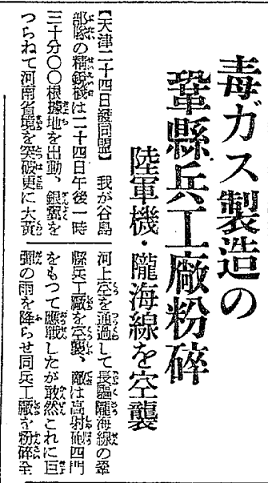 |
1937/12/10
|
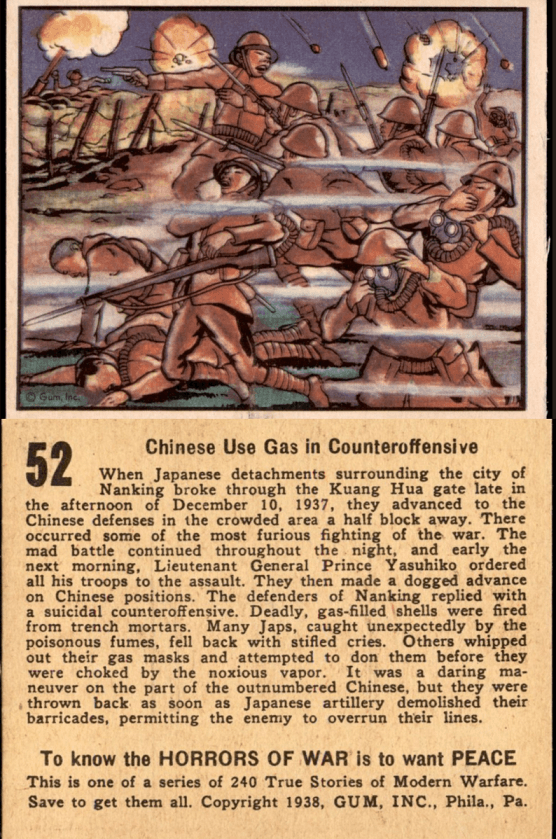
Gum Inc card. Chinese KMT at the battle of Nanking, used a poison gas 1937/12/10. |
 |
1937/12/10
| Interestingly, you can find the poison gas attack by KMT at Nanking in Japanese newspapers as well on the same day, and same phrase “counter attack” by Chinese. Were journalists sharing articles?? |
|
朝日新聞 1937年12月12日 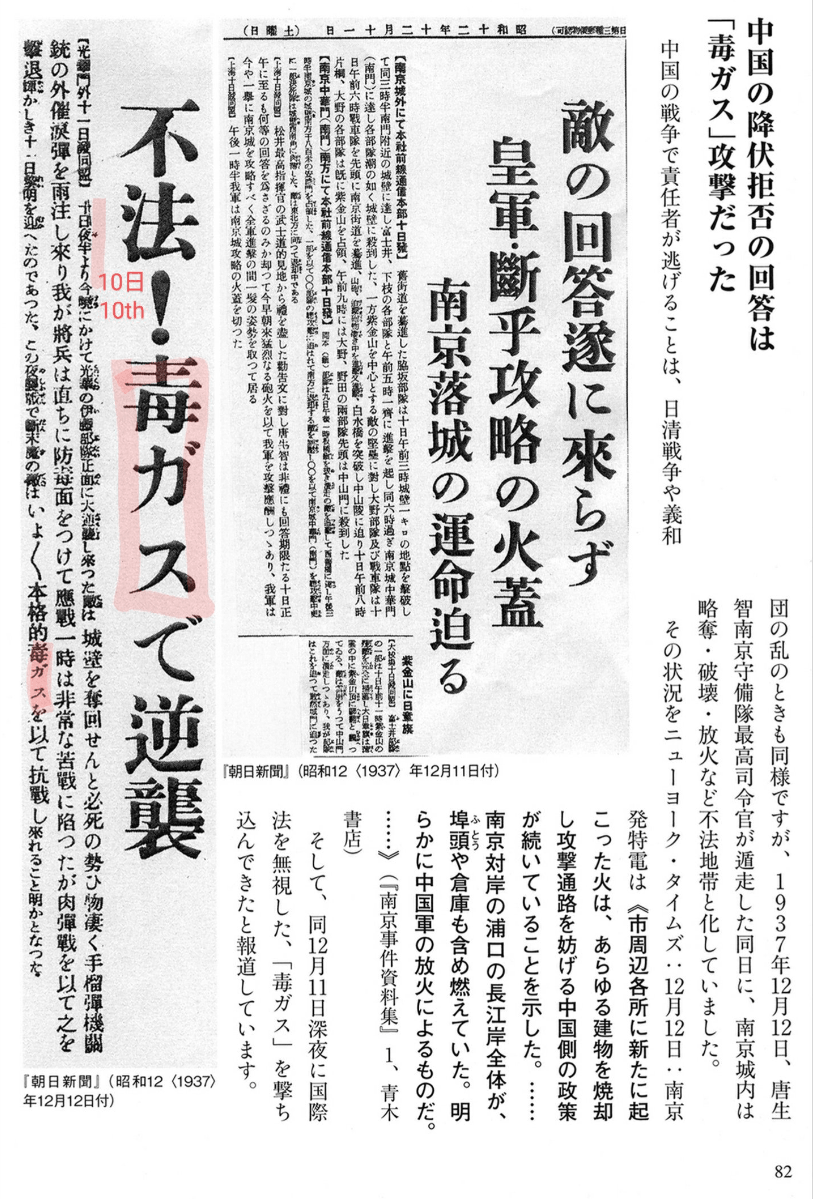
新世界朝日新聞 1937年12月12日 Shin Sekai Asahi Shinbun (San Francisco, CA), 1937.12.12 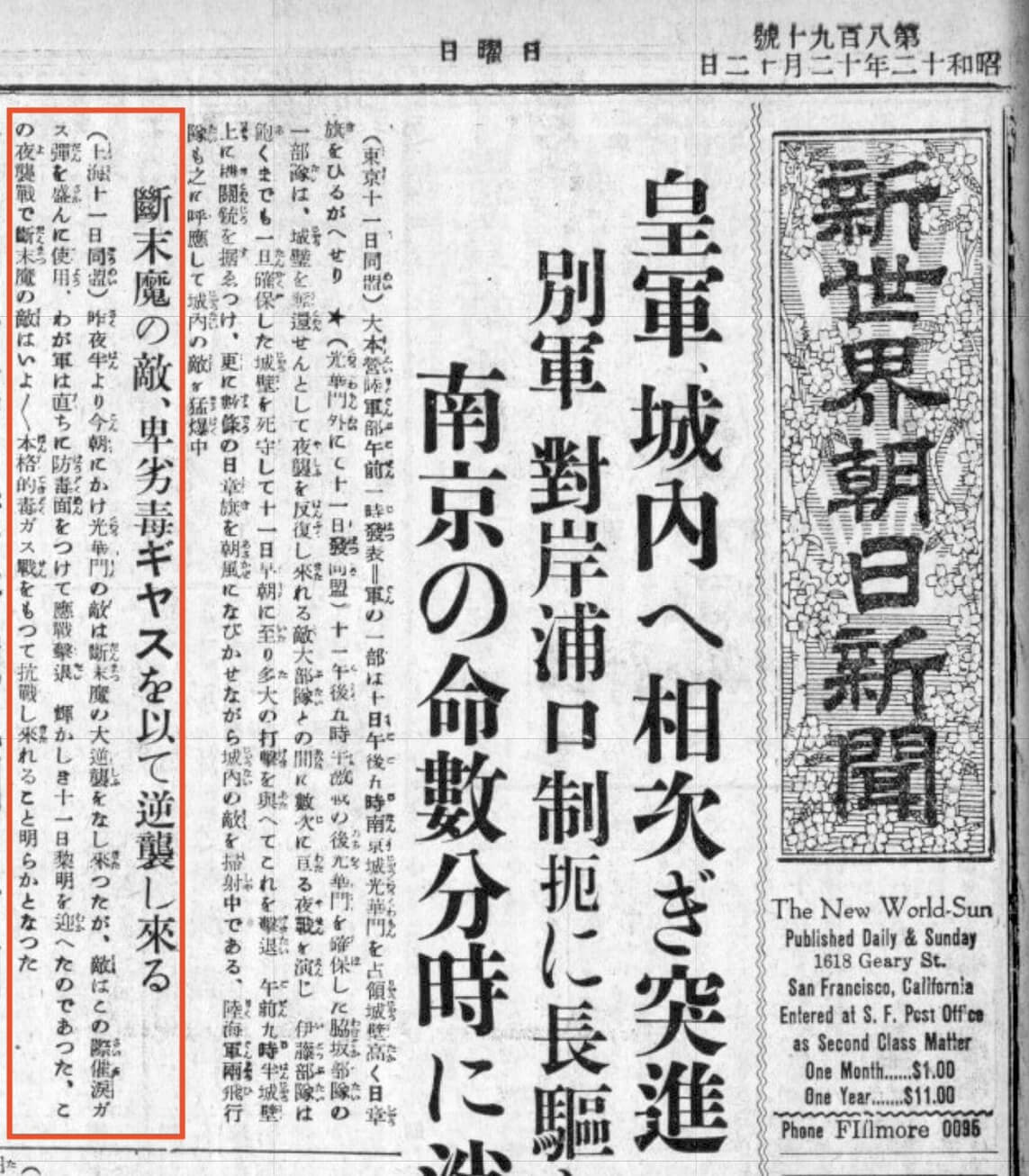
|
1938/07/20
|
敵イペリット瓦斯使用 1938年7月20日 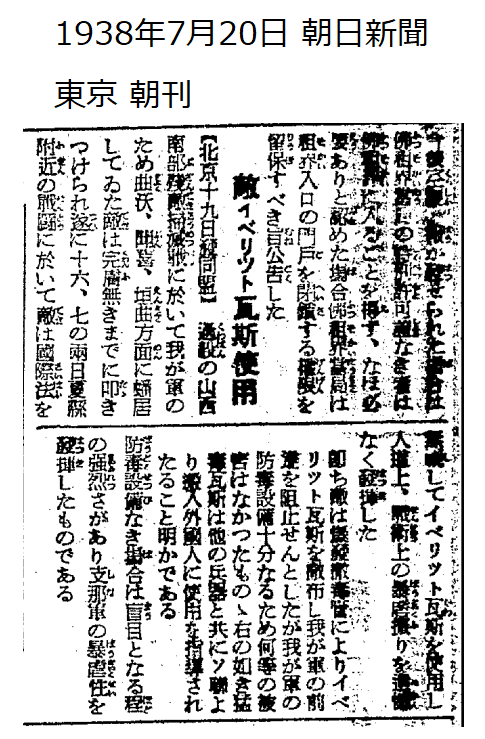 東京 朝日新聞 朝刊 2頁 9段 記事
|
¶ Japanese Retaliatory Poison Gas Attack (After Chinese KMT used) in 1939
|
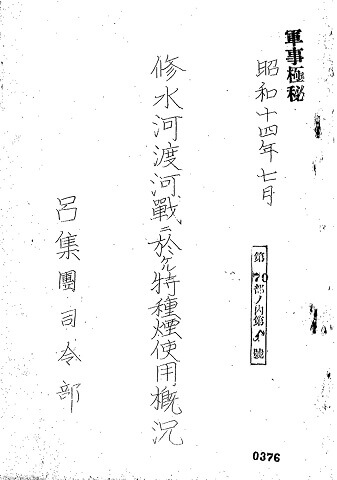
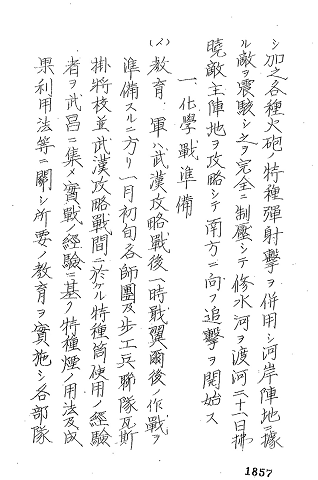
History of Japanese poison gas at a war The Chief of the General Staff had authorized the use of tear gas. The 10th Division, under the command of the North China Area Army, had been using tear gas since mid-October 1937. Furthermore, in April 1938 during the Battle of Xuzhou, the Chief of the General Staff authorized the North China Area Army and the garrison units to use red canisters and red shells (emetic gas), and from the following May (1938) onward, they were actually deployed. In these operations, field gas units were attached to infantry units, and a tactic was employed in which infantry would launch an assault to secure the area after the emetic gas had been released. |
1939/07
 |
 |
¶ British Poison Gas Attack and Japanese retaliatory attack
|
For the record, British attacked Poison Gas first against Japan during World War 2. |
|
1942年1月26日 満洲日日新聞 The Manshu Nichi-nichi Shimbun (大連/瀋陽) 血迷ふ 敗残英軍め 卑怯、毒ガスを使用 マレー戦線 皇軍怯まず猛攻 January 26, 1942 The Manshu Nichi-nichi Shimbun (Dalian/Shenyang) In a fit of madness, the defeated British forces—cowards—used poison gas on the Malaya Front; the Imperial Army, undaunted, launched a fierce counterattack. |
|
From March 11 to June 10, 1942, 11 “Chibi (ちび弾)”” bombs were used against British. The “Chibi bomb was a chemical weapon developed by Japan and consisted of a ceramic container filled with cyanide, designed to be carried by infantry. First Demobilization Bureau, Burma Campaign Records, Appendix 4: List of Major Ammunition Expenditures by the 15th Army—Central and Northern Burma Campaign |