¶ Chronological order
1937/08/11
 |
|
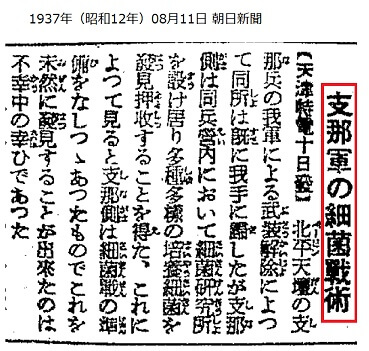
1937年 8月11日 朝日新聞 支那軍の細菌戦術 【天津特電十日発】北平天壇の支那兵の我が軍による武装解除によって同所は既に我手に帰したが、支那側は同兵営内において細菌研究所を設け居り、多種多様の培養細菌を発見押収することを得た、これによって見ると支那側は細菌戦の準備をなしつつあったものでこれを未然に発見することができたのは不幸中の幸いであった。 |
|
August 11, 1937, Asahi Shimbun Chinese Army’s Biological Warfare Tactics [Special Dispatch from Tianjin, August 10] Although the area around the Temple of Heaven in Beiping has already fallen into our hands following the disarmament of Chinese troops by our forces, the Chinese had established a bacteriological research laboratory within the barracks. We were able to discover and seize a wide variety of cultured bacteria. This indicates that the Chinese were preparing for biological warfare, and the fact that we were able to uncover this in advance was a blessing in disguise. |
1938/08/13
 |
|
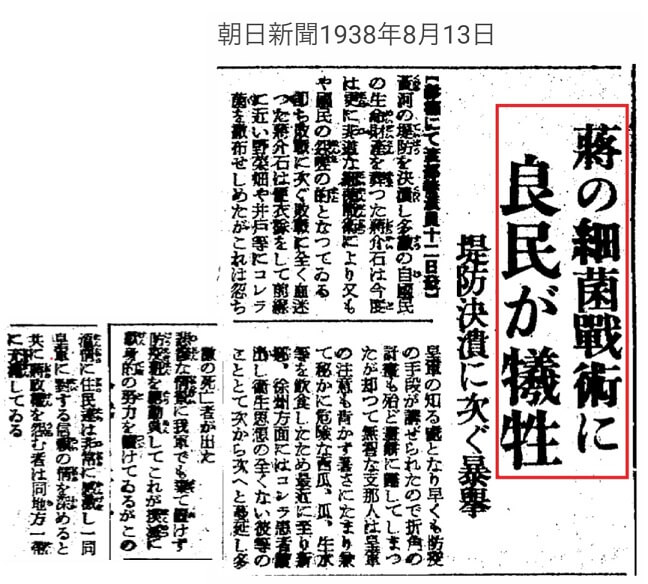
朝日新聞1938年8月13日 蒋の細菌戦術に良民が犠牲 堤防決潰に次ぐ暴挙 【十二日発】黄河の堤防を決潰し、多数の自国民の生命財産を葬った蒋介石は今度は更に「非道な細菌戦術」により又もや国民の怨嗟の的となっている。即ち、敗戦に次ぐ敗戦によりまったく血迷った蒋介石は便衣兵をして、前線に近い野菜畑や井戸等にコレラ菌を散布せめたが、これは忽ち皇軍の知る所となり、早くも防疫の手段が講ぜられたので、折角の計量も殆ど*****しまったが、却って無智な志那人は皇軍の注意も*かず、暑さにたまり兼ねて、秘かに危険な西瓜、瓜、生水等を飲食したため、最近に至り、新*、徐州方面にはコレラ患者発生し、衛生思想の全くない彼等のこととて、次から次へと蔓延し、多数の死亡者が出た。悲惨な情景に我軍でも棄てて置けず、防疫班を総動員して、これが撲滅に献身的の努力を続けてゐるが、この温情に住民達は非常に感激し一同皇軍に対する信頼の情を深めると共に蒋政権を怨むものは同地方一帯に充満している。 |
|
Asahi Shimbun, August 13, 1938 Innocent Civilians Fall Victim to Chiang’s Bacterial Warfare Tactics: Another Atrocity Following the Breaching of the Dikes [Dispatched on the 12th] Chiang Kai-shek, who breached the Yellow River dikes and buried the lives and property of countless of his own people, has once again become the target of public outrage through his “barbaric bacterial warfare tactics.” Namely, having completely lost his mind due to defeat after defeat, Chiang Kai-shek ordered soldiers in civilian clothes to spread cholera bacteria in vegetable fields and wells near the front lines. However, this immediately came to the attention of the Imperial Army, and preventive measures were taken early on, so his carefully laid plans were almost entirely thwarted , but the ignorant Chinese, paying no heed to the Imperial Army’s warnings and unable to bear the heat, secretly consumed dangerous watermelons, melons, and raw water. Consequently, cholera patients have recently emerged in the Xin* and Xuzhou areas. Since they have absolutely no concept of hygiene, the disease has spread rapidly, resulting in numerous deaths. Faced with this tragic situation, our army could not stand idly by. We have mobilized our entire epidemic prevention unit and are devoting ourselves to eradicating the disease. The residents are deeply moved by this compassion; while their trust in the Imperial Army has grown, resentment toward the Chiang regime now pervades the entire region. |
1938/08/29
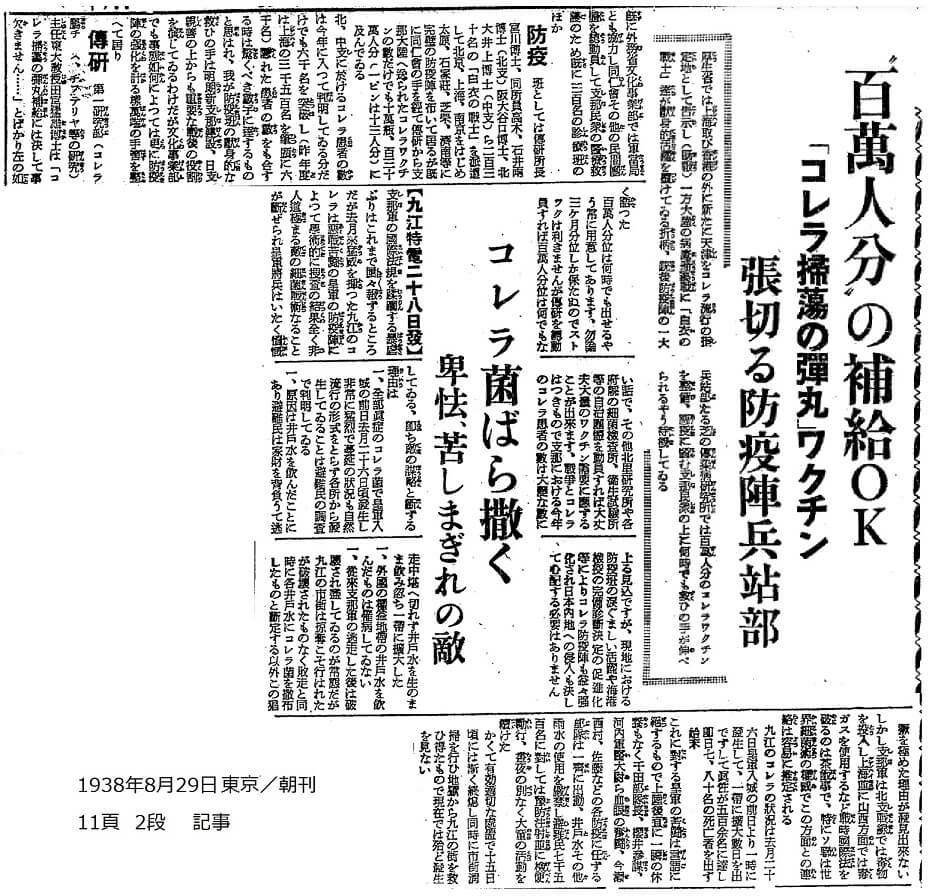 |
| 1938年8月29日 東京/朝刊 11頁 2段 |
1938/09/22
 |
|
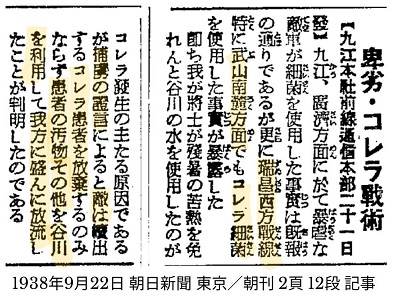
1938年9月22日 朝日新聞 東京/朝刊2頁 12段 卑劣・コレラ戦術 【九江本社前線通信本部二十一日発】九江、廣濟方面に於いて暴虐な敵軍が細菌を使用した事実は既報の通りであるが、更に瑞昌西方戦線、特に武山南麓方面でもコレラ細菌を使用した事実が暴露した。即ち我が将士が残暑の苦熱を免れんと谷川の水を使用したのがコレラ発生の主たる原因であるが、捕虜の証言によると、敵は続出するコレラ患者を放棄するのみならず患者の汚物その他を谷川を利用して我方に盛んに放流してたことが判明したのである。 |
|
September 22, 1938, Asahi Shimbun, Tokyo/Morning Edition, Page 2, Column 12 Despicable Cholera Tactics [From the Frontline Communications Headquarters at Jiujiang Headquarters, sent on the 21st] As previously reported, the brutal enemy forces have used bacteria in the Jiujiang and Guangji areas; however, it has now been revealed that they have also used cholera bacteria on the western front near Ruichang, particularly in the area south of Mount Wushan. Specifically, the primary cause of the cholera outbreak was that our soldiers used water from mountain streams to escape the sweltering heat of late summer. However, according to testimony from captured enemy soldiers, it has been revealed that the enemy not only abandoned the numerous cholera patients but also actively discharged the patients’ excrement and other waste into the streams, directing it toward our side. |
1938/09/25
 |
|
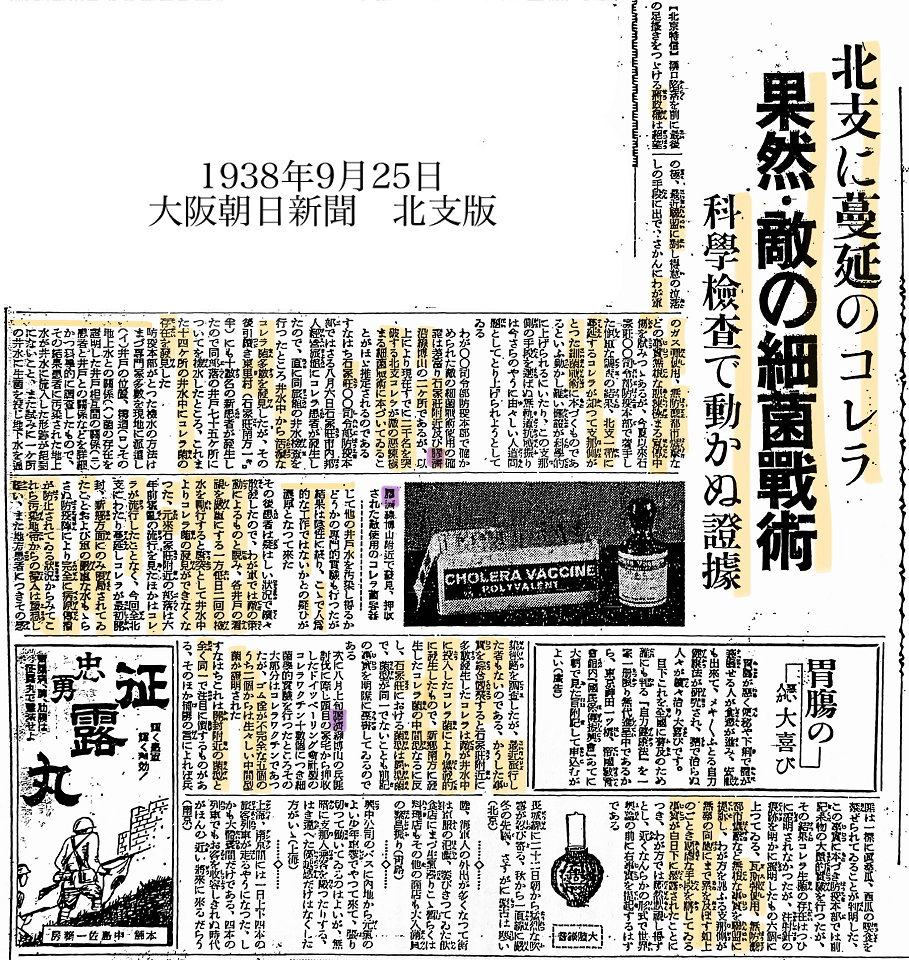
北支に蔓延のコレラ 果然・敵の細菌戦術 科学検査で動かぬ證據(証拠) 【北京特信】漢口陥落を前に最後の足掻きをつづける蒋介石政権は、絶望の極、細菌連盟対し、得意の泣き落としの手段に出て、さかんにわが軍のガス弾使用、無防備都市爆撃などの事実無根な悪辣極まる宣伝中傷を試みつつあるが、今夏依頼、石家荘〇〇司令部防疫本部で着手した慎重な調査の結果、北支一帯に蔓延するコレラが却って支那側がとった細菌戦術に本づくものであるという動かし難い確証が科学的に上げられるにいたり、この支那側の手段を選ばぬ無軌道抗戦振りは、今さらのように由々しい人道問題としてとり上げられようとしている。 |
1938/10/05
 |
|
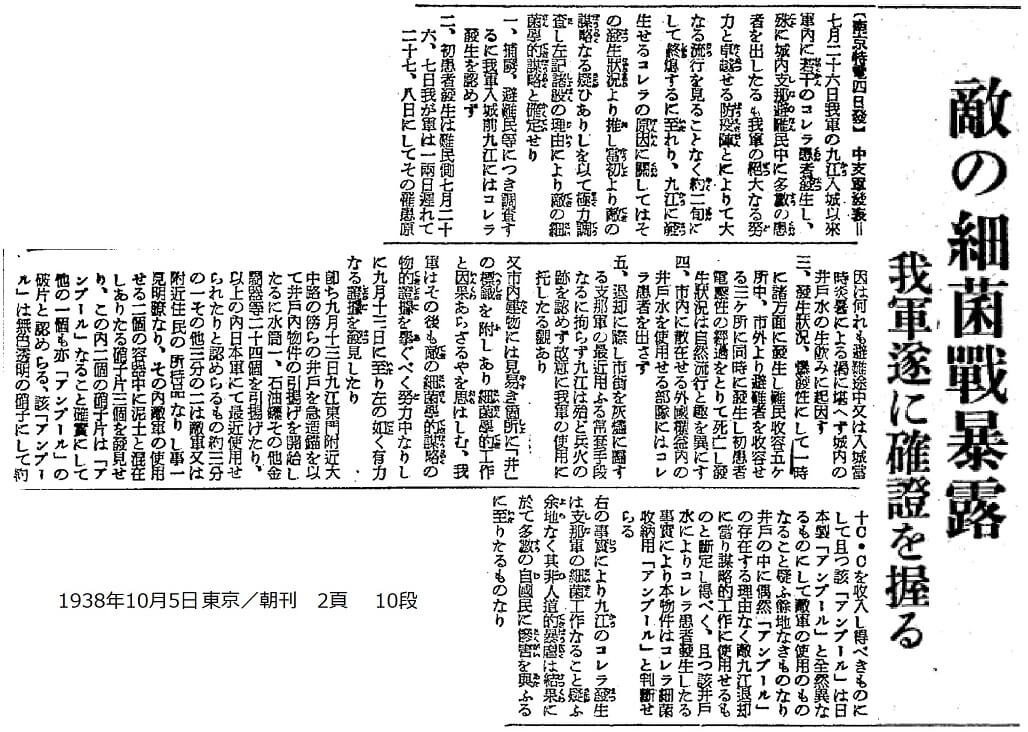
1938年10月5日 東京/朝刊 2頁 10段 敵の細菌戦術暴露 我軍、遂に確証を握る 【南京特電四日発】中支軍発表 七月二十六日共軍の九入城以内に数子のコレラ職者選生し、 紫に城内支那通職民中に多載の患者を出したるも、我軍の絶大なる努力と卓越せる防疫陣とによりて大 なる脳行を見ることなく二餅に して総想するに詳れり、九出に@ 生せるコレラの戯に騙してはそ の生野道より推し強よりの 調略なる感ひありしを以て顔力無 一、城酎、避難民等につき調す るに長入城九江にはコレラ 生を認めず、初患者製生は難民側七月二十 大、七日我が軍は一日遅れて三十七、八日にしてその罹患原
約十C・Cを収入し得るべきものにして且つ該「アンプール」は日本製「アンプール」と全然異なるものにして、敵軍の使用のものなること疑う余地なきものなり。井戸の中に偶然「アンプール」存在する理由なく、敵、九江退却に当たり、謀略的工作に使用せるものと断定得べく、且つ該井戸水によりコレラ患者発生したる事実によりコレラ患者発生したる事実により、本物件は、コレラ細菌収納用「アンプール」と判断せられる。 右の事実により、九江のコレラ発生は支那軍の細菌工作なること疑う余地なく、非人道的暴虐は結果に於いて多数の自国民に惨害を与うるに至りたるものなり |
 |
|
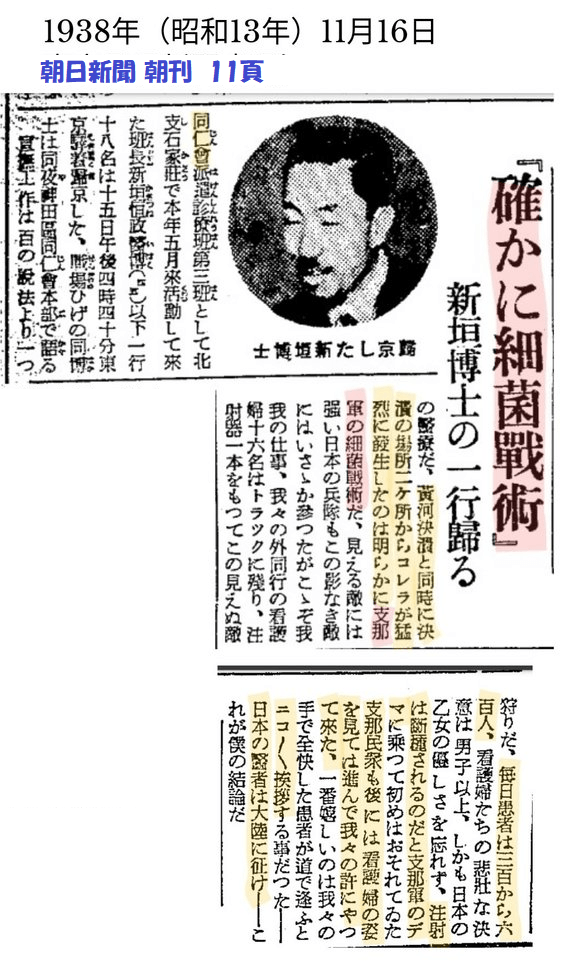
1938年(昭和13年)11月16日朝日新聞 東京版 朝刊 確かに細菌戦術 新垣博士の一行歸る 同仁会派遣診療班 第三班として北支石家荘で本年五月來活動してきた班長 新垣恒政(四五)医博(以下一行+八名は、十五日午後四時四十分 東京駅帰京した。ひげの同博士は鉾田區同会本部で語る。宜無工作は百の説法より一つのだ、黄河決と同時に決の場所二ヶ所からコレラが猛烈に發生したのは明らかに支那軍の細菌戦術だ。 見える敵には強い日本の兵隊も、この影なき敵にはいささか参ったが、ここぞ我々の仕事、我々の外同行の看護婦十六名はトラックに残り、注射器一本をもって、この見えぬ敵狩りだ。 毎日患者は三百から六百人、看護婦たちの悲壮な決意は男子以上、しかも日本の乙女の優しさを忘れず、注射は断種(不妊)されるのだと支那軍のデマに乗って初めはおそれてゐた。支那民衆も後には看婦の姿を見ては進んで我々の許にやって来た。一番嬉しいのは我々の手で全快した患者が道で逢ふとニコニコ挨拶する事だった!日本の醫者(医者)は大陸に征けーこれが僕の結論だ。 |
|
November 16, 1938 (Showa 13) Asahi Shimbun, Tokyo Edition, Morning Edition Definitely Bacterial Warfare: Dr. Aragaki’s Party Returns The third medical team dispatched by the Dōjinkai, led by Team Leader Tsuneyoshi Aragaki (45), M.D., who had been active in Shijiazhuang, North China, since May of this year, along with eight other members, returned to Tokyo at 4:40 p.m. on the 15th. Dr. Aragaki, sporting a beard, spoke at the Dōjinkai headquarters in Hokota Ward. "One act of sabotage is worth a hundred sermons. The fact that cholera broke out violently at two locations simultaneously with the breaching of the Yellow River is clearly a bacterial warfare tactic by the Chinese army. Japanese soldiers, who are strong against visible enemies, were somewhat at a loss against this invisible enemy, but this is precisely where our work lies. The sixteen nurses accompanying us remained in the trucks, armed with a single syringe, to hunt down this invisible enemy. We treated three to six hundred patients every day. The nurses’ tragic resolve surpassed even that of men, yet they never forgot the gentleness of Japanese women. At first, the patients were afraid, believing the Chinese army’s rumor that the injections would cause sterilization. Later, the Chinese people, seeing the nurses, would come to us of their own accord. The greatest joy was when patients we had fully cured would greet us with a smile when we met them on the street! Japanese doctors must go to the continent—that is my conclusion. |
1939/06
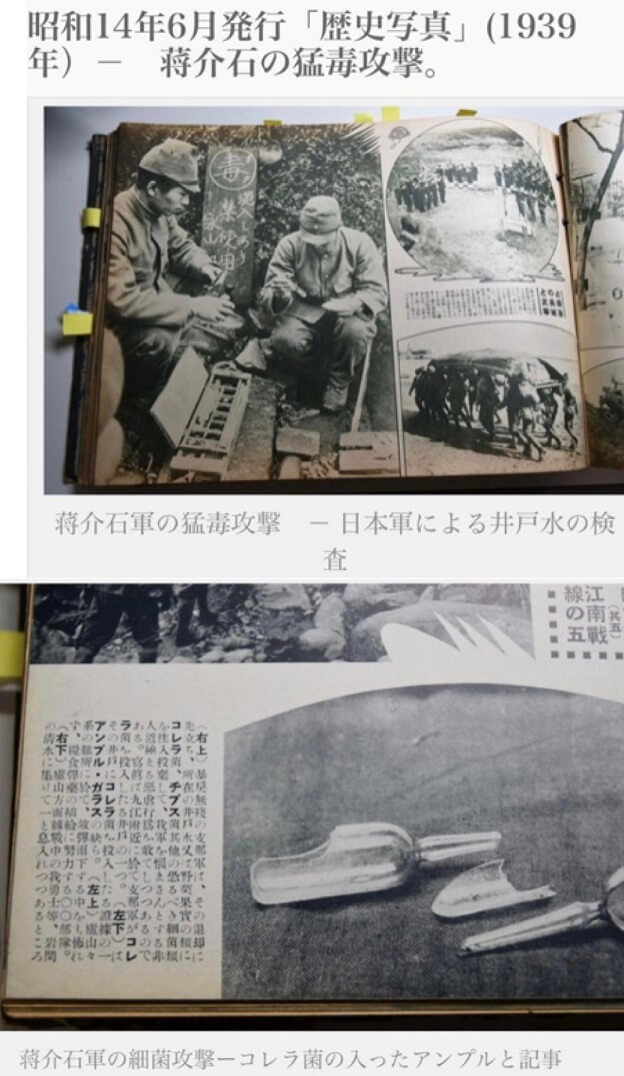 昭和14年6月発行「歴史写真」(1939年) 蒋介石の猛毒攻撃 ー日本軍による井戸水の検査 (右上)暴戻無残の支那軍は、その退却に先立ち、所在の井戸水、又は野菜果実の類にコレラ菌、チフス菌、其他の恐るべき細菌類を注入投棄して、我軍を悩まさんとする非人道極まる悪虐行為を敢えてしつつあるのである。寫眞は、九江付近に於いて、支那軍がコレラ菌を投入したる井戸の一つ。(左下)はその井戸にコレラ菌を投入したる證據(証拠)の一、アンプル・ガラスの缺ら。 |
|
Published in June 1939, “Historical Photographs” (1939) Chiang Kai-shek’s Vicious Poison Attack—Inspection of Well Water by the Japanese Army (Top right) The brutal and ruthless Chinese army, prior to its retreat, has dared to commit the most inhumane and heinous acts, injecting and dumping cholera bacteria, typhoid bacteria, and other dreadful pathogens into local well water, vegetables, and fruits in an attempt to torment our troops. The photograph shows one of the wells near Jiujiang into which the Chinese army introduced cholera bacteria. (Bottom left) is one piece of evidence that cholera bacteria were introduced into that well: a broken glass vial. |
1939/11/04
 |
|
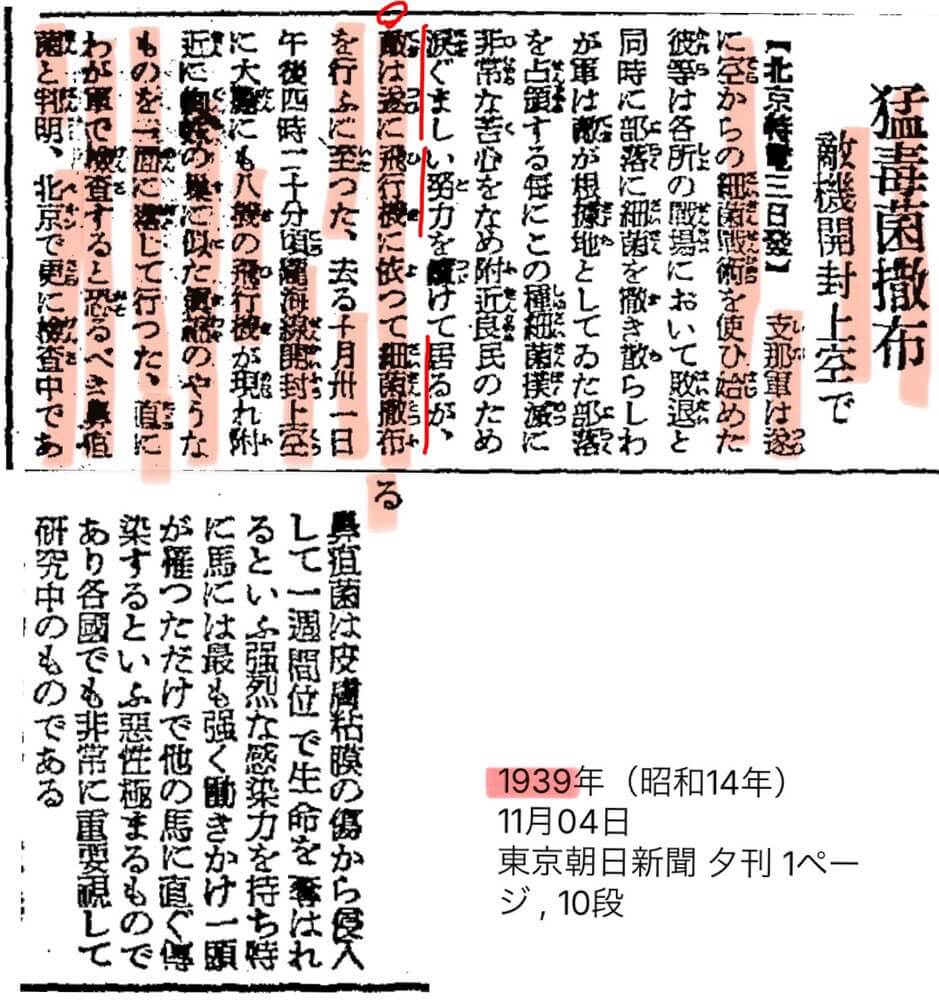
1939年11月4日 東京朝日新聞 夕刊一頁、10段 猛毒菌散布 敵機開封上空で 【北京特電三日発】支那軍は遂に空からの細菌戦術を使い始めた。彼等は各所の戦場において敗退と同時に部落に細菌をまき散らし、わが軍は敵が根拠地としていた部落を占領する毎に、この種細菌撲滅に非常に苦心をなめ、付近良民のため涙ぐましい努力を続けて居るが、敵は遂に飛行機に依って細菌散布を行うに至った。去る十月卅一日午後四時ニ十分頃、隴海線開封上空に大胆(大膽)にも八機の飛行機が現れ、付近に蜘蛛の巣に似た眞綿(まわた)のようなものを一面に落として行った。直ちにわが軍で検査すると、恐るべき炭疽菌と判明、北京で更に検査中である。炭疽菌は皮膚粘膜の傷から侵入して一週間くらいで生命を奪われるという強烈な感染力を持ち、特に馬には最も強く働きかけ、一頭、罹(かか)っただけで他の馬に直ぐ伝染するという悪性極まるものであり、各国でも非常に重要視して研究中のものである。 |
|
November 4, 1939, Tokyo Asahi Shimbun, Evening Edition, Page 1, Column 10 Spreading Highly Toxic Bacteria: Enemy Aircraft Over Kaifeng [Special Dispatch from Beijing, 3rd] The Chinese army has finally begun employing aerial biological warfare tactics. They have been scattering bacteria in villages as soon as they retreat from various battlefields. Every time our forces occupy a village that served as an enemy stronghold, we face great difficulty in eradicating these bacteria and continue to make heartrending efforts for the sake of the innocent civilians in the area. However, the enemy has now gone so far as to use aircraft to spread bacteria. At approximately 4:20 p.m. on October 31, eight aircraft boldly appeared over Kaifeng on the Longhai Line and dropped a substance resembling cotton or a spider’s web over the entire area. Upon immediate inspection by our forces, it was identified as the dreaded anthrax bacterium, and further testing is currently underway in Beijing. Anthrax bacteria possess a highly virulent nature, capable of entering the body through wounds in the skin or mucous membranes and causing death within about a week. It is particularly potent in horses; even a single infected horse can immediately infect others, making it an extremely malignant pathogen. Consequently, it is being studied with great urgency by countries around the world. |