Bataan death march and the Manila massacre are US propaganda. The damage is exaggerated and it was brought by the US. The truth is Japan liberated the Philippines, which gained independence in 1943, before the end of WW2.
¶ Summary
¶ The Details
¶ The US made two fake independence promises to Filipinos.
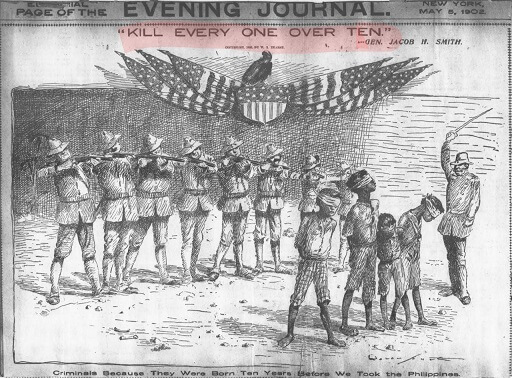
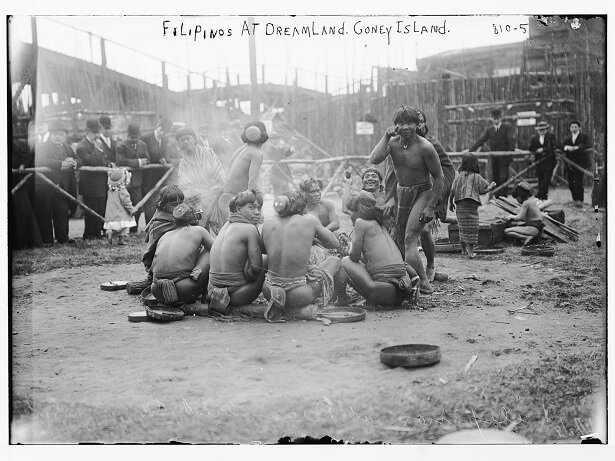
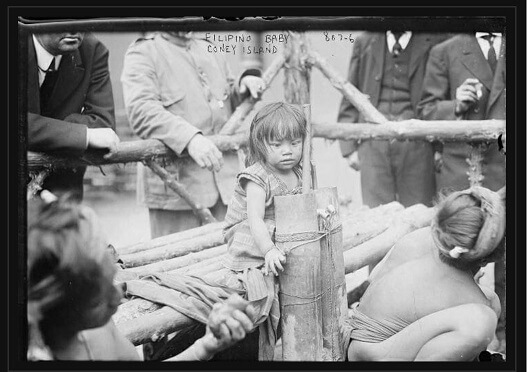
The first one is when fighting against Spain, the US made a promise to Filipino for the independence from Spain, and had them fight with US. But after a battle, US colonized Philippine.
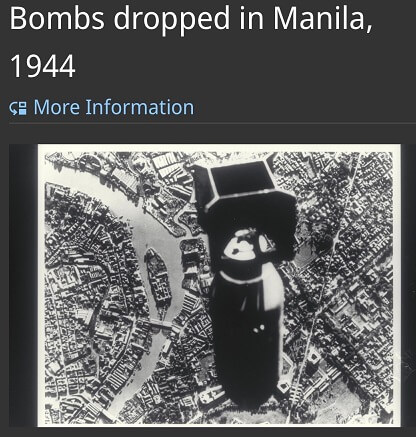
The second one is how US turned Filipino against Japanese when its nation already became independent without US in 1943. Why did Japan come to Philippine in the first place in 1941? Japan was at 2nd Sino-Japanese war. Yet the US, FDR started to interfere by supporting Japanese opponent, Republic of China Chiang kai-shek/Soong mei-ling. In 1941, finally FDR put Japan with a complete isolation with economic blockage by their collaborators with the America(Philippine), British(Malaysia), China(the US dog Chiang kai-shek), Dutch (Indonesia), so called ABCD encirclement to ensure Japan would lose on 2nd Sino-Japanese war. Japan had no choice but fight against US on Pearl Harbor and British territory Malaysia 7th December 1941. Next day Japan attacked the US in Philippine and kicked US military out of Philippine. Douglas Macarthur escaped to Australia on 11th March in 1942 leaving his soldiers in Philippine. Japan helped the independence of Philippine in 1943 with Jose Laurel leading to Greater East Asia Co-Prosperity Sphere. The US called Jose Laurel regime as a puppet, which is US tactics when US is the one having puppets on its own. The US came back to Philippine and used Filipino guerrilla to attack Japanese in Philippine. It was US that bombed Manila city. Filipino guerrillas set a fire. The US and Filipino collaborators spread propagandas such as Manila Massacre and Japanese atrocity as they claimed all happened oddly AFTER 1943. It certainly raises the question why Japanese would become suddenly an evil monster when helping Filipino for independence prior to that?
After Japan lost a war, the US betrayed Philippine and forced to agree on unfair treaty, Manila Treaty, and set a series of puppet governments.
Following the US taking his former colony back, British French and Dutch came back to their colonies and started battles killing many locals in Malaysia, Vietnam, and Indonesia respectively.
Currently among these victorious allied nations, only Dutch apologized to Indonesia, while British and especially the US dodged their war crimes by writing their war winner histories demonizing Japan with Nanking and Manila massacres.
¶ The US colonized Philippine 1898~
This is out of scope of this website so it skips.
¶ Japanese attack on Philippine after Pearl Harbor
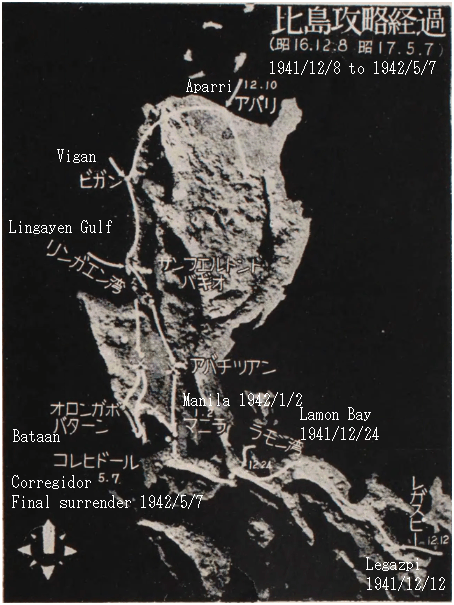
After attack on Pearl Harbor 1941/12/8 , Japanese military ships and Japanese airplanes headed to Philippine to attack the US military. The battle of Philippine which on next year 1942/5/7 taking 6 months.
|
(Below)The landing site was Santiago, in Lingayen Gulf. A massive convoy of 76 ships carrying the main force braved stormy weather—with low-hanging clouds and waves 2 meters high—and carried out the landing. 上陸地点は、リンガエン湾の、サンチアゴ。主力をのせた76隻の大船団は、雲低くたれ、巻波2米の荒天を冒し、揚陸を敢行した。 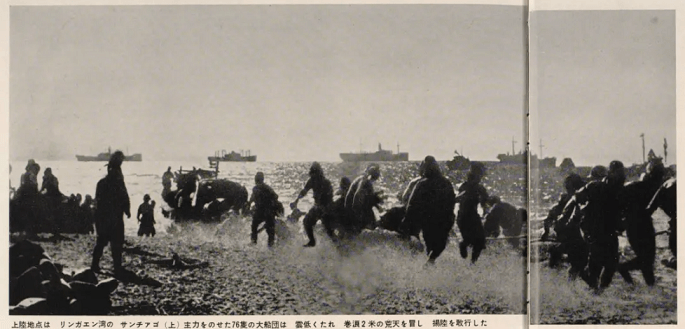
比島攻略の前哨戦は、航空機だった。いま、台湾の高尾基地から発進する第5集団の荒鷲軍は上陸直協の重責に羽ばたいている。 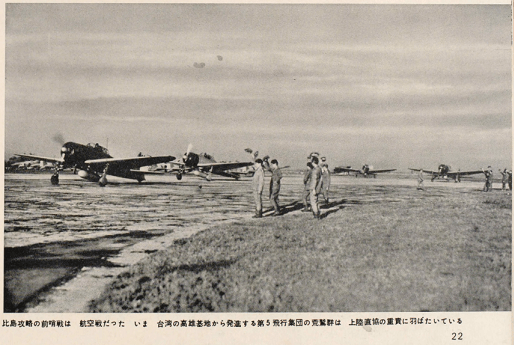 |
¶ Battle at Manilla
In Manila, the Japanese military first secured the port and the airfield. This allowed them to gain control of the sea and the air. Although U.S. forces had moved to Bataan, the Japanese military’s initial strategy was to ensure the occupation of Manila.
|
(Below) South of Manila, the Cavite Naval Base is a U.S. Navy base. A preemptive air strike reduced it to ruins in an instant. マニラ南方、キャビデ軍港は、米海軍の根據(拠)地。空軍の先制攻撃は、ここを一瞬廃墟にした。 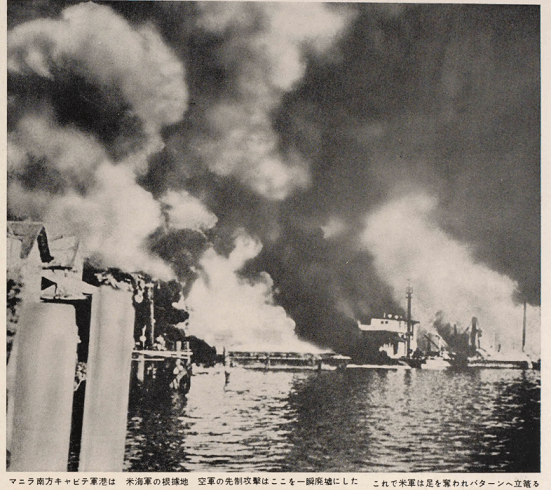 |
|
(Below) Iloilo Airfield was ablaze. The initial air operations were successful, and air superiority over the Philippine Islands was secured. The few remaining bombers fled to Australia. Although it was highly likely that the U.S. field army would entrench itself on the Bataan Peninsula, the Japanese Army set the capture of Manila as its immediate objective, and its tanks, kicking up clouds of dust, advanced rapidly, wave after wave. 炎上するイロイロ飛行場。緒戦の航空作戦は奏功して、比島周辺の制空権は確保された。僅かにのこっていた爆撃機は豪州へ逃げた。米野戦軍は、バターン半島に立篭る公算が多かったが、軍はマニラ攻略を当面の目標に、戦車は砂塵を巻いて、急進または急進をつづける。 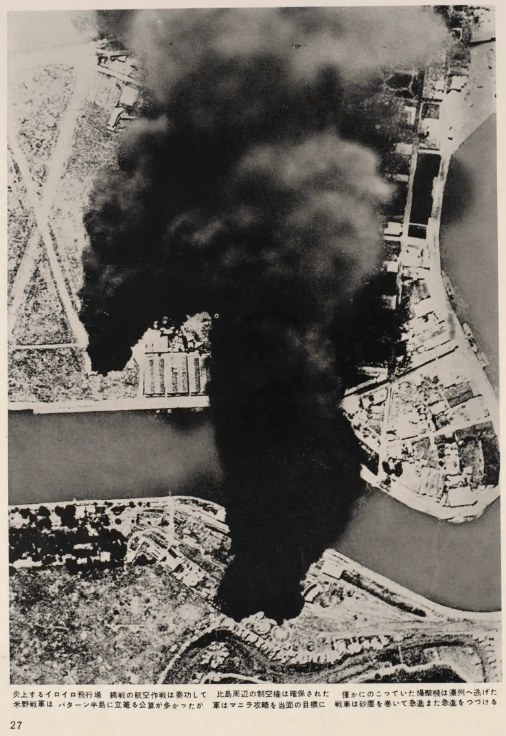 |
|
(Below) Any hope of capturing Manila without destroying the city was dashed by the raging fires. To save the city from the flames, the military decided to launch an assault. マニラの街を破壊せずに攻略しようという希望は、炎上する火災によって失われた。街を火災から救うために、軍は進入を決意した。 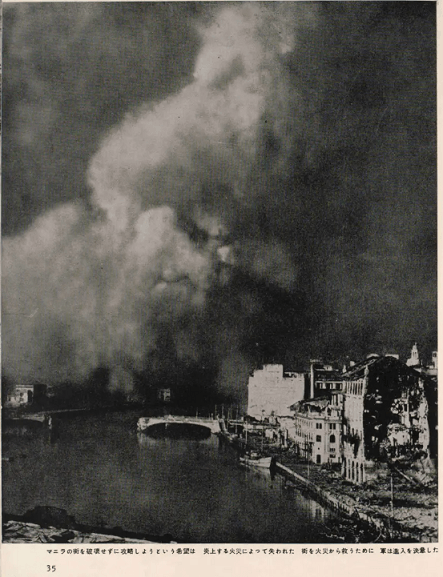 |
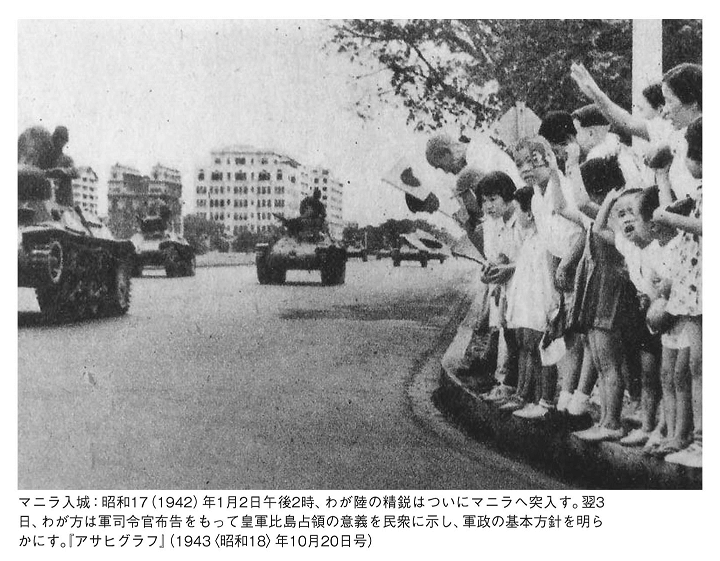
(Below) Entry into Manila: At 2:00 PM on January 2, 1942 (Showa 17), our elite ground forces finally stormed into Manila. The following day, the 3rd, our side issued a proclamation by the military commander to demonstrate to the populace the significance of the Imperial Army's occupation of the Philippines and to clarify the basic principles of military administration. (Asahi Graph, October 20, 1943 issue)
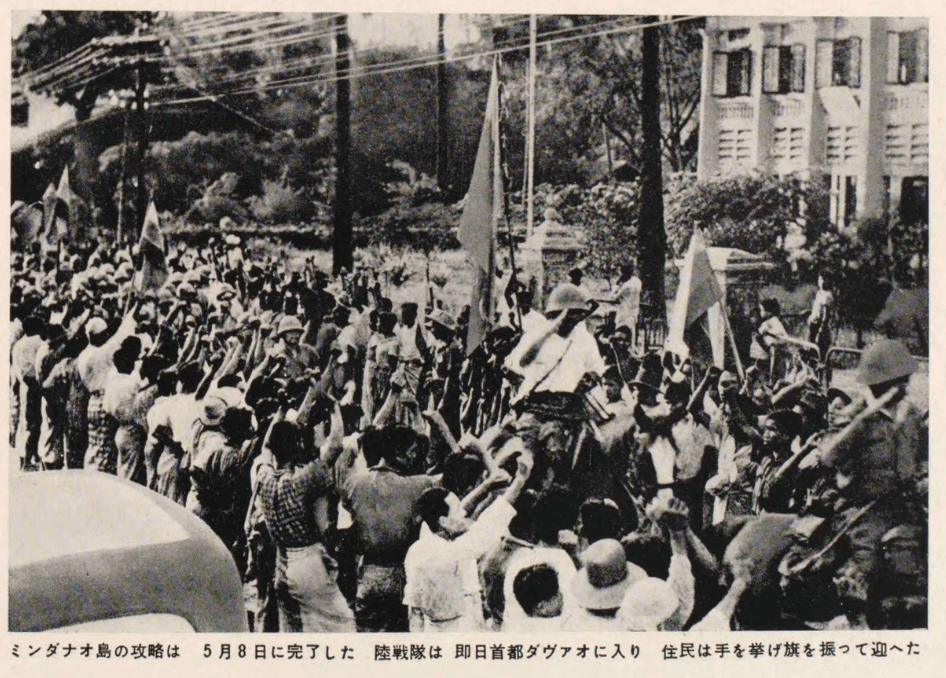
(Below) Japanese victory in Philippine in Mindanao island.
The conquest of Mindanao Island was completed on May 8. The landing force entered the capital city of Davao that same day, where residents welcomed them with raised hands and waving flags.
¶ Battle at Bataan
|
On March 30, General Homma, commander of the army, moved his forward command post to Orani. Preparations for the assault are complete. 本間軍司令官は、3月30日、先頭司令部をオラニに推進。攻略の準備成る 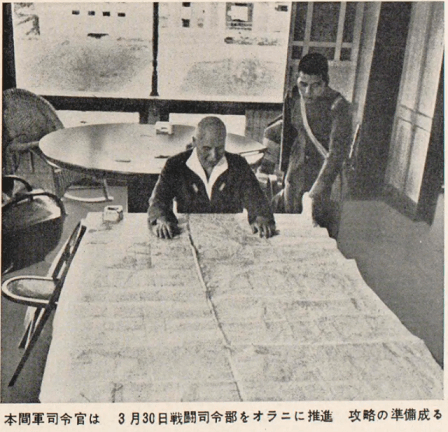 |
|
A distant view of Bataan. The high ground on the far right is Mount Mariveles. The central high ground is Mount Samat. In front of it lies the U.S. Army’s main line of resistance. The attack began on April 3 with artillery and air strikes. バターンの遠景。右端の高地がマリベレス山。中央高地はサマット山。その前面が米軍の主抵抗線。攻撃は、4月3日。砲爆撃により開始された。 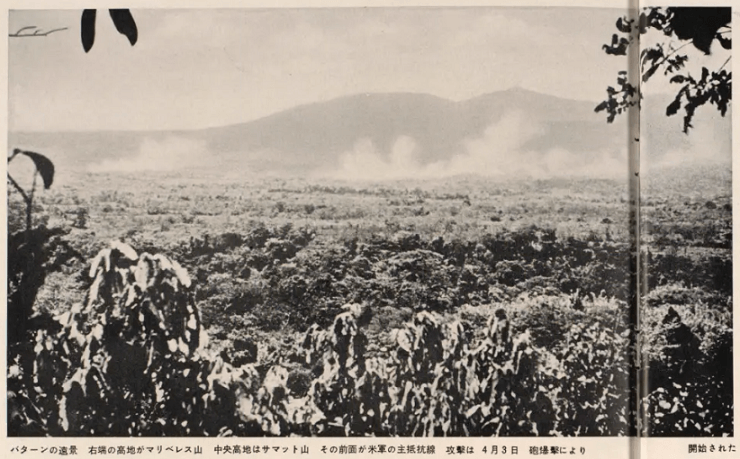 |
|
Map of the Japanese Army's Conquest of Bataan 日本軍のバターン攻略地図 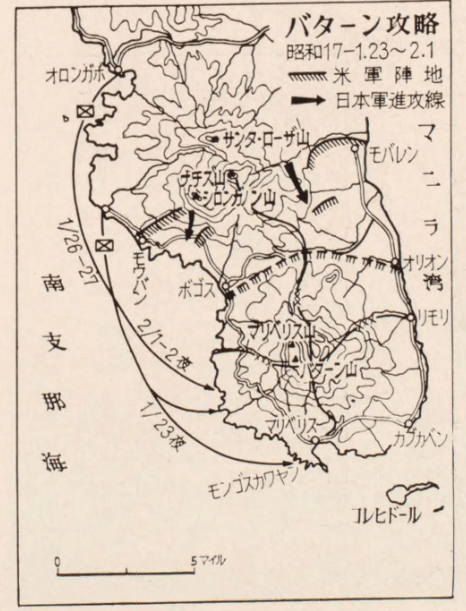 |
|
The U.S. military position in Bataan was more heavily fortified than expected. The first attack in January failed for that reason. バターンの米軍陣地は予想以上に堅個だった。1月の第一次攻撃はその為に失敗 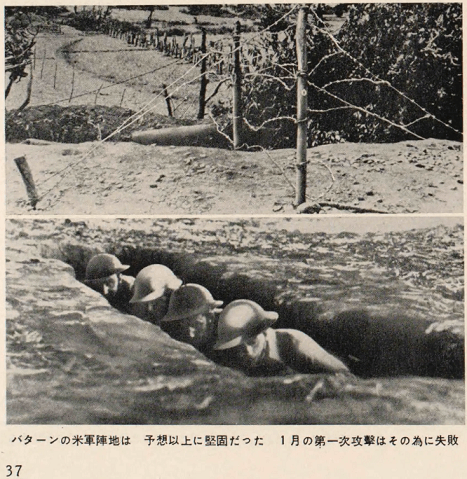 |
|
The battlefield was the Bataan Peninsula. Moving against the tide of the rapidly advancing tanks, soldiers who had apparently been left behind by the retreat were already coming down from the front lines on foot to surrender. 戦場はバターン半島 急追する戦車に逆行して、前線からは、遁入に遅れたのであろうか、はやくも投降兵が徒歩で下ってくる 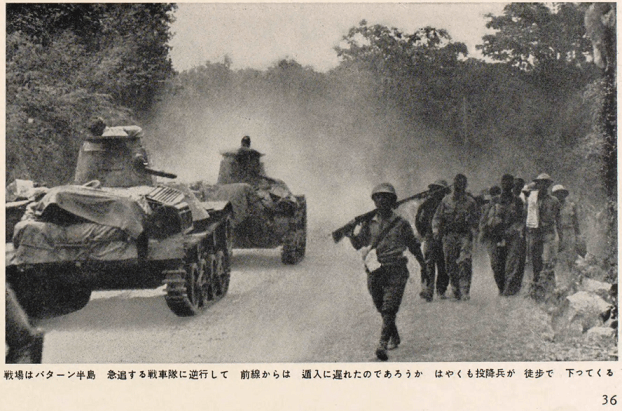 |
|
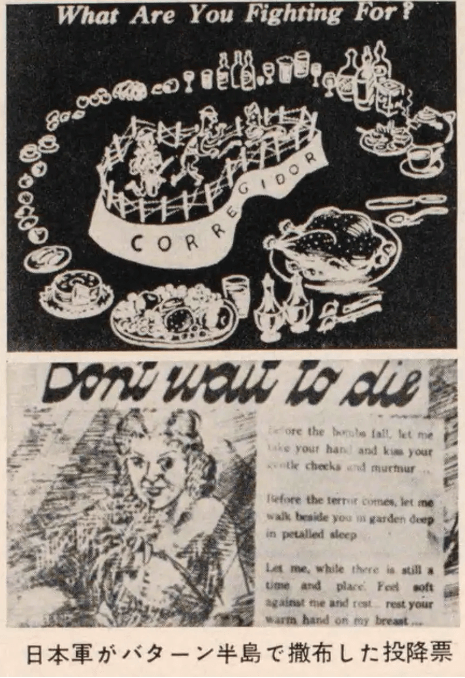
(Below) The surrender leaflets proved highly effective. From the forest and the mountainside, crowds emerged waving white flags 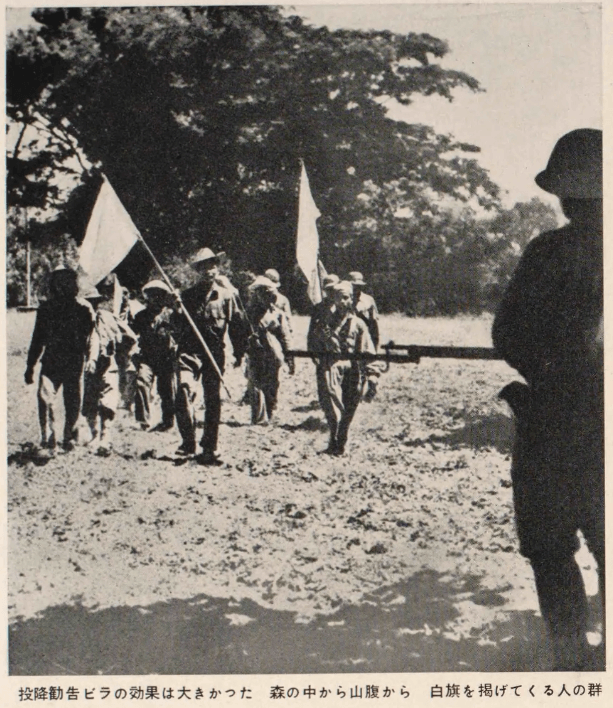 |
|
(Below) The resistance of the U.S.-Filipino forces holed up in Bataan possessed strength that could not be underestimated, but once it began to crumble, the number of surrendering soldiers surged dramatically, and white flags were raised one after another. 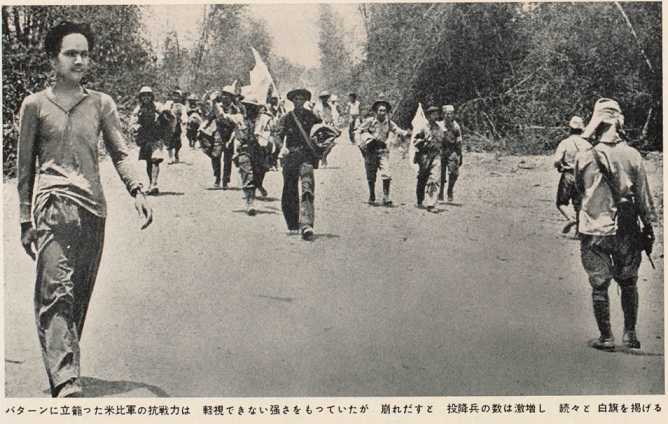 |
|
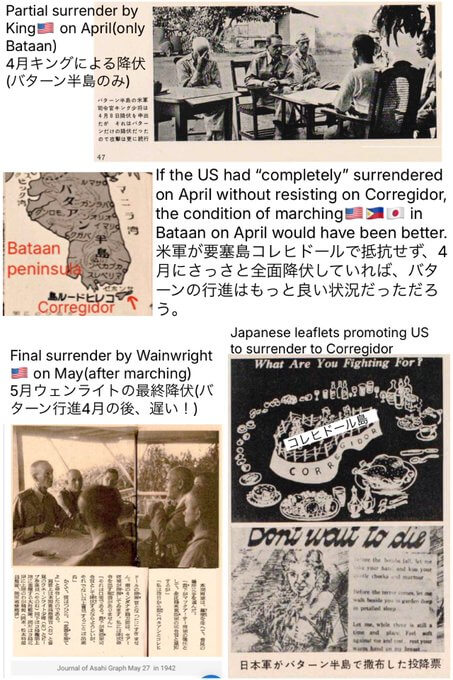
Major General King, the U.S. commander on the Bataan Peninsula, offered to surrender on April 8, but since that surrender applied only to Bataan, the attack continued. バターン半島の米軍司令官キング少将は4月8日降伏を申し出たが、それはバターンだけの降伏だったので攻撃は更に続行 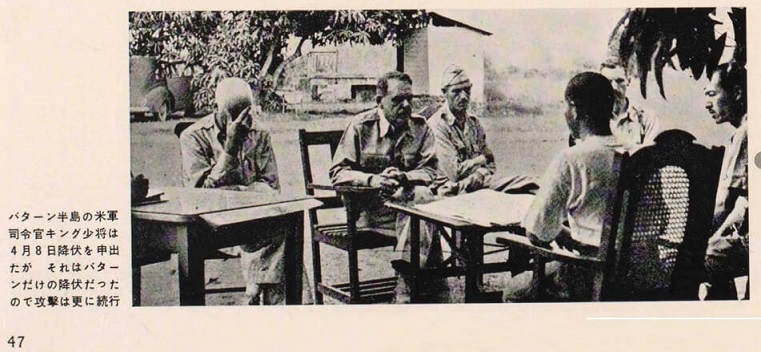 |
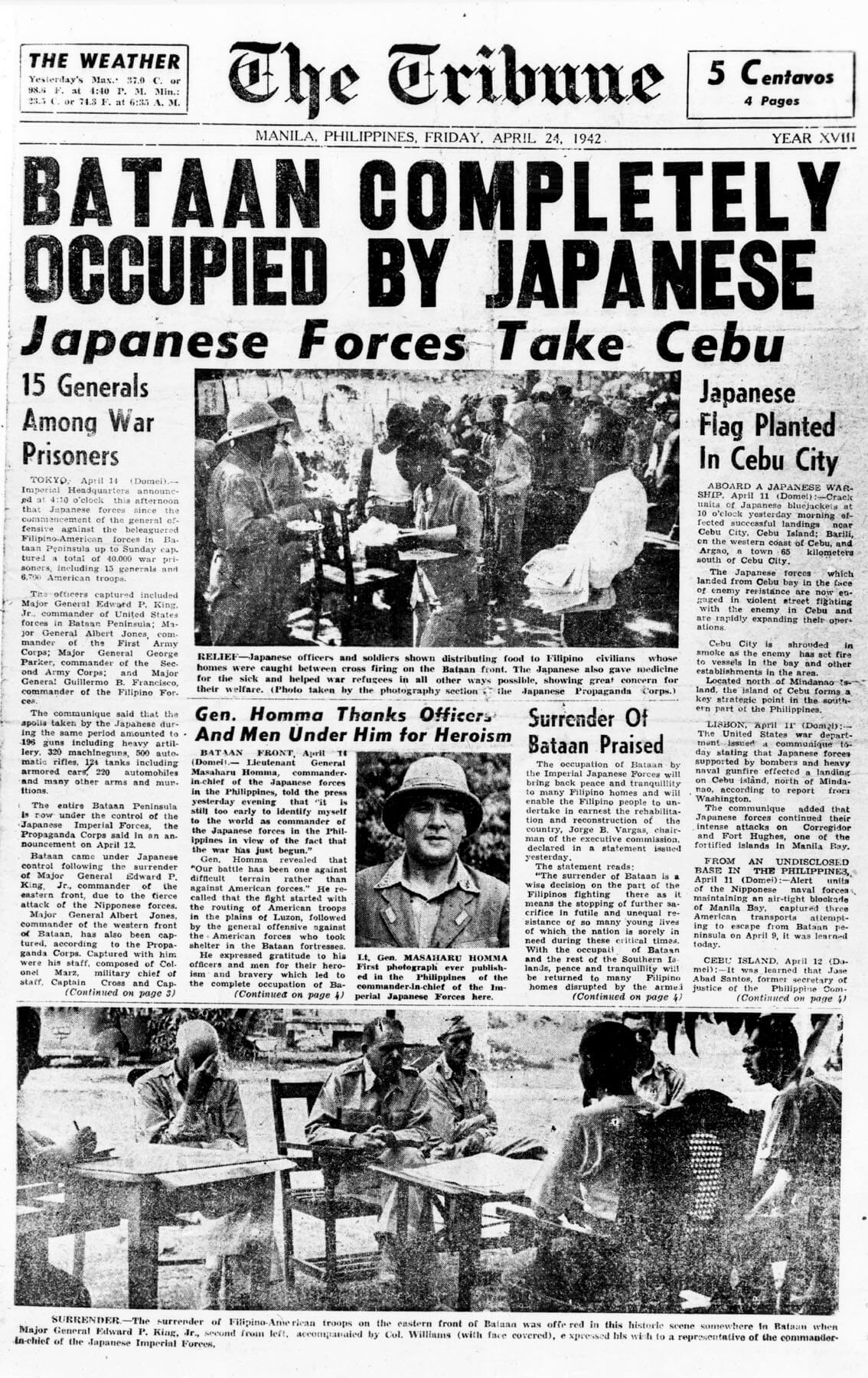
The Tribune, 24th April in 1942, Japanese General, Masaharu Honma (本間雅晴)
¶ The US soldiers and Filipinos marching in Bataan
|
Even if they continued to put up fierce resistance, once the decision to surrender was made, they accepted it without hesitation. There were approximately 50,000 soldiers at Fort Bataan. The procession of surrendering soldiers lasted for 11 days. 頑強に抵抗をつづけても、降伏ときまれば、諦めはいい。バターン要塞にあった兵は、約五万。投降兵の行列は、11日間もつづいた。 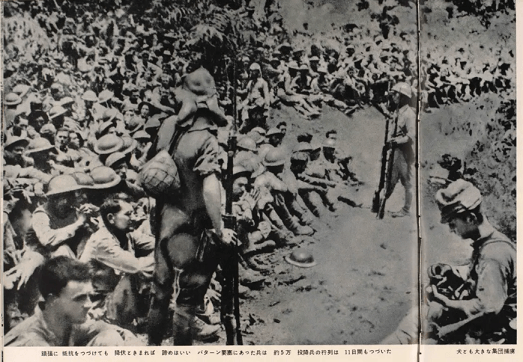 |
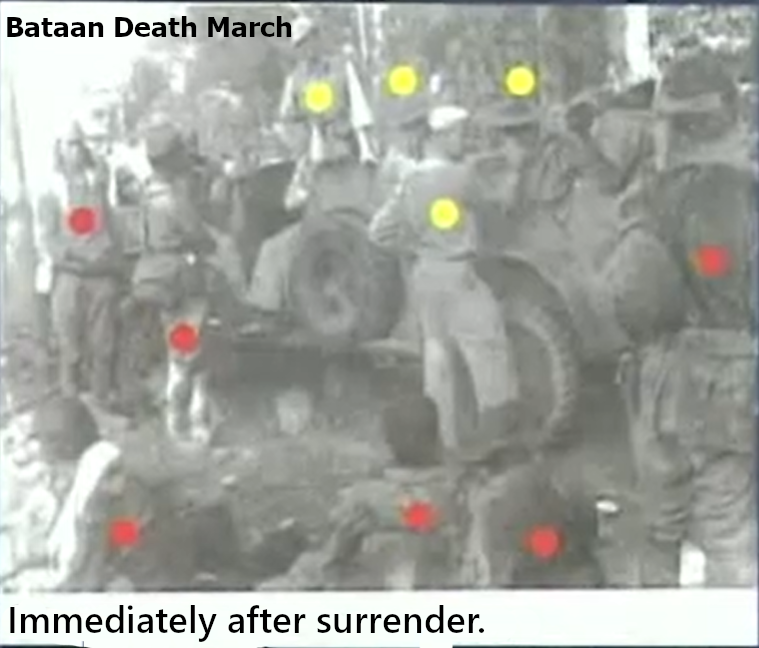
The accusation against Japan about the US marching after a war was completely out of blue to Japanese.
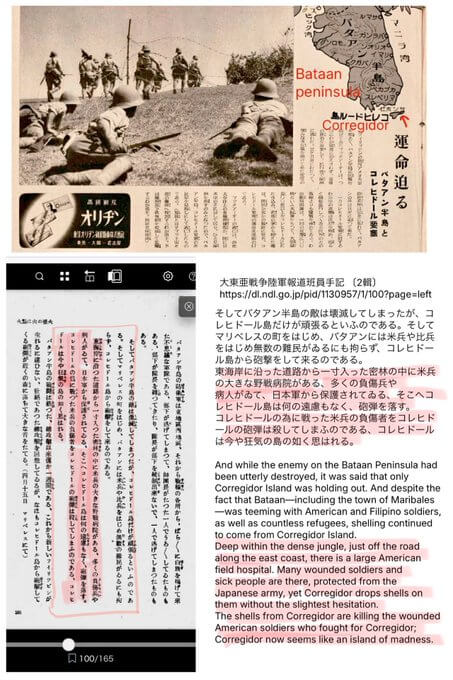
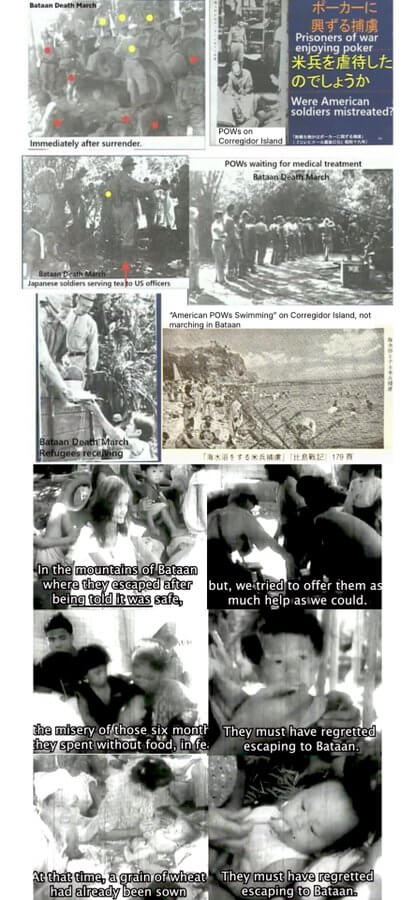
The marching course is from Mariveles to Capas as shown below. Japanese, the US POW, and Filipinos (soldiers and refugees) walked sometimes they used truck and rails. The distance they walked min 45Km, max 80km taking 3 days, 15km to 30km per a day, with medical clinics and water supply points along way, while the US was still fighting against Japan from Correigidor.
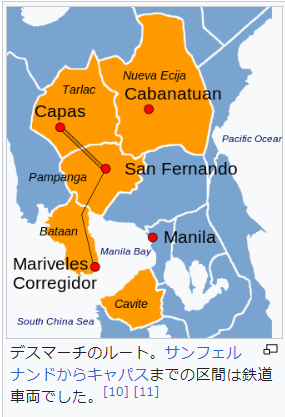
|
These are valuable photos of Bataan taken by War correspondent, which can be seen in a book “Paint and War” (絵具と戦争), by the author Mizoguchi Ikuo 溝口郁夫. 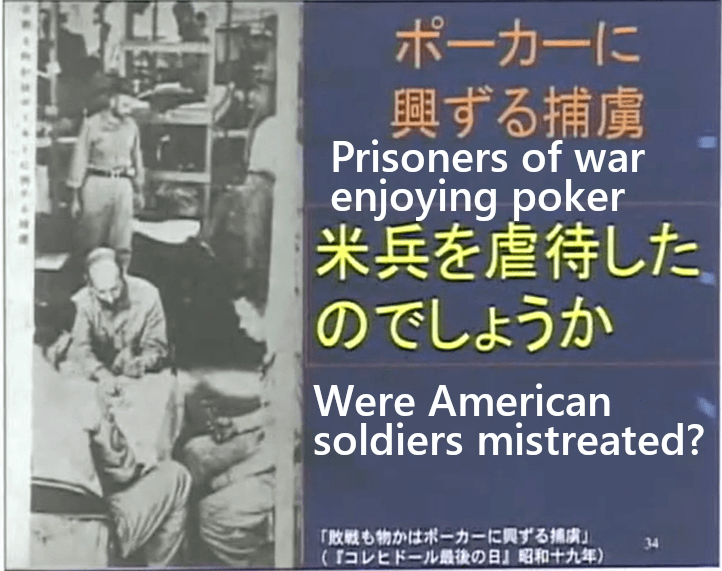 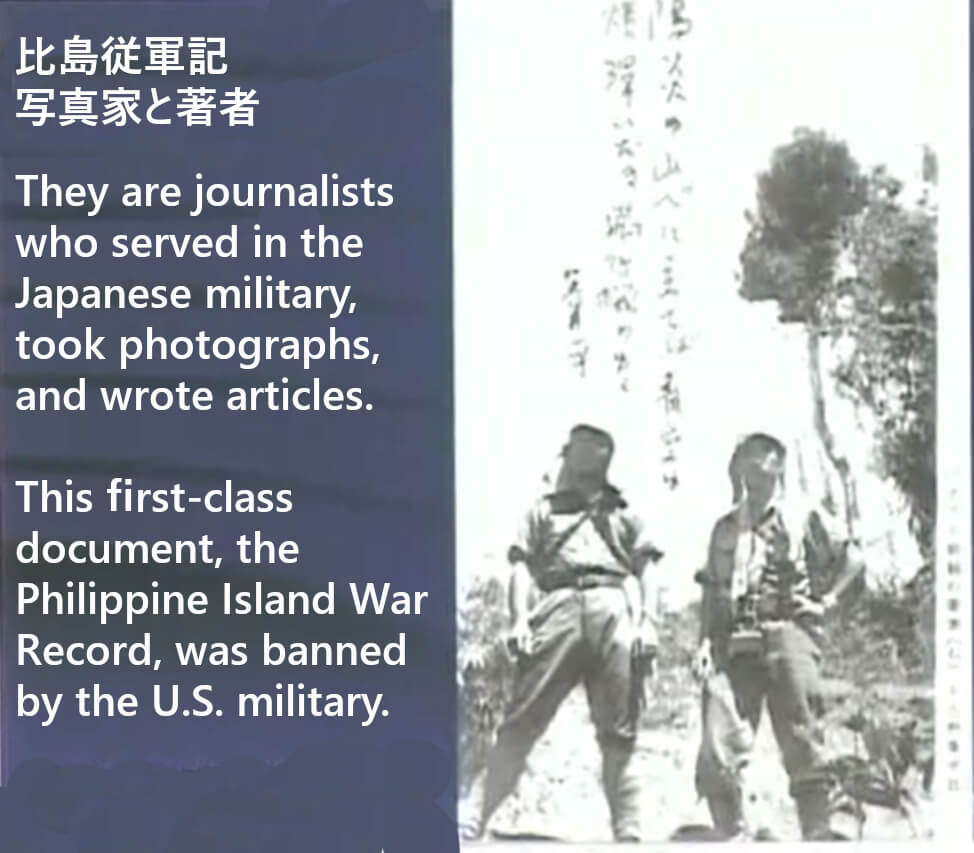 Our brave soldiers distributing food to evacuees. From the photo spread in “A War Diary from the Philippine Islands” by Yoshio Nishikawa. 避難民に食糧を給与している我が勇士たち。西川佳雄著「比島従軍記」グラビアより 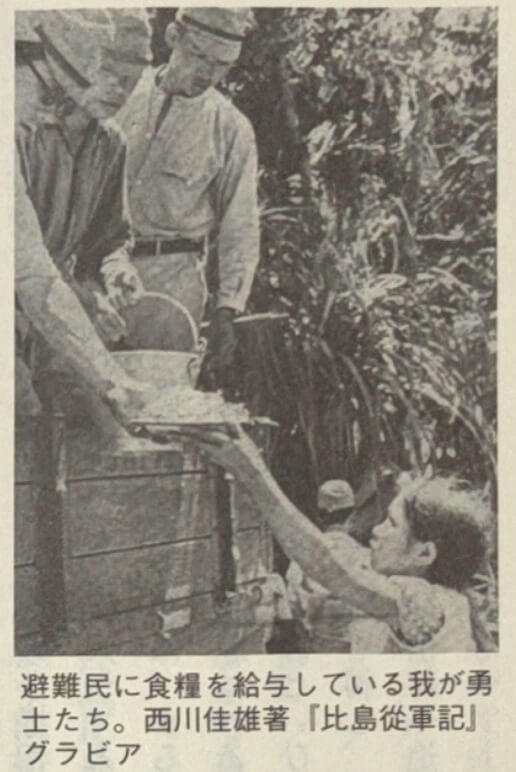 “Serving Tea to a Surrendered Enemy Officer,” “War Diary from the Philippine Islands: Under the Southern Cross”, Showa 17, December, p. 152 「投降の敵将校に紅茶の接待」「比島従軍記 南十字星下」昭和17年12月152頁 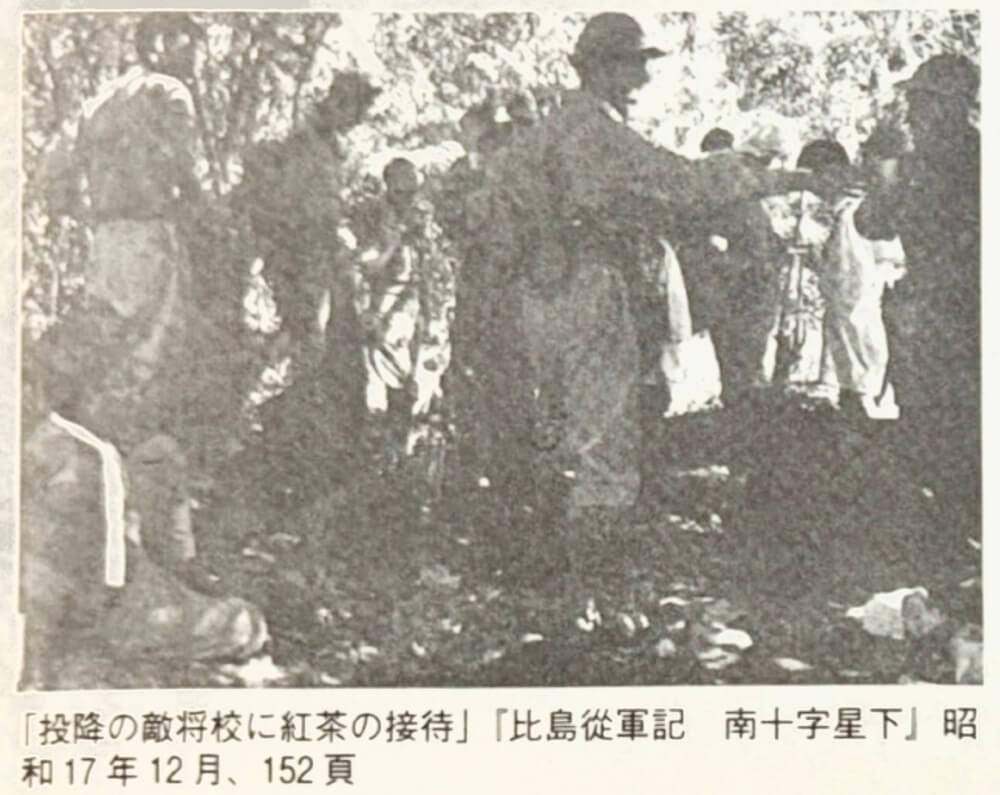 “A Line of Prisoners of War Waiting for Medical Treatment (XX Field Hospital),” “A War Diary from the Philippine Islands: Under the Southern Cross”, Showa 17, December, p. 152 「診療を待つ捕虜の列(XX野戦病院)」「比島従軍記 南十字星下」昭和17年12月152頁 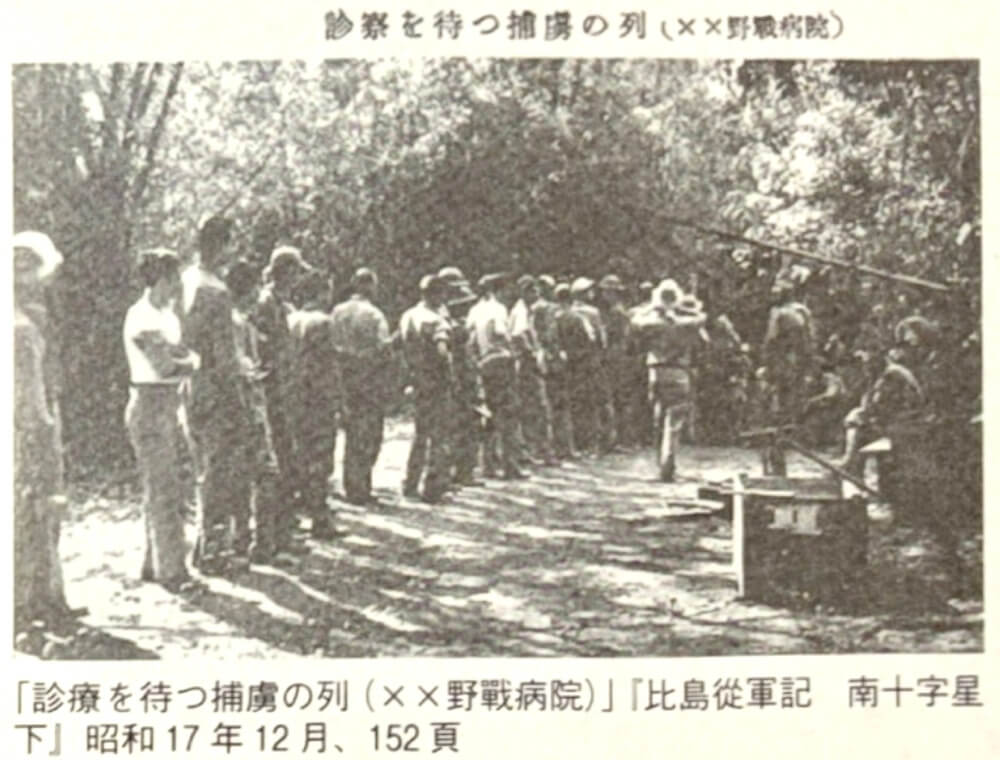
“American POWs Swimming in the Sea,” “The Philippine Campaign”, p. 179 「海水浴をする米兵捕虜」「比島戦記」179頁 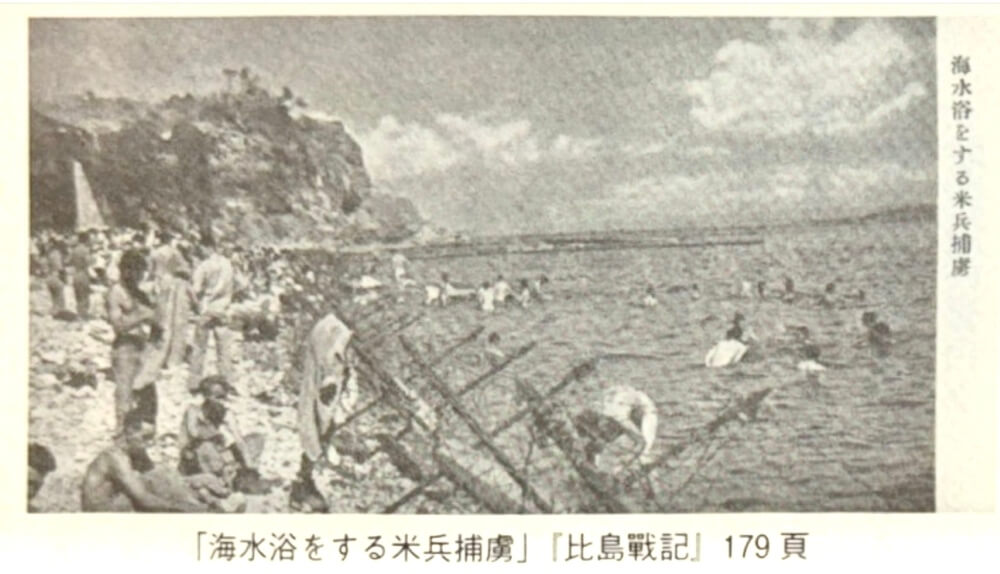
“Prisoners of war, undeterred by defeat, enjoy a game of poker” (“The Last Days of Corregidor,” Shōwa 19) 「敗戦も物かはポーカーに興ずる捕虜」(「コレヒドール最後の日」昭和十九年) 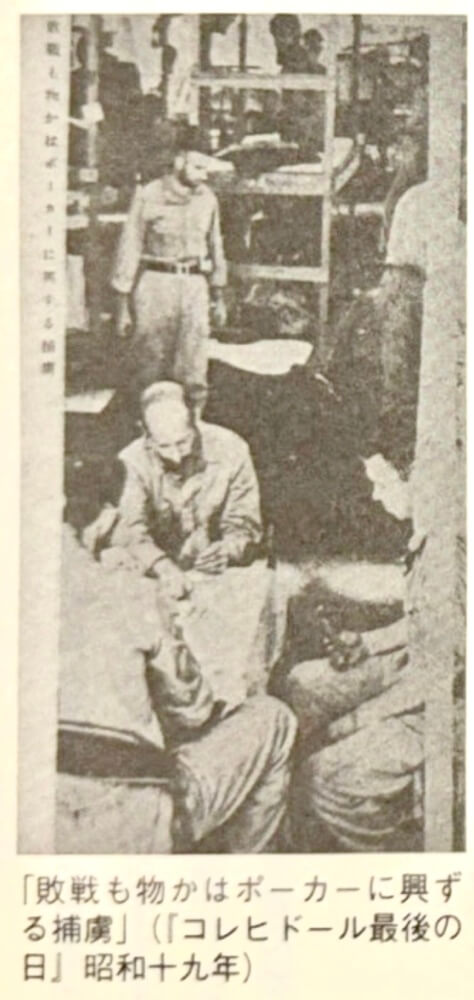
 |
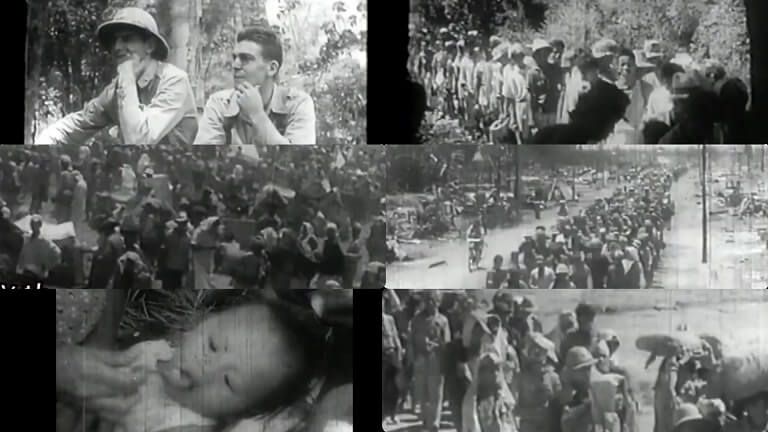
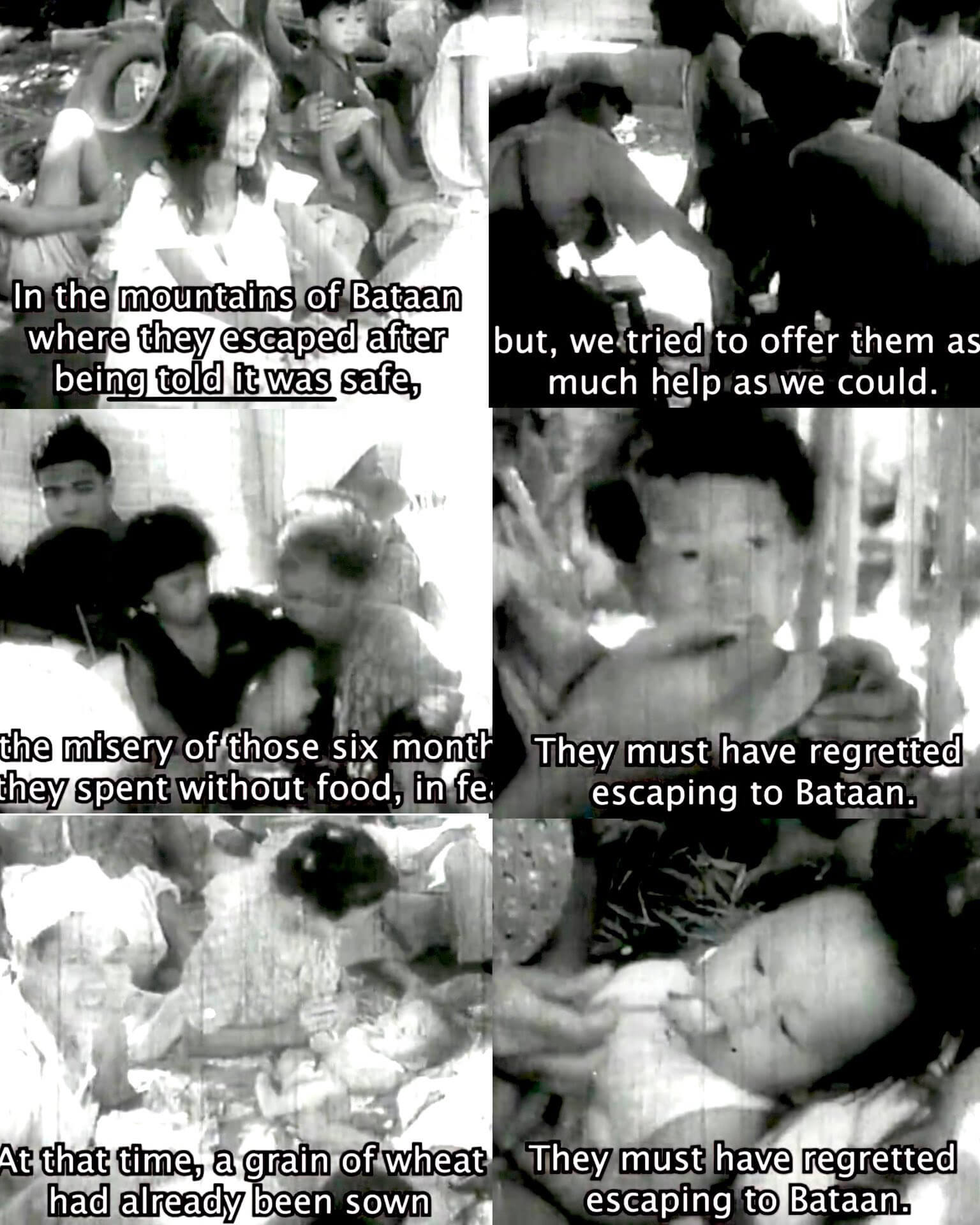
The valuable film taken by Japanese
¶ Battle at Corregidor
While the US soldiers and Filipinos were marching on April, the remained US military resisted at the fortress island, Corregidor, refusing to surrender shelling to Bataan killing the wounded US soldiers there. If they had surrendered with King, the US and Japanese could have provided the better conditions to those marching in Bataan.
(Below) Japanese military leaflets urging surrender distributed on the Bataan Peninsula
|
General MacArthur, who had moved from Manila to Corregidor, escaped from there as well in late March マニラからコレヒドールに移ったマッカーサー大将は、3月下旬、ここも脱出 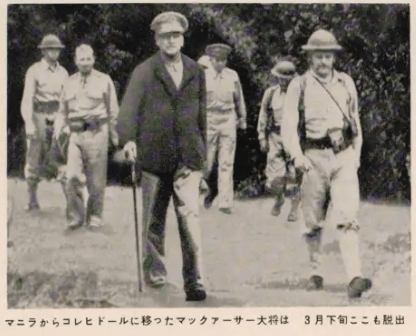 |
|
Preparations for the Corregidor landing operation were kept secret. Air strikes were the only repeated action, and bombs rained down day after day, but the “unsinkable fortress” did not crumble easily. コレヒドール上陸作戦は、秘匿されたまま準備された。専ら空爆だけが反復され、連日爆弾の雨を降らせたが、不沈要塞は容易に潰れなかった。 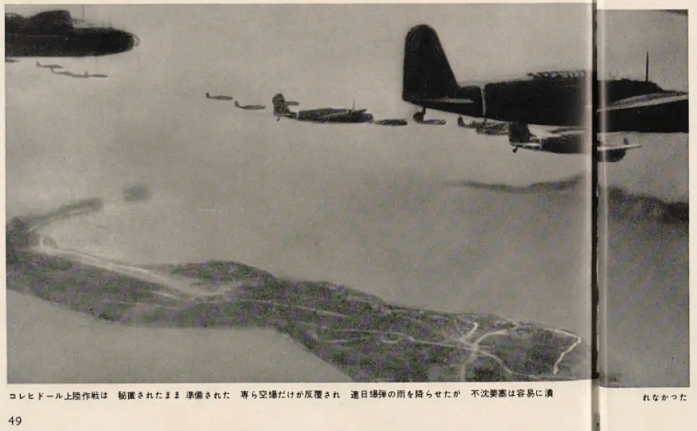 |
|
(Left top)The surrounding area lies in ruins from artillery and air strikes, yet the tanks charge forward without a second glance. Resistance from within the fortress’s solid shell is fierce. あたりは砲爆撃で荒廃しているその中を戦車は傍目もふらずに突撃だ。要塞の固い殻の中からの抵抗は強い (Left bottom)Infantry units, armed with flamethrowers, advance step by step through the swirling rubble and gun smoke, scaling the fortress built of rammed earth. 歩兵部隊は、火炎放射をもって瓦礫と硝煙の渦巻く中を一歩一歩ぺトンで固めた要塞にとりついて行く (Middle)The landing force is in high spirits, knowing this is the final, fierce battle. いよいよ最期の激戦だと上陸部隊の意気軒昂(いきけんこう) (Right bottom) The Corregidor assault force advanced carrying seven days’ worth of water and rations. The landing craft moved swiftly, shuttling back and forth to transport infantry, tanks, and mountain guns. コレヒドール突入部隊は7日間の水と糧食を携帯して進撃。舟艇の足も軽く、揚陸しては、また引返して運ぶ歩兵と戦車と山砲だ。 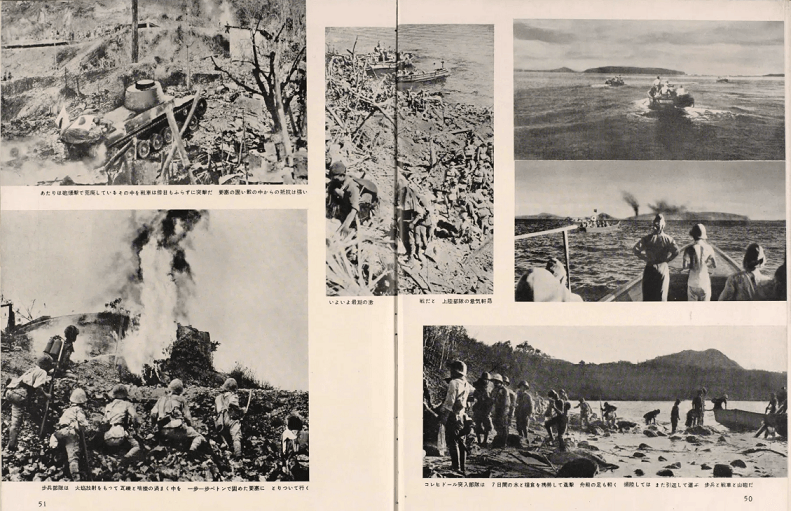 |
¶ Finally the US surrendered
Finally the US, Jonathan Wainwright, surrendered on May…. but it is too late! Bataan march on April already ended.
|
Surrendering soldiers poured out one after another from the underground fortress connecting Corregidor and Bataan. The facilities of this underground fortress, designed for a protracted defense, left observers in awe. コレヒドールとバターンを繋ぐ地下要塞から投降兵は続々とでてきた。持久を策したこの地下要塞の施設は見る者の目を瞠せた(みはせた)。 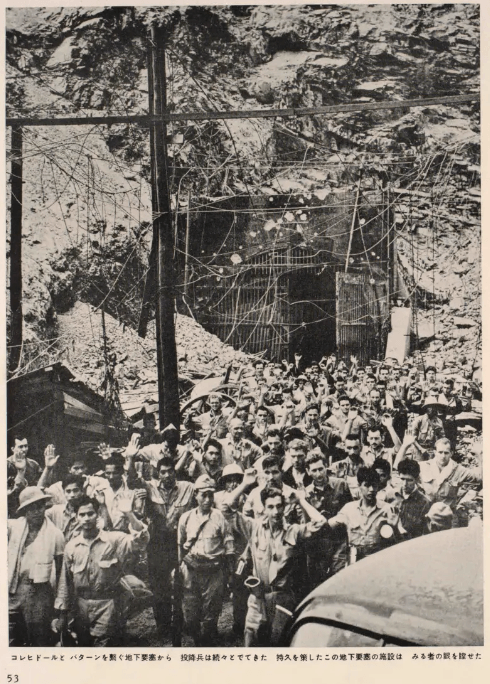
|
|
Photos from Journal of Asahi Graph May 27 in 1942 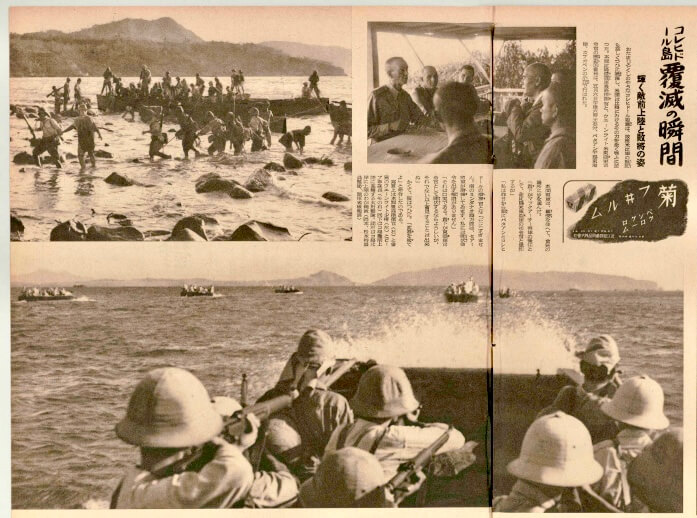
|
|
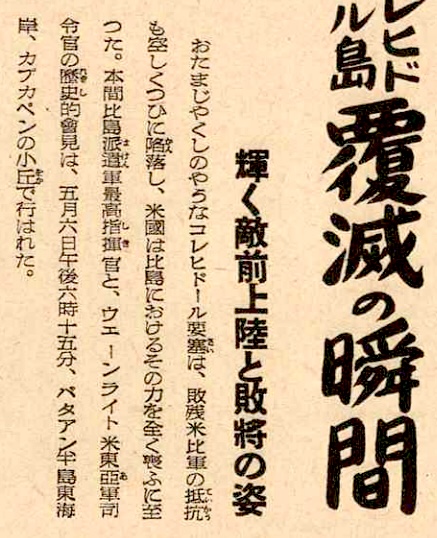
コレヒドール島、覆滅の瞬間 輝く敵前上陸と敗将の姿 おたまじゃくしのやうなコレヒドール要塞は、敗残米比軍の抵抗も空しく、ついに陥落し、米國は比島におけるその力を全く喪うに至 つた。本間比島派遣軍最高指揮官と、ウェーンライト米東亜軍司令官の歴史的会見は、五月六日午後六時十五分、ベタアン半島東海 岸、カプカペンの小丘で行はれた。 The US surrendered on May after Bataan march. (Translation) Corregidor Island: The Moment of Annihilation The Glorious Landing Before the Enemy and the Figure of the Defeated Commander The tadpole-shaped Corregidor Fortress finally fell, despite the futile resistance of the defeated American and Philippine forces. The United States thus completely lost its power in the Philippines. The historic meeting between General Homma, Supreme Commander of the Japanese Expeditionary Force to the Philippines, and General Jonathan Wainwright, Commander of the U.S. Forces in East Asia, took place at 6:15 PM on May 6th, on a small hill at Capucapén on the eastern coast of the Bataan Peninsula. |
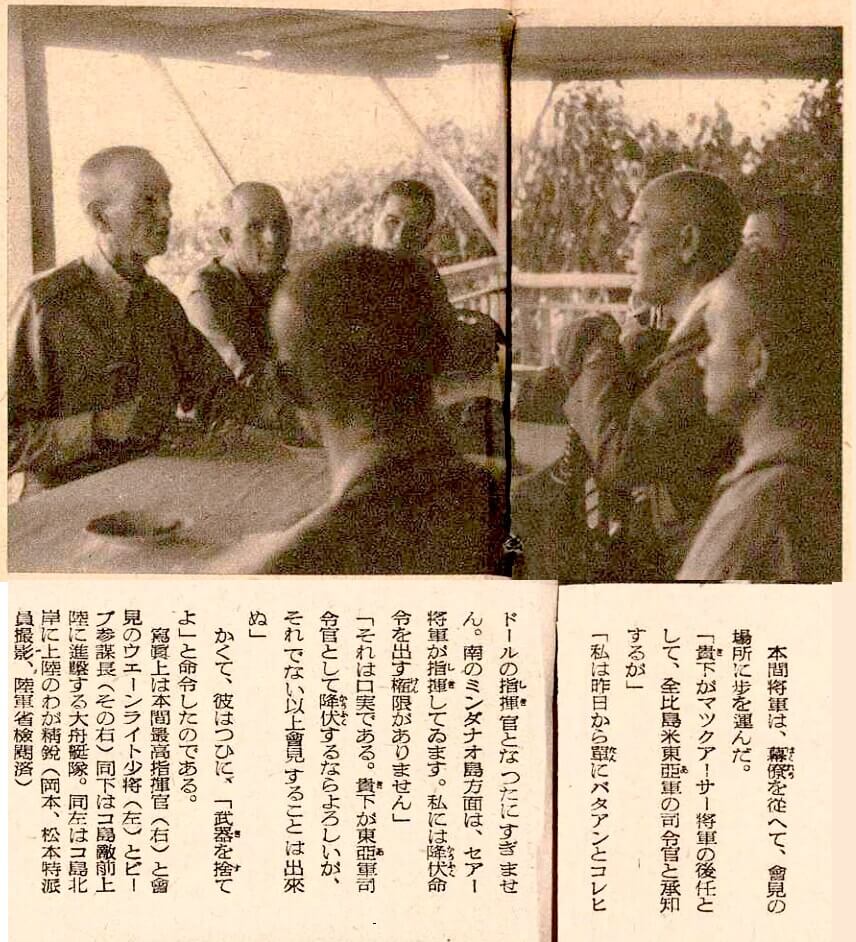
本間将軍は、幕僚を従えて、会見の場所に歩を選んだ。「貴下がマッカーサー将軍の後任として、全比島米東亜軍の司令官と承知するが」 「私は昨日から単にバターンとコレヒドールの指揮官となったにすぎません。南のミンダナオ島方面は、セアー將軍が指揮しています。私には降伏命令を出す職限がありません」 「それは口実である。貴下が東亜軍司令官として降伏するならよろしいが、それでない以上、会見することは出來ぬ」 かくて、彼はつひに「武器を捨てよ」と命令したのである。 写真上は本間最高指揮官(右)と会見のウェーンライト少将(左)とビープ参謀長(その右)同下はコレヒドール島北岸に上陸のわが精鋭(岡本、松本特派員撮影、陸軍省検閲済) (Translation) General Homma, accompanied by his staff, chose to walk to the meeting place. “I understand you have succeeded General MacArthur as Commander of the U.S. Forces in the East Asia Command throughout the Philippines.” “Since yesterday, I have merely assumed command of Bataan and Corregidor. General Shearman commands the southern Mindanao sector. I lack the authority to issue a surrender order.” “That is an excuse. If you surrender as Commander of the Army of the East Asia, that is acceptable. Otherwise, I cannot proceed with this meeting.” Thus, he finally ordered, “Lay down your arms.” Top photo: Supreme Commander Honma (right) meeting with Major General Weihlright (left) and Chief of Staff Beep (to his right). Bottom photo: Our elite troops landing on the northern shore of Corregidor Island (photographed by correspondents Okamoto and Matsumoto, censored by the Army Ministry). |
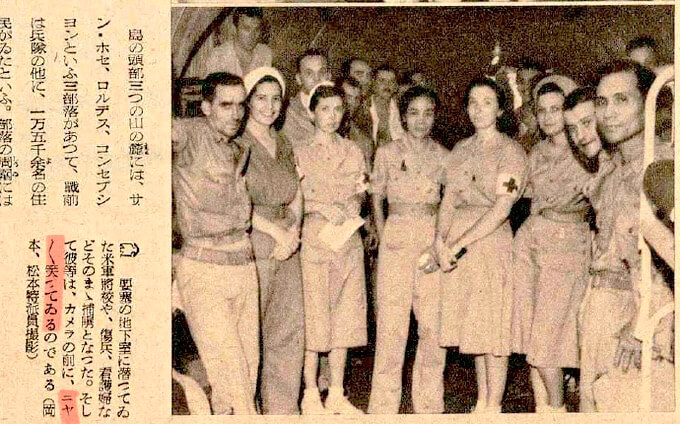
島の頭部三つの山の麓には、サン・ホセ、ロルデス、コンセプションといふ三部落があって、戦前は兵隊の他に、一万五千余名の住民がいたという。部落の周囲には、、、。 要塞の地下室に潜んでいた米軍将校や、傷兵、看護婦などそのまま捕虜となった。そして彼等は、カメラの前に、ニヤニヤ笑っているのである(岡本、松本特派員撮影) (Translation) At the foot of the island's three main mountains lie the three villages of San Jose, Lourdes, and Conception. Before the war, besides the soldiers, there were said to be over fifteen thousand residents. U.S. military officers, wounded soldiers, nurses, and others who had been hiding in the fortress's basement were taken prisoner. And there they were, grinning before the camera. (Photographed by Special Correspondents Okamoto and Matsumoto) |
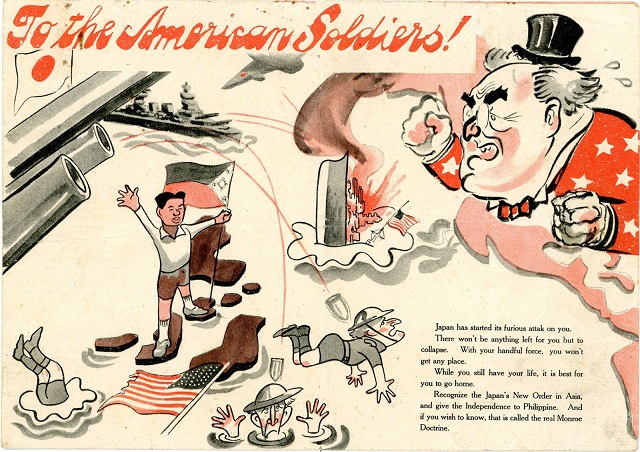
¶ Philippine after the end of 44 years US colonization (1898-1942)
(Movie) POW with rehabilitation and a new pledge
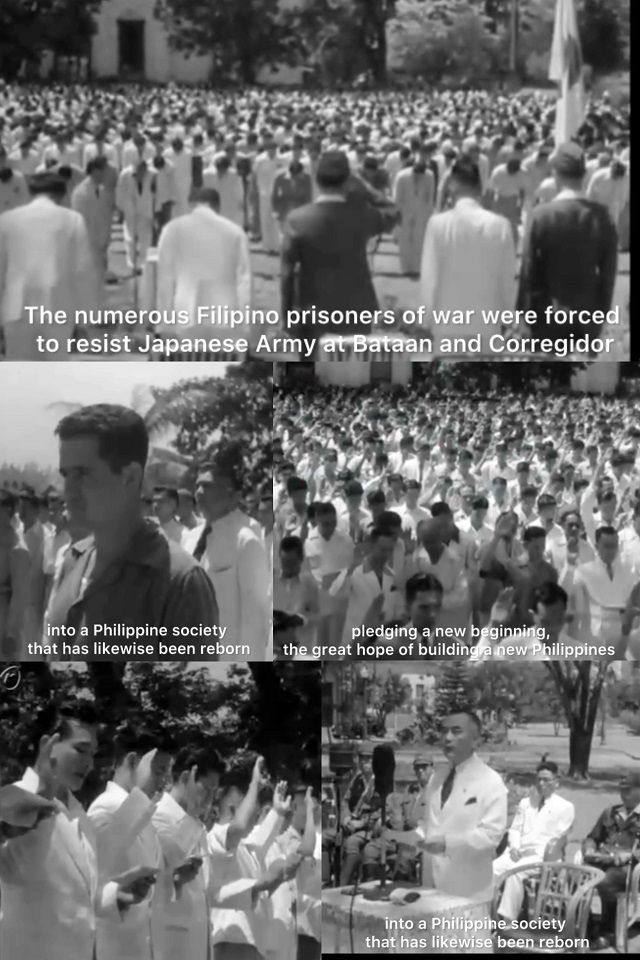
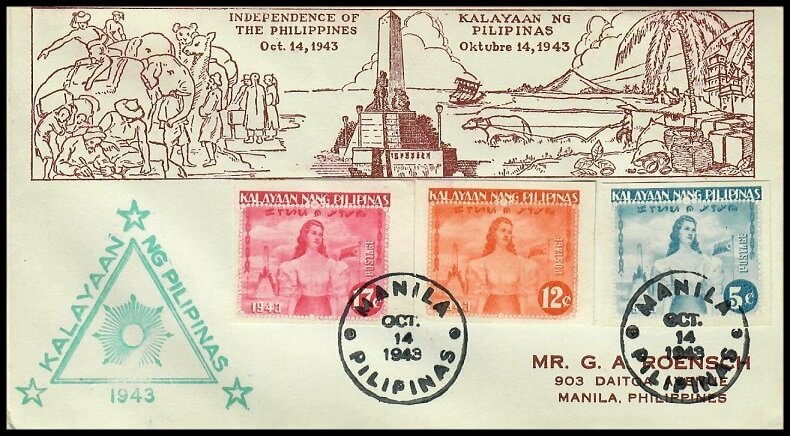
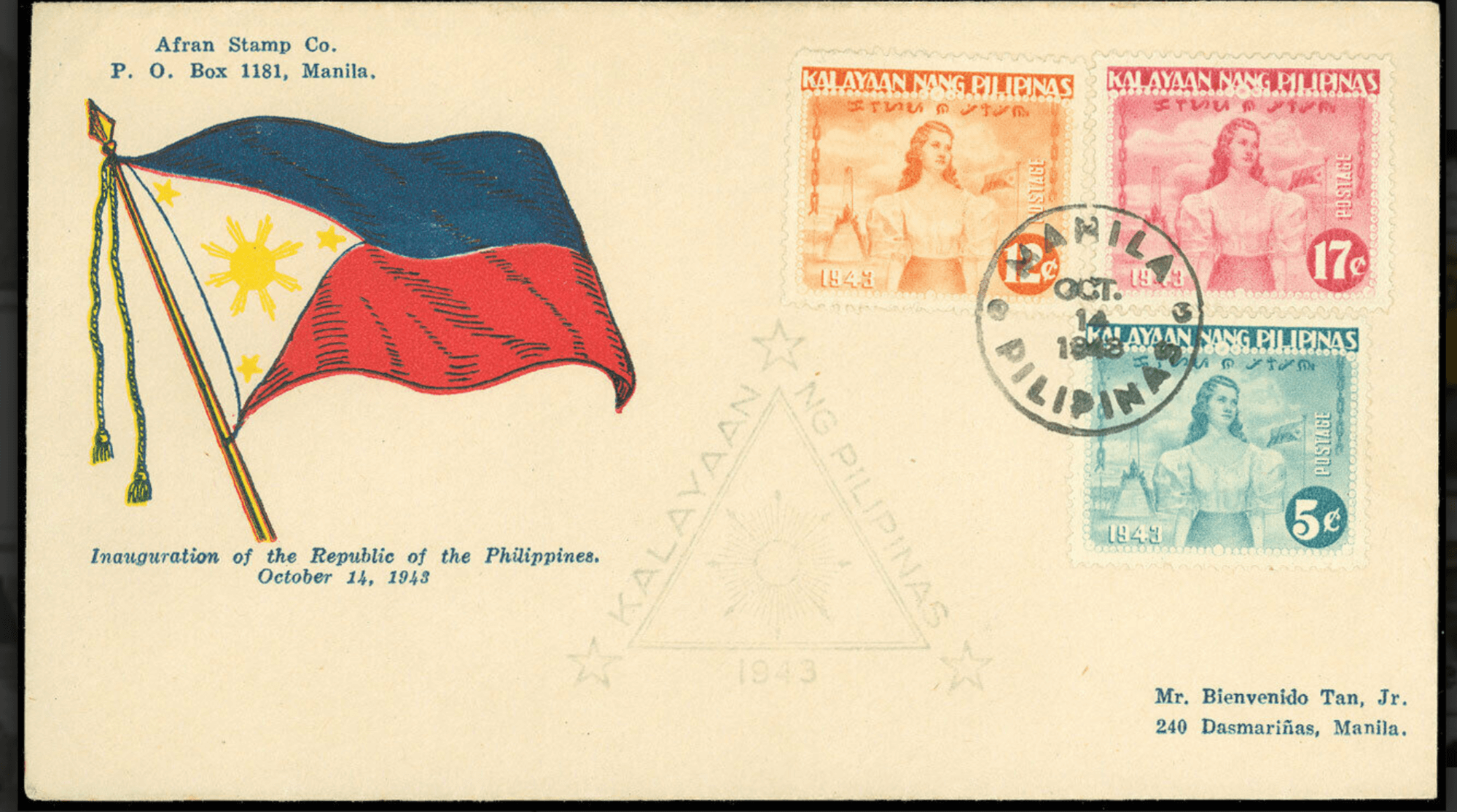
¶ The independence of Philippines in 1943
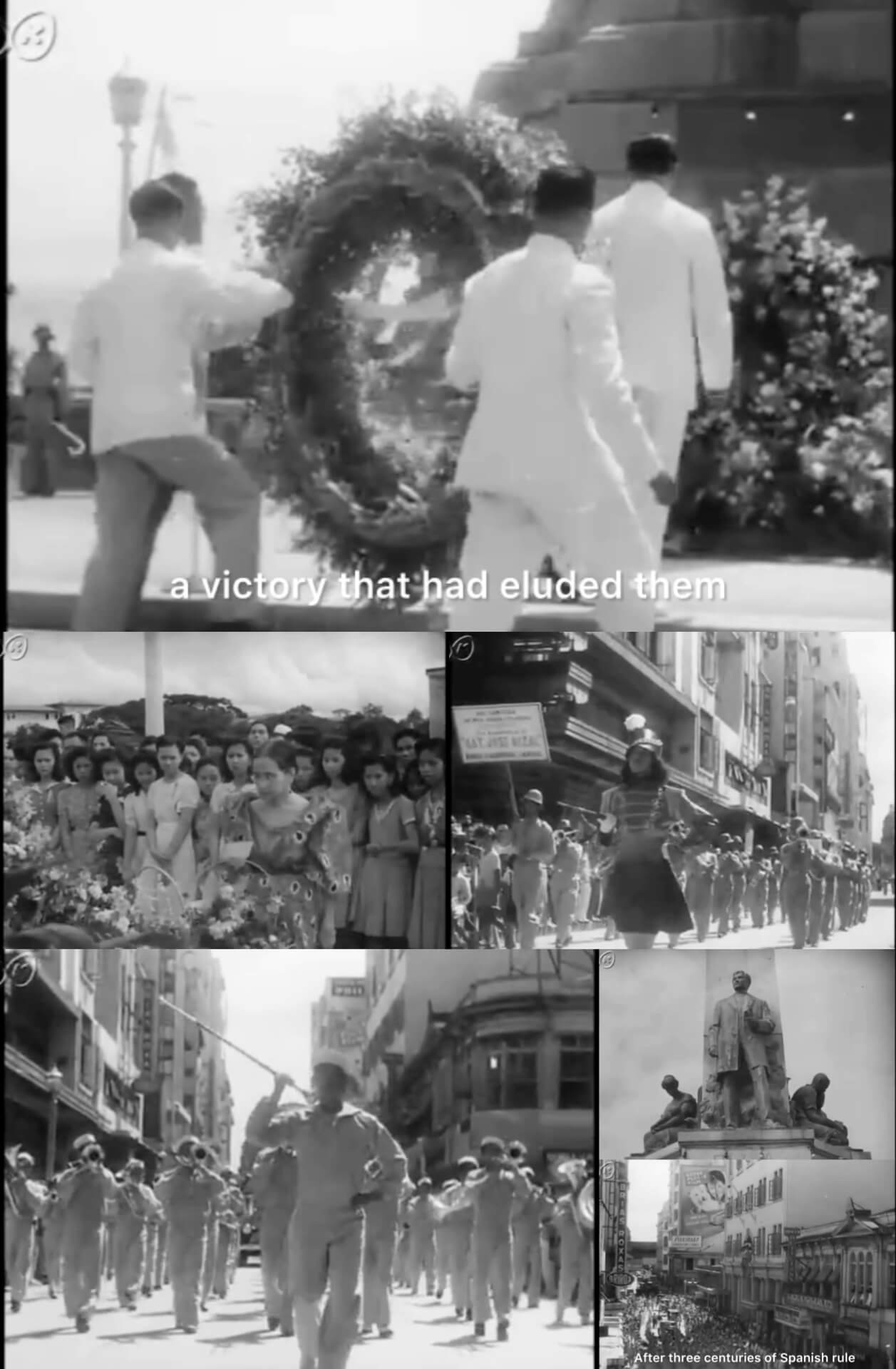
(Movie) The independence ceremony of the Philippines in 1943
https://www2.nhk.or.jp/archives/movies/?id=D0009180995_00000
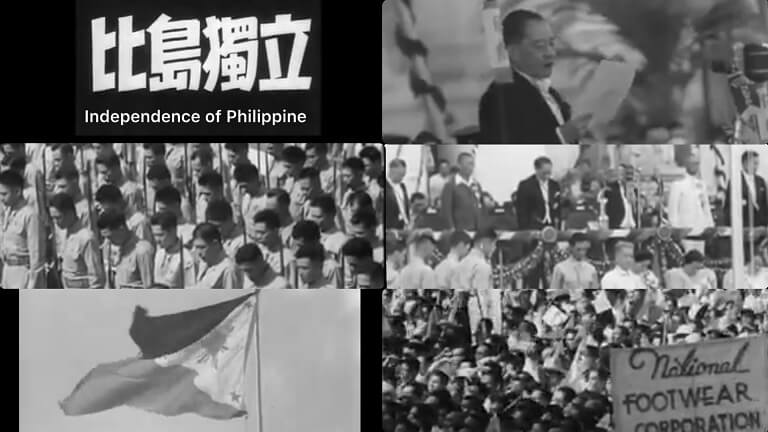
(Movie) Parade to Rizal monument in 1943
Original source https://www2.nhk.or.jp/archives/movies/?id=D0009180916_00000
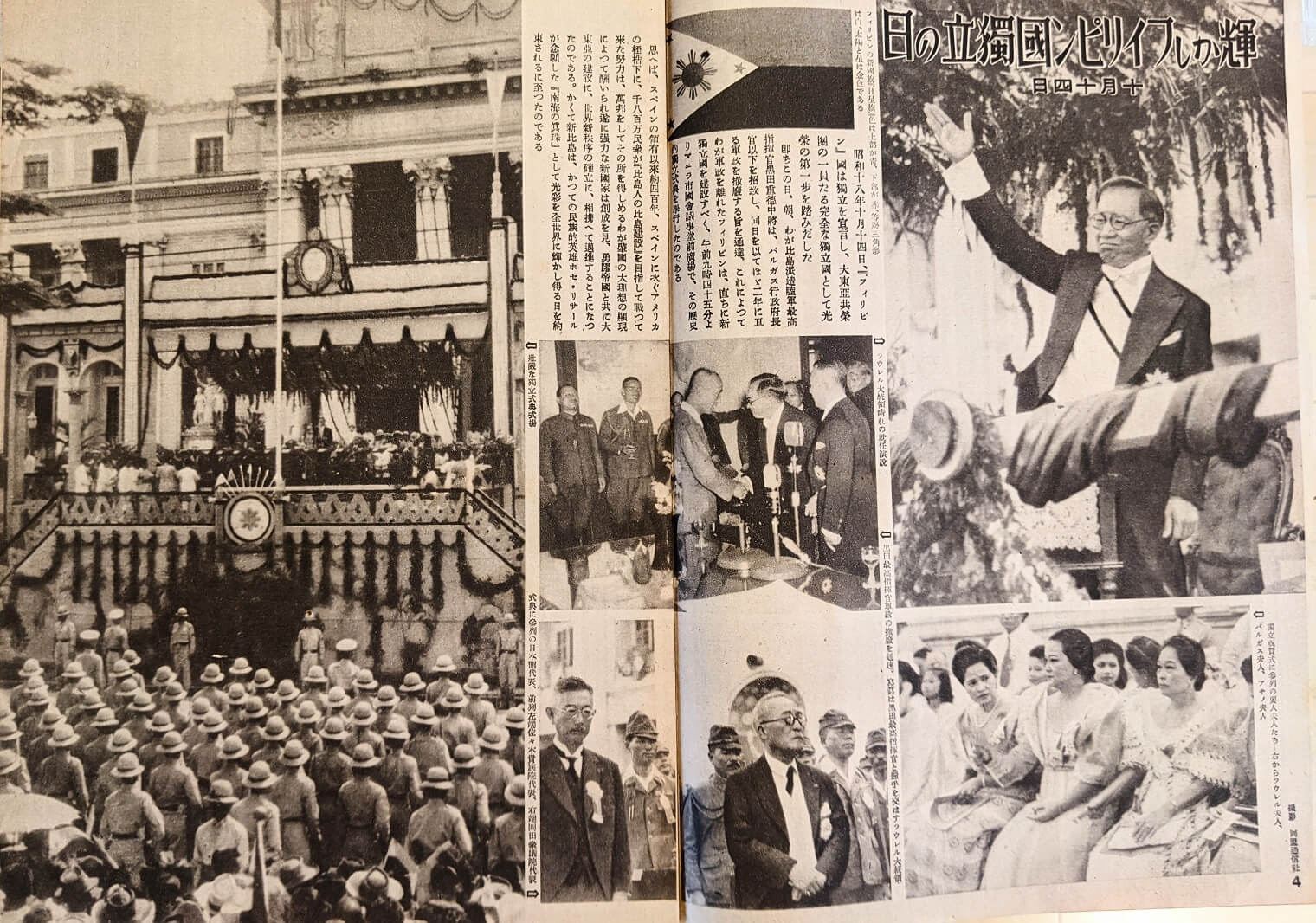
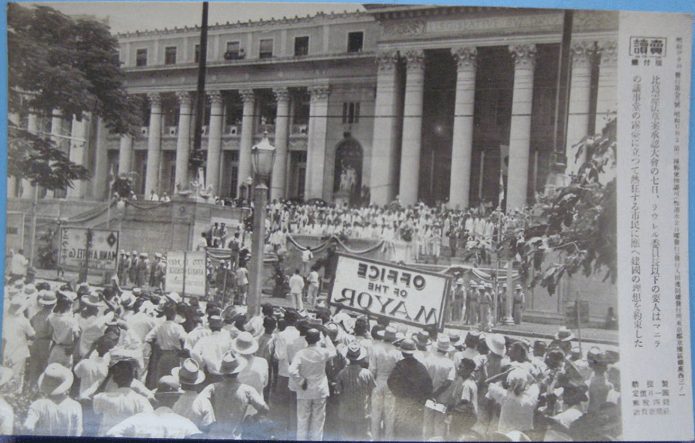
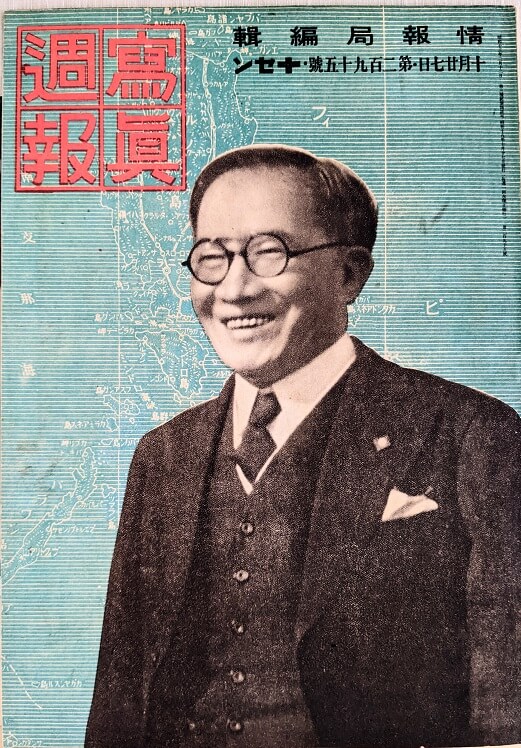
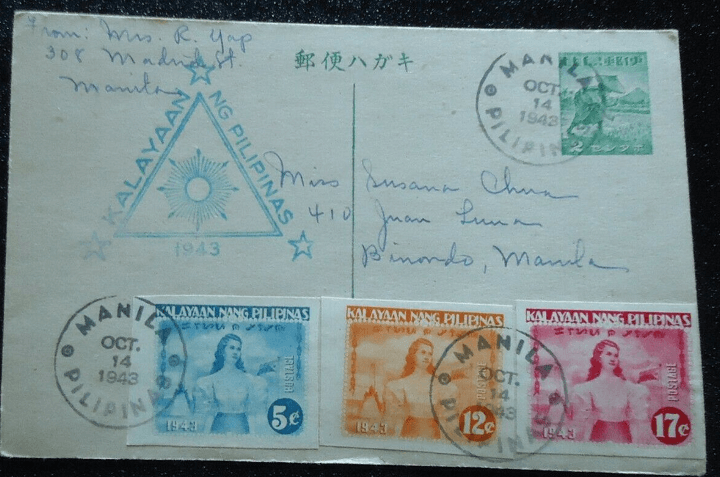
(Below) Journal Photo Weekly (写真週報 Shashin Shyuhou) October, 27, 1943, No.295
|
(English Translation) October 14, 1943, Showa 18, Philippines. The Philippines declared its independence, taking its first glorious step as a fully independent nation within the Greater East Asia Co-Prosperity Sphere. That morning, Lieutenant General Shigenori Kuroda, Supreme Commander of the Japanese Expeditionary Army in the Philippines, summoned Governor-General Vargas and his staff. He announced that the Japanese military government, which had lasted nearly two years, would be abolished effective that same day. Thereupon, the Philippines, freed from our military administration, immediately proceeded to establish a new independent nation. At 9:45 AM, the historic independence ceremony commenced in the plaza before the National Assembly building in Manila. Reflecting on the past, for nearly four hundred years since Spanish rule, and subsequently under American domination, eighteen million people fought for the establishment of a Philippine government by Filipinos. Their efforts were rewarded by the realization of our founding ideal, which grants every nation its rightful place. A far more powerful new nation was born, and with courageous resolve, it joined the Empire in advancing together toward the construction of the Greater East Asia Co-Prosperity Sphere and the establishment of a new world order. Thus, the new Philippines was assured of the day when it would shine its brilliance across the world as the “Pearl of the South Seas,” the very vision cherished by its national hero, José Rizal. |
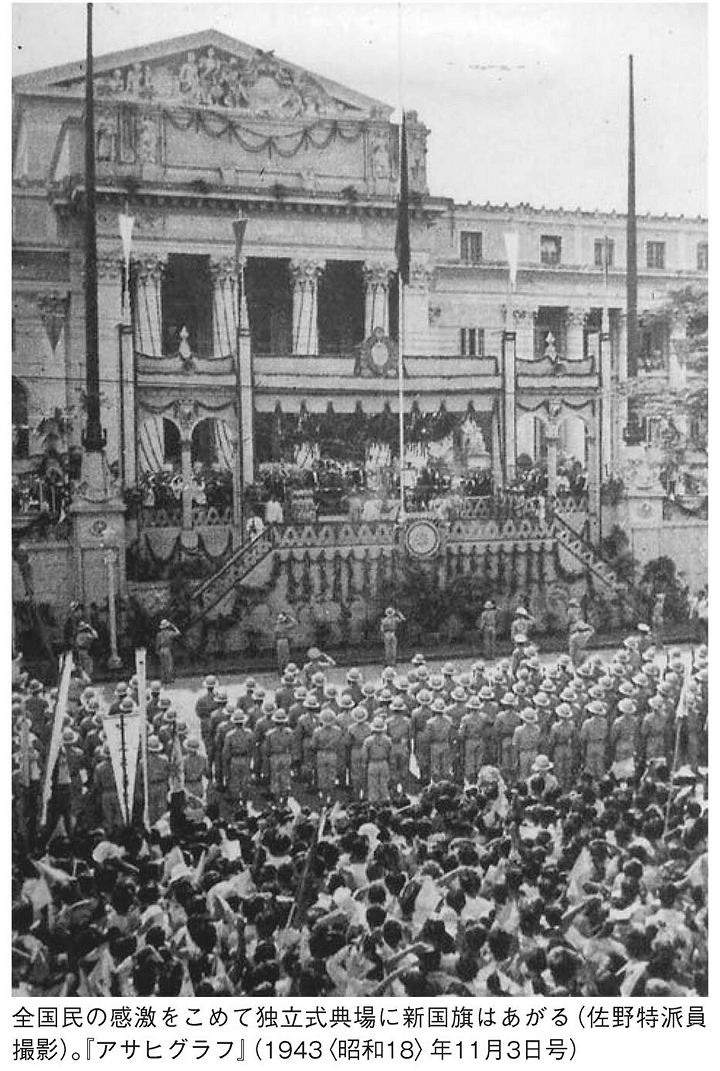
(Below) The new national flag rises at the independence ceremony venue, carrying the emotions of the entire nation (Photo by Sano, special correspondent). Asahi Graph (November 3, 1943 issue)
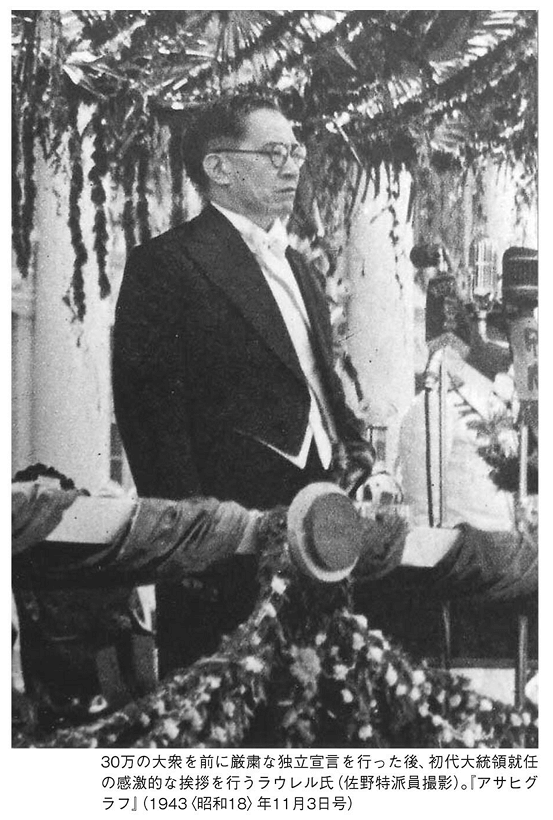
(Below) Mr. Laurel delivering his stirring inaugural address after solemnly declaring independence before a crowd of 300,000 (Photo by Sano, special correspondent). Asahi Graph, November 3, 1943 issue.
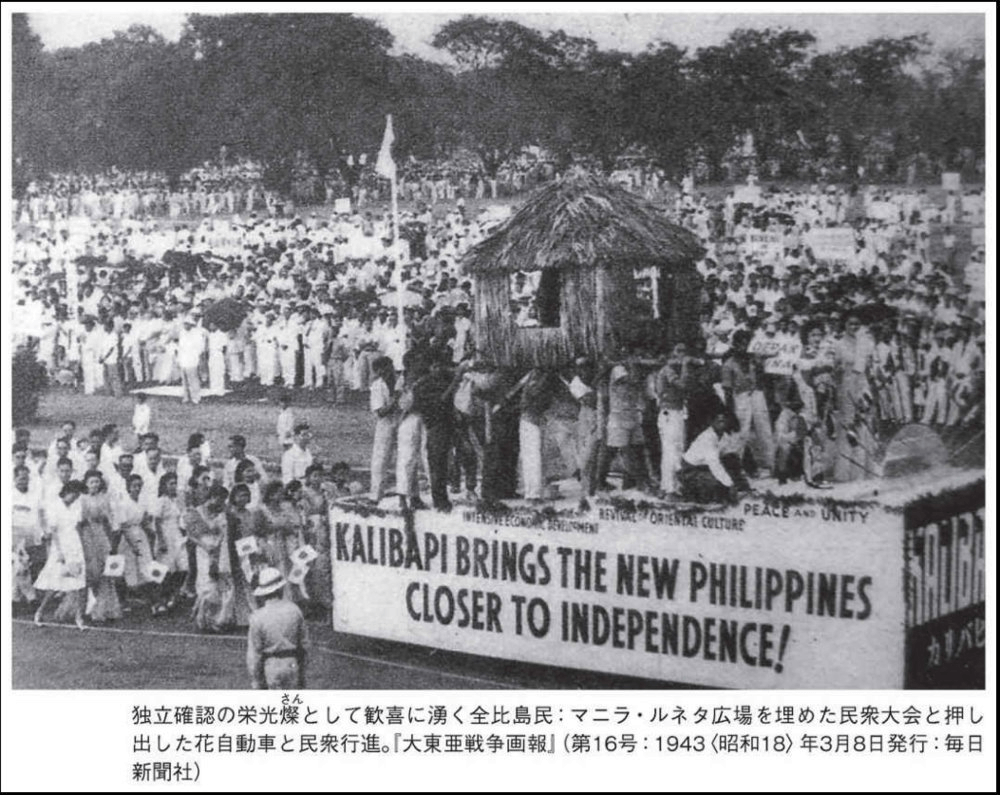
(Below) All Filipinos rejoice in the glory of independence: A mass rally filling Manila's Rizal Park, flower-decorated automobiles parading through the streets, and a popular procession. (The Greater East Asia War Pictorial, Issue 16: Published March 8, 1943 [Showa 18]: Mainichi Shimbun)
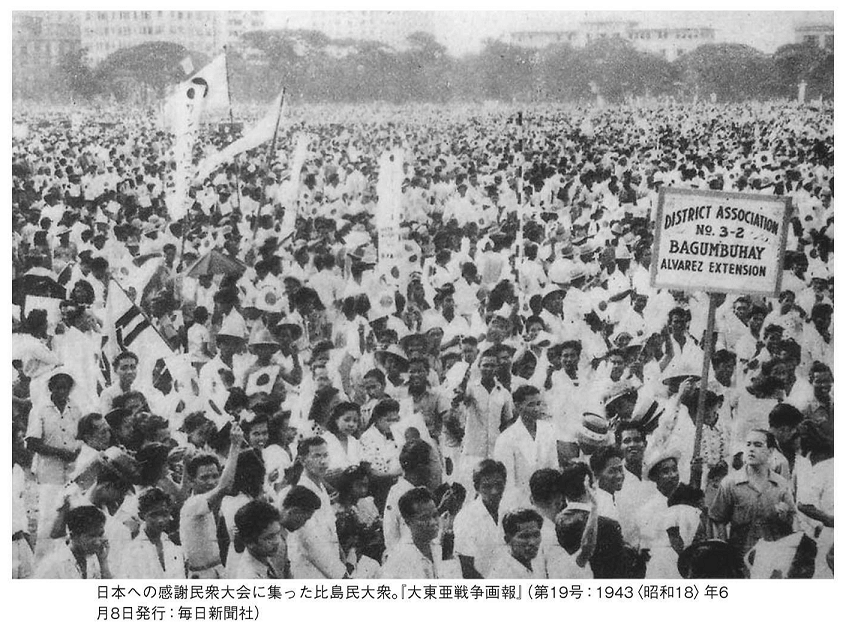
(Below) Filipino masses gathered at the Gratitude Rally for Japan. (The Greater East Asia War Pictorial, Issue 16: Published March 8, 1943 [Showa 18]: Mainichi Shimbun)
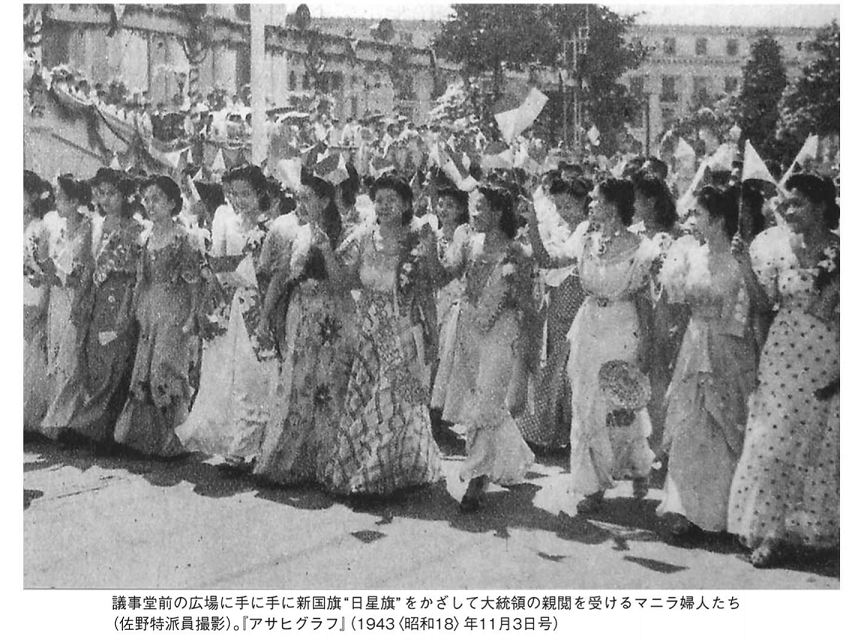
(Below) Manila women holding the new national flag, the “Sun and Star Flag,” in the square before the Parliament building as they receive the President's personal greetings. (Photo by Sano, Special Correspondent). Asahi Graph, November 3, 1943 (Showa 18) issue
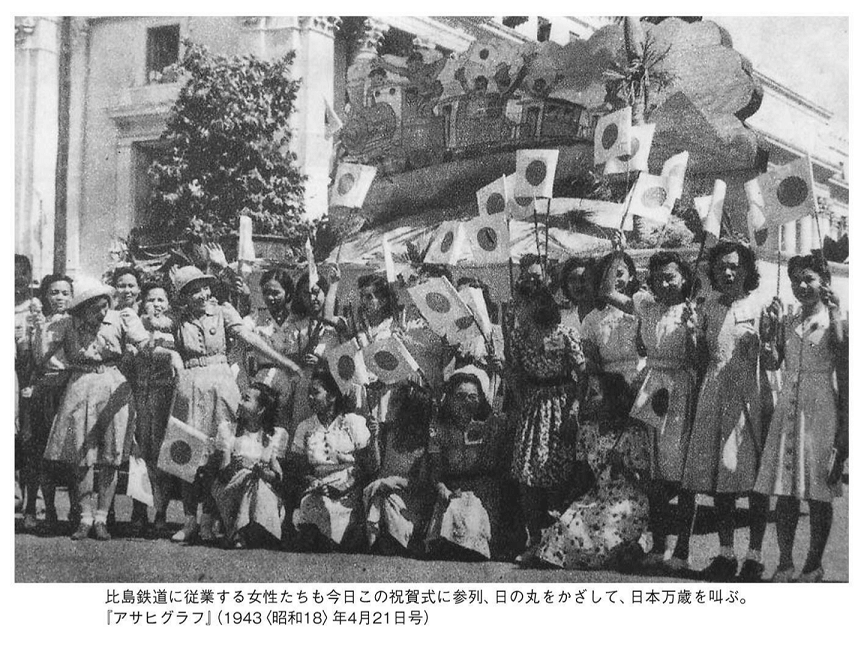
(Below) Women employed by the Philippine Islands Railway also attended today's celebratory ceremony, waving the Rising Sun flag and shouting “Long live Japan!” Asahi Graph (April 21, 1943 issue)
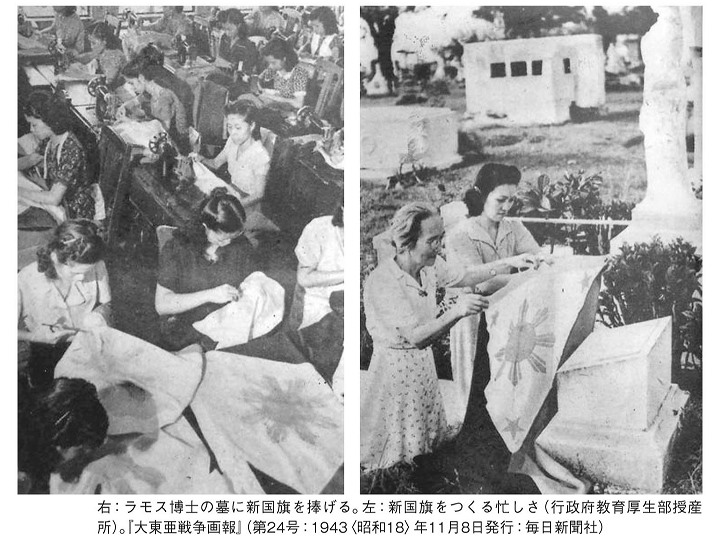
(Below) Right: Offering the new national flag at Dr. Ramos' grave. Left: Busy making the new national flag (Government Administration Education and Welfare Department Workshop). “Greater East Asia War Pictorial” (Issue 24: Published November 8, 1943): Mainichi Shimbun
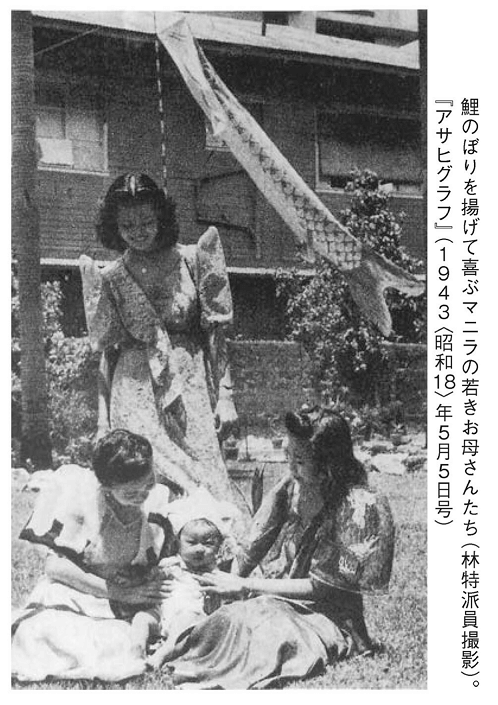
(Below) Young mothers in Manila rejoice as they raise carp streamers (Photo by Correspondent Hayashi) Asahi Graph (May 5, 1943 issue)
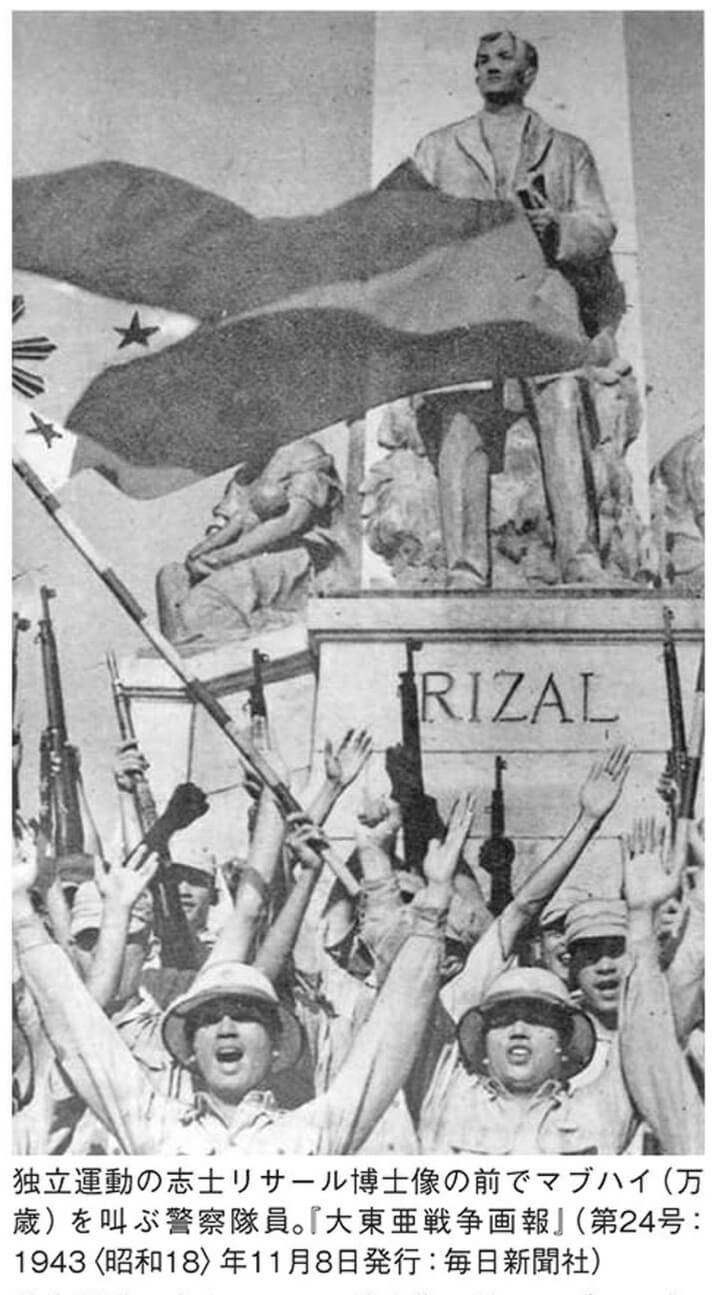
(Below) People celebrating in front of the statue of Jose Rizal
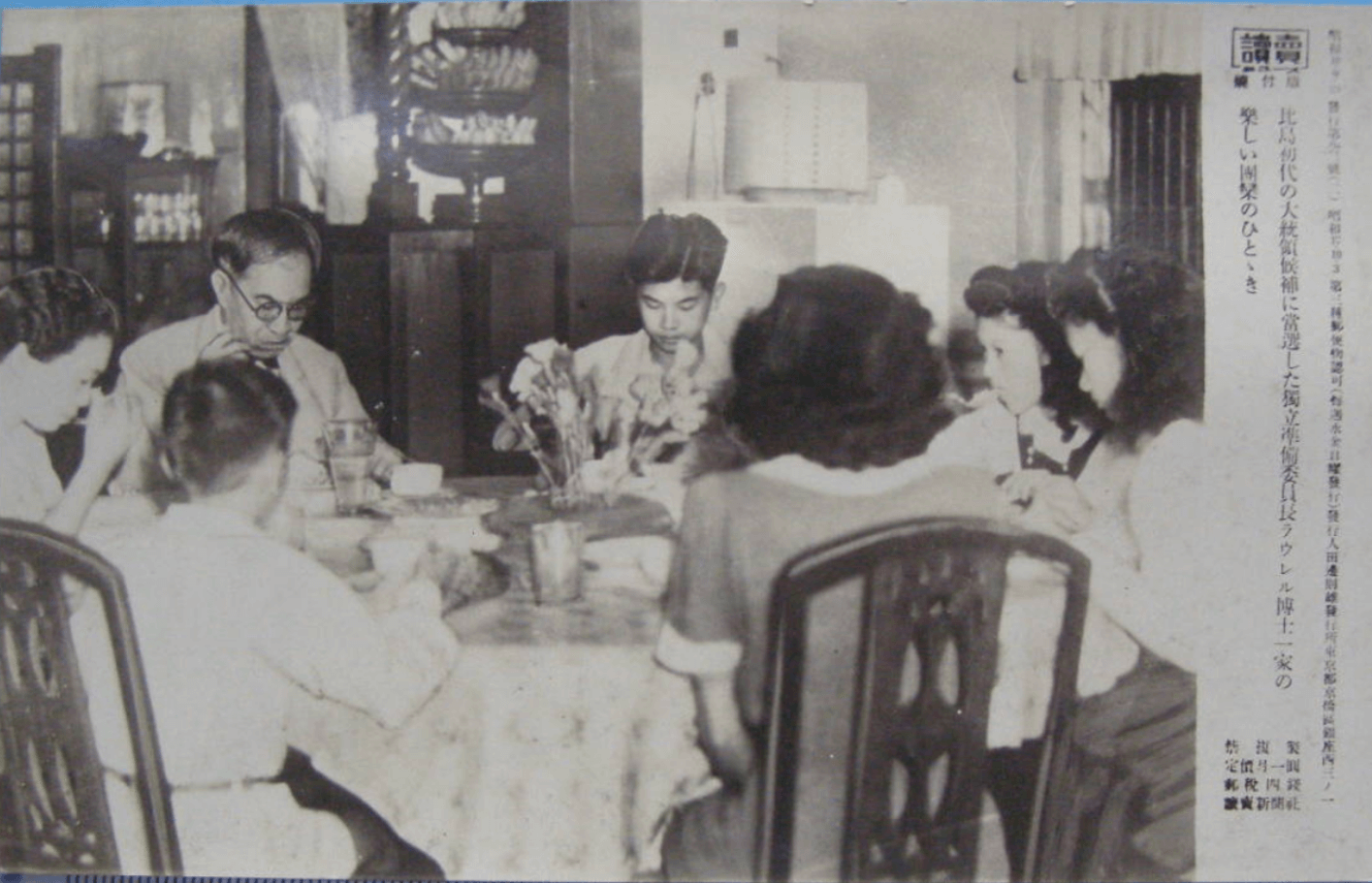
(Below) 比島初代大統領候補に当選した独立準備委員長、ラウレル博士一家の楽しい団欒のひととき
A joyful family gathering of Dr. Laurel, Chairman of the Preparatory Committee for Independence, who was elected as the first presidential candidate of the Philippines.
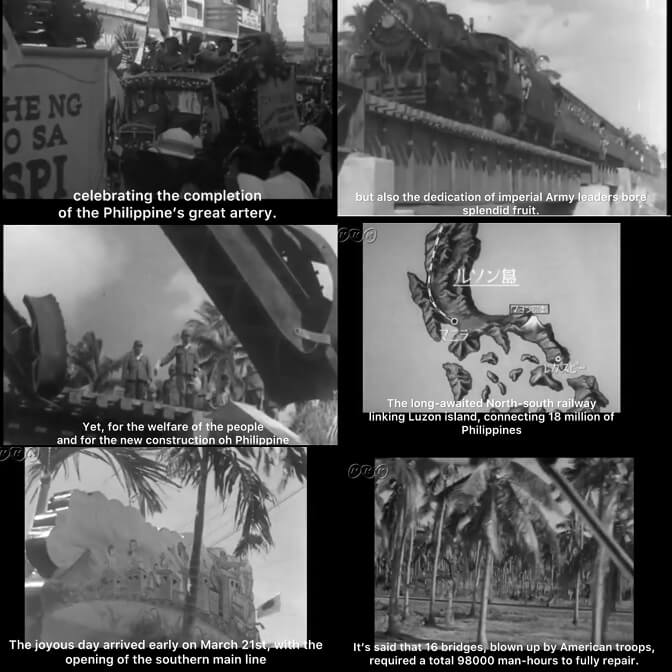
(Movie) Restoring Railroads 1943
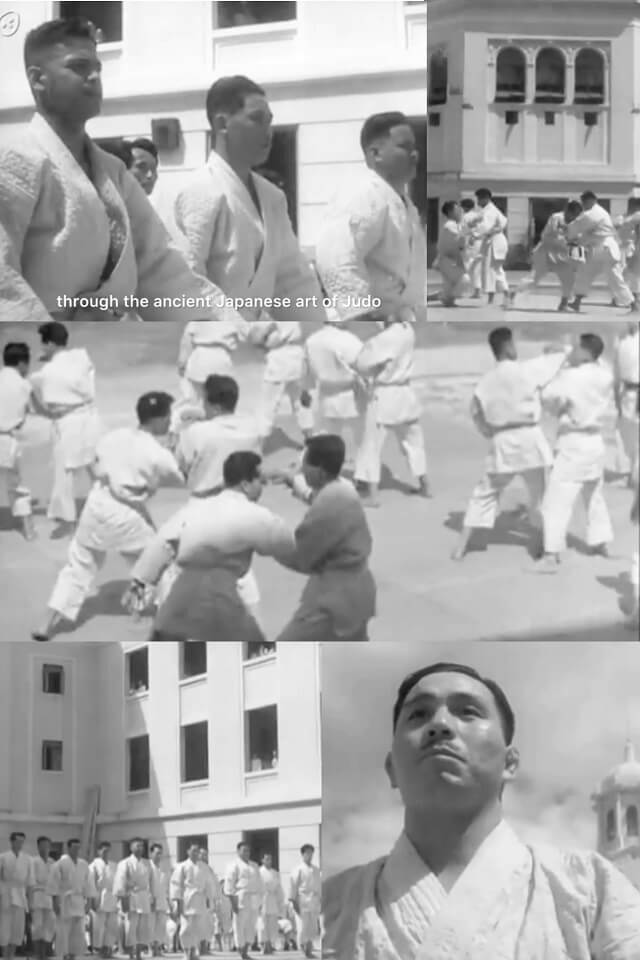
(Movie) Manila Police learning Judo
https://www2.nhk.or.jp/archives/movies/?id=D0009180863_00000
|
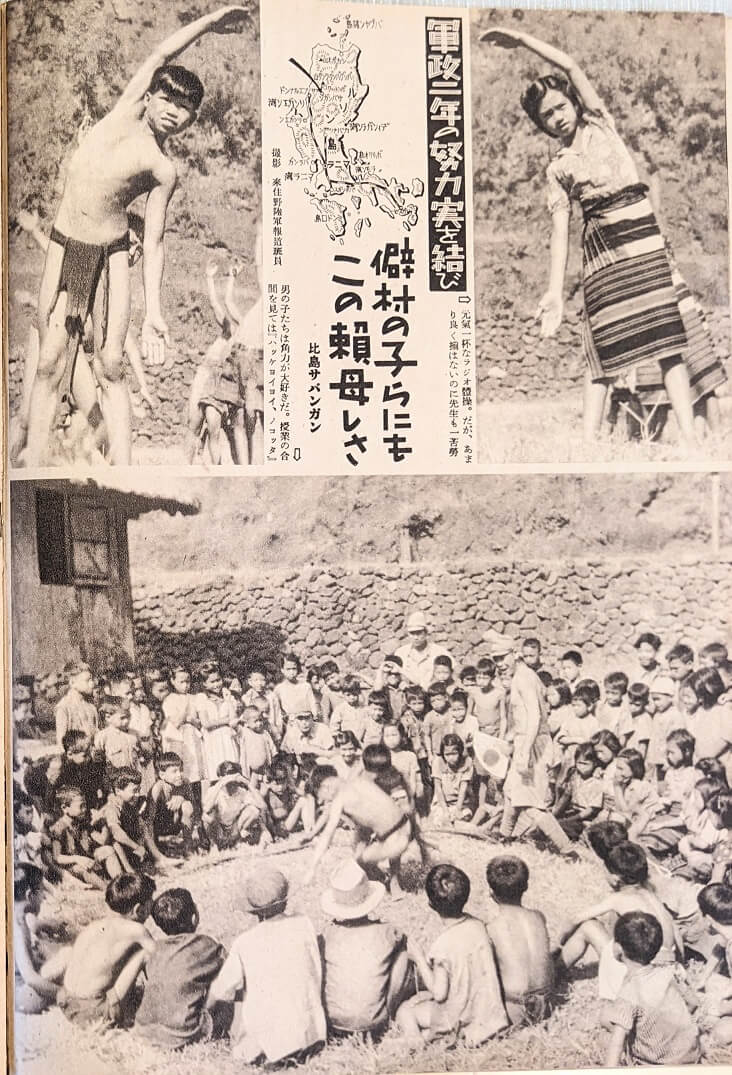
(Below) [Top Right] 街角に貼られた日本語ポスターに見入る少女たち [Top Left] 日本語の上達は素晴らしく、餘り上手な『今日ハ』に現地の兵隊さんがはっとされることがあるという。 [Left Bottom] おじぎも上手になって兵隊さんに行儀正しく『サヨナラ』の挨拶。 比島再建につくされた軍政二カ年の努力は、文化教育の部門にも立派に實を結んで、比島全体にわたって諸学校の既に再開されたもの公私立小学校約1千四百、就学児童数は五十万に達している。この地、中等学校、専門学校、大学などについても、必要なものについては逐次再開がはかられており、独立と共に舊套(きゅうとう)を脱した比島教育の健全な発達は十分期待される。日本語の普及も比島人の語学に達者な素質と比島人一般に学習熱の高まったことと相俟って、マニラなどの都会地ばかりでなく、地方でも目覚ましい進捗をみせている。 このサバンガンは山岳郷の一村で、昔は首狩り人種といわれたイゴロト族の住む地であるが、イゴロトのヨイコたちが分哨の兵長先生を中心に熱心に日本語を学ぶ頼みしい姿は、共栄圏の一員として逞しく起ち上がった比島の将来を物語って餘りある。 [Top Right] Girls intently studying Japanese posters posted on street corners [Top Left] Their Japanese skills have improved remarkably, and local soldiers are sometimes startled by their surprisingly fluent “Kon nichi wa” greetings. [Left Bottom] Their bows have also improved, and they politely greet soldiers with “Sayonara.” The two years of military administration dedicated to Philippine reconstruction have borne splendid fruit in the cultural and educational sectors. Across the Philippines, approximately 1,400 public and private elementary schools have already reopened, with the number of enrolled children reaching 500,000. Regarding secondary schools, vocational colleges, and universities in this region, necessary reopenings are being arranged sequentially. With independence, the sound development of Philippine education, shedding old conventions, is fully anticipated. The spread of the Japanese language, aided by Filipinos' innate aptitude for languages and the heightened enthusiasm for learning among Filipinos in general, is showing remarkable progress not only in urban areas like Manila but also in the provinces. This village of Sabangan lies in a mountainous region, once home to the Igorot tribe known in the past as headhunters. Yet the sight of the Igorot youths diligently learning Japanese under the guidance of Sergeant Major, the detachment commander, speaks volumes about the future of the Philippines rising robustly as a member of the Co-Prosperity Sphere. 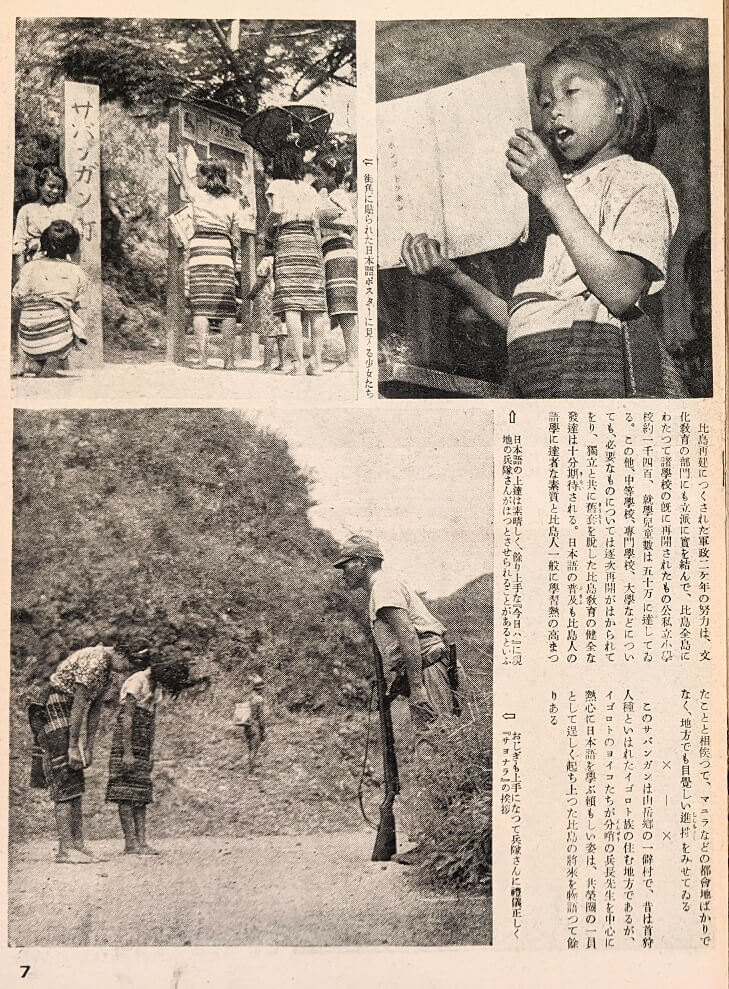
|
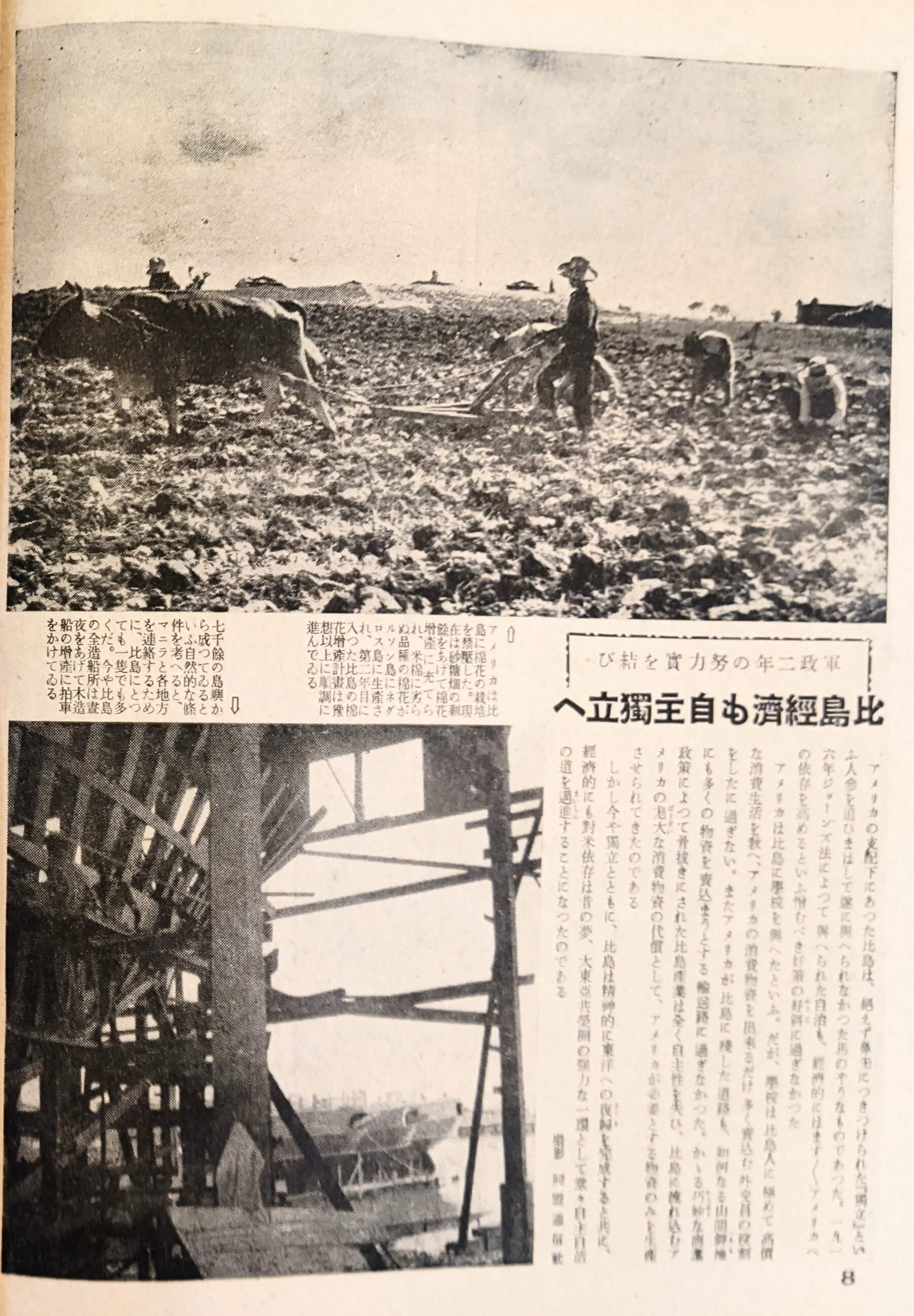
写真週報 1943年10月 27日 No.295
比島経済も自主獨立へ
アメリカの支配下にあった比島は、絶えず鼻先につきつけられた「獨立」という人参を追いまわして遂に与えられなかった馬のようなものであった。一九一六年、ジョーンズ法によって与えられた自治も、経済的にはますますアメリカの依存を高めるという憎むべき好作の好餌に過ぎなかった。アメリカは比島に学校を与えたという。だが、学校は比島人に極めて高價な消費生活を教え、アメリカの消費物資を出来るだけ多く費込む外交員の役割をしたに過ぎない。またアメリカが比島に残した道路も、如何なる山間僻地にも多くの物資を費込もうとする輸送路に過ぎなかった。かかる巧妙な商業政策によって骨抜きにされた比島産業は、全く自主性を失い、比島に流れ込むアメリカの膨大な消費物資の代償として、アメリカが必要とする物資のみを生産させられてきたのである。しかし、今や獨立とともに、比島は精神的に東洋への復帰を完成すると共に、経済的にも対米依存は昔の夢、大東亜共栄圏の強力な一環として、堂々自主自活の道を邁進することになったのである。 撮影 同盟通信社
(上の写真) アメリカは比島に綿花の栽培を禁壓した。現在は砂糖畑の剰餘をあげて綿花増産に充てられ、米綿に劣らぬ品種の綿花がルソン島にネグロス島に生産され、第二年目に入った比島の綿花増産計画は予想以上に順調に進んでいる。
(下の写真) 七千餘の島嶼から成っているという自然的な条件を考えると、マニラと各地方を連絡するために、比島につとめても一隻でも多くだ。今や比島の全造船所は晝夜をあげて木造船の増産に拍車をかけている。
[English translation above ]
Journal Photo Weekly (写真週報 Shashin Shyuhou) October, 27, 1943, No.295
Philippine Economy Heads Toward Self-Reliance and Independence
The Philippines, under American rule, had been like a horse chasing the carrot of “independence” dangled constantly before its nose, only to never receive it. The autonomy granted by the Jones Act of 1916 proved nothing more than a hateful bait and switch, economically deepening dependence on America. America claimed to have given the Philippines schools. Yet these schools merely taught Filipinos an extremely expensive lifestyle, serving as agents to consume as many American consumer goods as possible. Moreover, the roads America left behind in the Philippines were merely transportation routes designed to funnel vast quantities of goods into even the most remote mountainous regions. Through such cunning commercial policies, Philippine industry was completely hollowed out, stripped of all autonomy. It was forced to produce only the goods America needed, as payment for the enormous flow of American consumer goods flooding into the Philippines. However, with independence now achieved, the Philippines has spiritually completed its return to the East. Economically, dependence on America is a thing of the past. As a powerful link in the Greater East Asia Co-Prosperity Sphere, it has embarked with pride on the path of self-reliance and self-sufficiency. Photo: Dōmei News Agency
(Top photo) America once prohibited cotton cultivation in the Philippines. Now, surplus land from sugar plantations is being used to increase cotton production. Varieties of cotton comparable to American cotton are being produced on Luzon and Negros Islands. The second year of the Philippine cotton expansion plan is progressing more smoothly than anticipated.
(Photo below) Considering the natural condition of being composed of over seven thousand islands, even one additional ship is essential to connect Manila with the various regions. All shipyards in the Philippines are now working day and night to accelerate the production of wooden vessels.
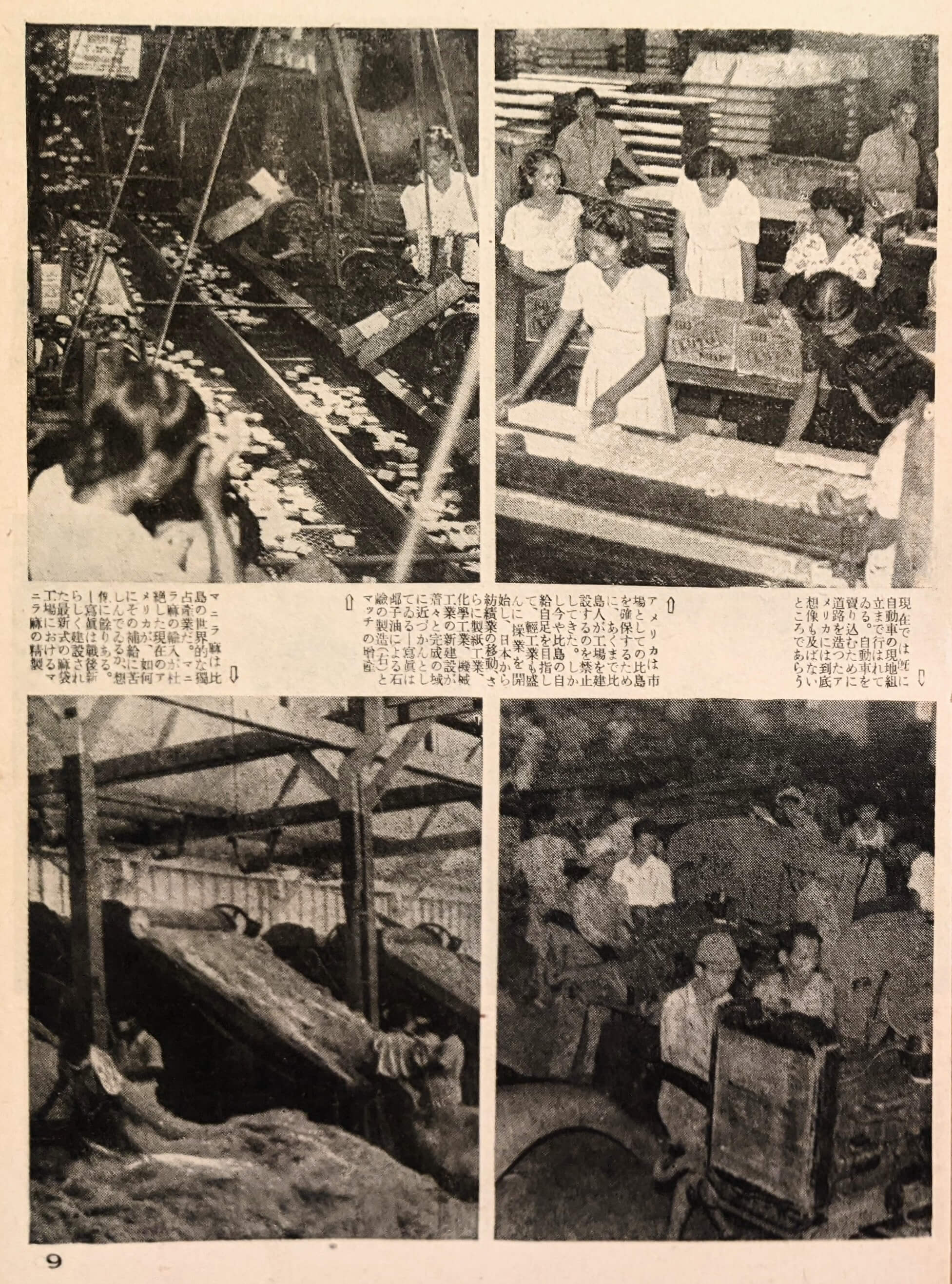
(Below)
[Left Bottom]
マニラ麻は、比島の正解的な独占産業だ。マニラ麻の輸入が杜絶した現在のアメリカが、如何にその補給に苦しんでるか想像に餘りある。寫眞は戦後新しく最新式の麻袋工場におけるマニラ麻の精製
Manila hemp is the Philippines' true monopoly industry. One can only imagine how much the United States, now cut off from Manila hemp imports, is suffering to secure supplies. The photograph shows the processing of Manila hemp at a new, state-of-the-art burlap factory after the war.
[Top]
アメリカは市場としての比島を確保するために、あくまで比島人が工場を建設するのを禁止してきた。しかし、今や比島の自給自足を目指して、軽工場も盛んに操業を開始し、日本から紡績業の移動、さらに製紙工業、化学工業、機械工業の神権説が着々と完成の域に近づかんとしている。寫眞は椰子油による石鹸の製造(右)とマッチの増産
The United States has consistently prohibited Filipinos from building factories in order to secure the Philippines as a market. However, aiming for self-sufficiency, light factories have now begun operating vigorously. The transfer of the spinning industry from Japan, along with the paper, chemical, and machinery industries, is steadily nearing completion. Photographs show soap production using coconut oil (right) and increased match production.
[Right Bottom]
現在では既に自動車の現地組み立てまで行われている。自動車を売り込むために道路を造ったアメリカには到底想像も及ばないところであろう。
Today, they have even begun assembling automobiles locally. This is something the United States, which built roads to sell cars, could never have imagined.
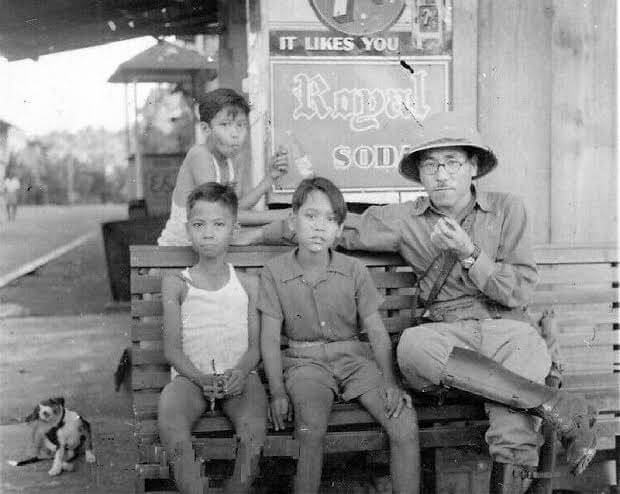
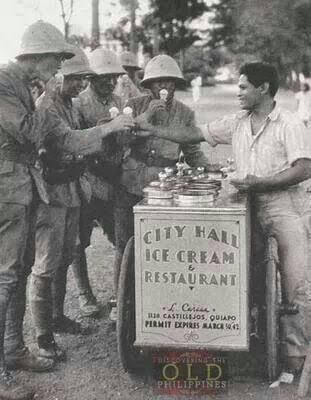
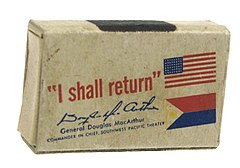
¶ Yet, the US came back.
What gives the US a right to come back to the independence declared nation and make it a battle field?
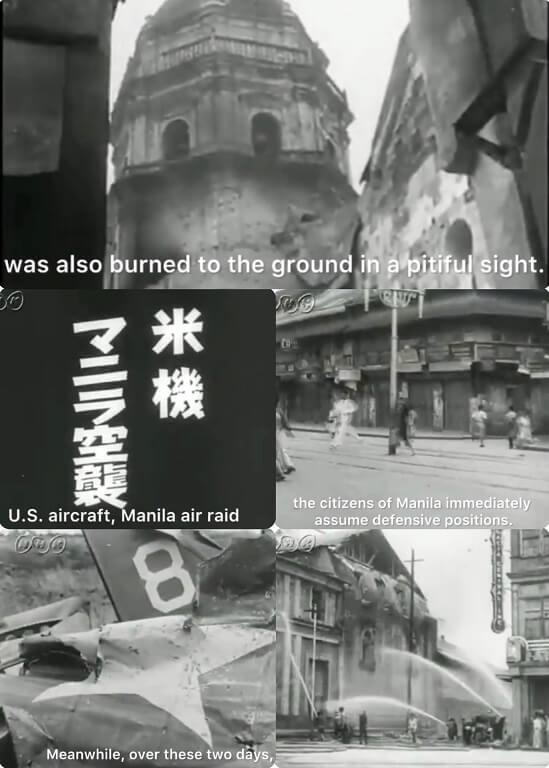
(Movie) Luzon Frontline, the US came back
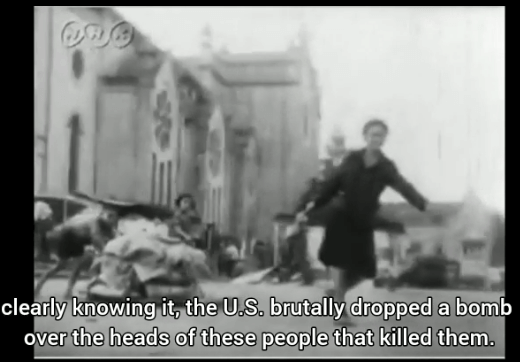
(Movie) The US airplane air raid over Binondo Church
https://www2.nhk.or.jp/archives/movies/?id=D0001300355_00000&chapter=002
|
日本軍が死守するマニラ市に対する集中砲撃。写真右方の高い塔は市役所の一部で、攻略後、連合軍最高司令部となった。 Intense artillery bombardment targeting Manila City, fiercely defended by Japanese forces. The tall tower on the right side of the photo is part of the city hall, which became the Allied Forces Supreme Command Headquarters after its capture. 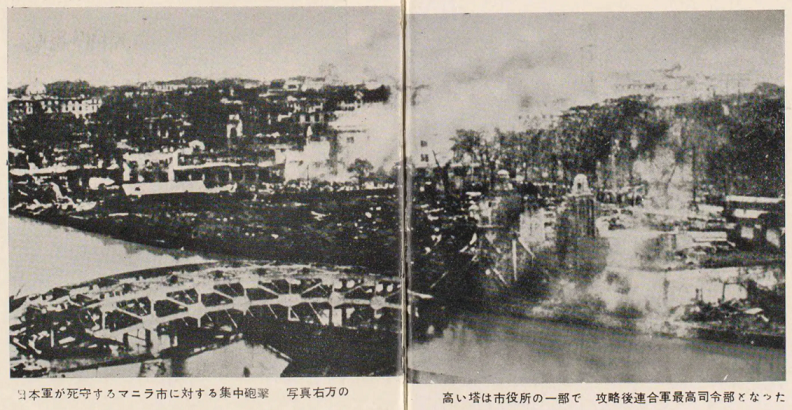
|
|
|
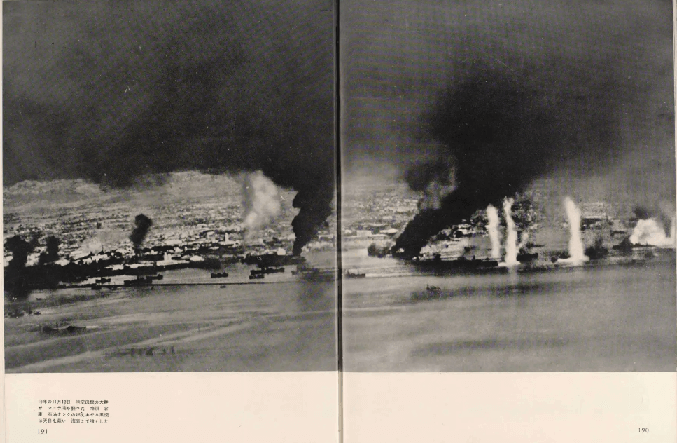
(昭和)19年の11月13日 米空母機の大群が、マニラ港を襲った。埠頭、倉庫、石油タンクの燃え上がる黒煙は天日を蔽い、海面まで暗くした。 November 13, 1944 A massive fleet of U.S. carrier-based aircraft attacked Manila Harbor. Black smoke billowing from the burning docks, warehouses, and oil tanks obscured the sun and darkened the sea surface. 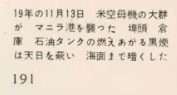 |
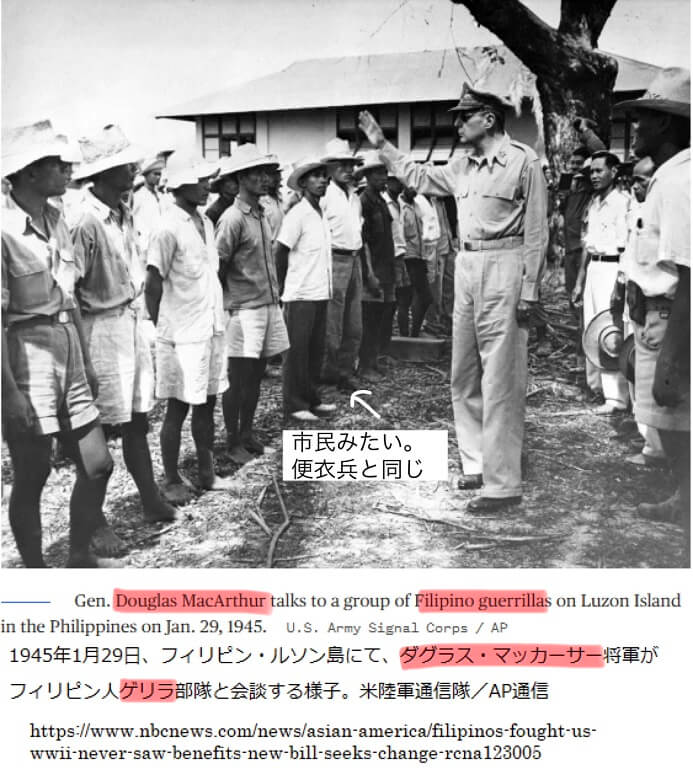
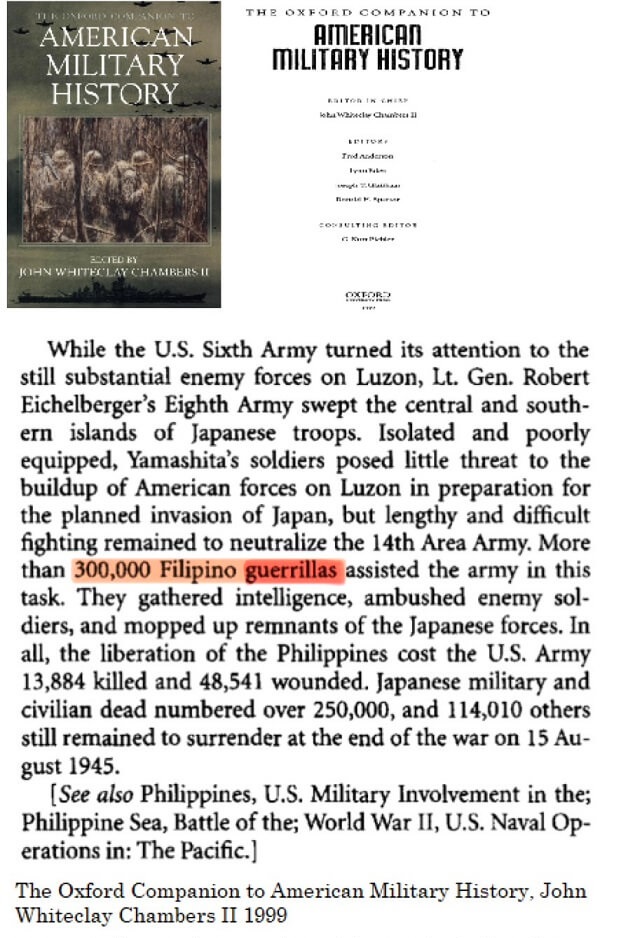
The US used 300000 guerrillas to attack Japanese in Philippine. Some look like civilians, which endangers other civilians being the targets of war.
|
朝日新聞 1945/02/04 原住民を矢面に 【ルソン前線基地 藤田報道班員 三日発】米鬼はリンガエンに強行上陸して以来、いよいよ、その残虐振りを随所に発揮し、病院、学校、寺院を盲爆するなど限りなき戦法振りを見せているが、わが斬込隊の報告によれば、かなり多数の原住民軍がわが方の攻撃の矢面に立てられ、憐れる人道主義に踊らされており、さらにクラーク付近に侵入して来た一部、敵先導部隊にも、原住民匪賊多数が混ざっているといわれ、かれ等、原住民匪の一部は、常に米軍の手先となり、先頭にたてられて、戦意なき戦いを続けていることが判った。然も、これら無惨な原住民は全部には正規な装備が行きわたらず、中には木塊を楯に戦いを余儀なくされている者もある。今次のリンガエン上陸作戦にも彼らの常套手段を用い、ラウエル大統領の下、忠誠を装う原住民達を、或いは欺瞞政策で、或いはまた恐喝して、心ならずも祖国に背く行為に出てしめ、我が方の砲火の犠牲たらしめている。 [English Translation above] Asahi Shimbun 1945/02/04 Indigenous People Used as Sacrificial Lambs [From Luzon Front Base, Reporter Fujita, Dispatch of the Third] Since forcibly landing at Lingayen, the American devils have increasingly displayed their brutality everywhere, showing limitless tactics such as indiscriminate bombing of hospitals, schools, and temples. However, according to reports from our assault units, a considerable number of indigenous troops have been placed on the front lines of our attacks, manipulated by pitiful humanitarianism. Furthermore, it is said that many indigenous bandits are mixed in with some enemy advance units that have penetrated near Clark. It has become clear that some of these indigenous bandits constantly serve as tools for the American forces, placed at the forefront, continuing a fight they have no will to wage. Moreover, these wretched natives are not all properly equipped; some are forced to fight using wooden shields. In the recent Lingayen landings operation, they employed their usual tactics: under President Laurel, they compelled the indigenous people—who feigned loyalty—to betray their homeland against their will, either through deceitful policies or intimidation, making them victims of our artillery fire. 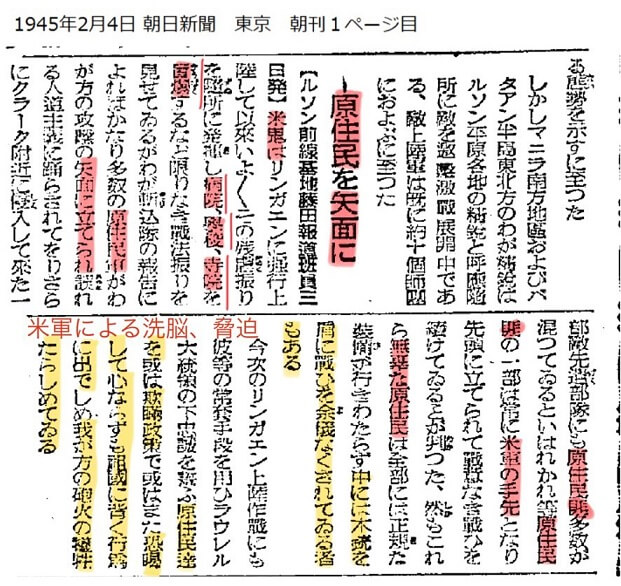
|
|
朝日新聞 1945/02/11 出血既に一万九千 敵、マニラに掠奪放火 ルソン平原の我が出血作戦は、同平原、東北方山地前面と、クラークフィールド飛行場前面で、特に活発巧妙を極め、敵のリンガエン上陸以来、去る五日までの間に、敵に与えた出血は、判明したもののみでも累計約一万九千名に上っている。 敵軍の態勢はルソン平原東北地区に五個師、クラーク基地前面に二個師、ルソン平地東側南下部隊二個師、スービック湾方面二個師、ナスグブ方面の空挺第十一師団一個師、タガイタイ付近降下部隊約一個部隊で敵のルソン投入部隊の数は十二個師団と一個部隊に上っているが、実勢力は十一個師程度である。 三日、マニラ市に北方から突入した敵は、我軍特火点の猛攻によって熾烈な市街戦を展開しているが、依然としてパシッグ河の線以北に食い止められ、その主力は北方郊外で形成装備を行ひ、攻撃準備中である。わが軍はマニラを戦火から守るため、予め、主力は市内から撤収して、東北高地の堅陣に戻り、治安維持のため、一部の兵力を市内に止めたに過ぎない。比島政府また我が軍の眞意に同意し、マニラから撤退していたが、敵は匪賊を先登に、市内に突入掠奪放火を恣まゝにし、猛火に包まれたマニラ市内は、さながら地獄と化した。エー・ピー電によれば、市内では、連日数百名餓死者をだしていると伝えられる。敵軍は匪賊を扇動し、良民をその犠牲として比島民の犠牲においてマニラ奪回を焦っている。スービック湾方面に上陸した敵はオロンガポ東側の隘路口で釘付けになっている。ナスグブに上陸した敵は、所在の我が軍のためアガ(ナガ?)付近で食い止められている。タガイタイ付近に降下した敵は、マニラ南郊ニコラス飛行場に迫っている。(報道部提供) [English Translation above] Asahi Shimbun, February 11, 1945 Enemy Casualties Already 19,000; Plunder and Arson in Manila Our bleeding operations in the Luzon Plains have been particularly active and skillful in the northeastern mountainous front of the plains and in front of Clark Field. Since the enemy landed at Lingayen, the confirmed casualties inflicted upon them up to the 5th have totaled approximately 19,000. The enemy's disposition comprises five divisions in the northeastern Luzon Plain region, two divisions in front of Clark Field, two divisions of the southern advance force on the eastern side of the Luzon Plain, two divisions in the Subic Bay area, one division of the 11th Airborne Division in the Nasugbu area, and approximately one unit of airborne troops near Tagaytay. The total number of enemy divisions committed to Luzon is twelve divisions and one unit, but their actual effective strength is about eleven divisions. On the 3rd, enemy forces advancing into Manila from the north engaged in fierce urban combat against our concentrated fire, but remain pinned north of the Pasig River line. Their main force is assembling and preparing for attack in the northern suburbs. Our forces, in order to protect Manila from the ravages of war, had previously withdrawn their main force from the city to the fortified positions in the northeast highlands, leaving only a portion of their forces within the city for security purposes. The Philippine government, agreeing with our true intentions, had also withdrawn from Manila. However, the enemy, using bandits as vanguards, stormed into the city, committing rampant looting and arson. Manila, engulfed in fierce flames, was transformed into a veritable hell. According to AP reports, hundreds are starving to death daily within the city. The enemy forces are inciting bandits, sacrificing innocent civilians in their desperate rush to retake Manila at the expense of the Filipino people. Enemy forces landed in the Subic Bay area are pinned down at the bottleneck east of Olongapo. Enemy forces landing at Nasugbu are being held back near Aga (Naga?) by our troops stationed there. Enemy forces parachuted near Tagaytay are approaching the Nicolas Airfield south of Manila. (Provided by the Press Department) 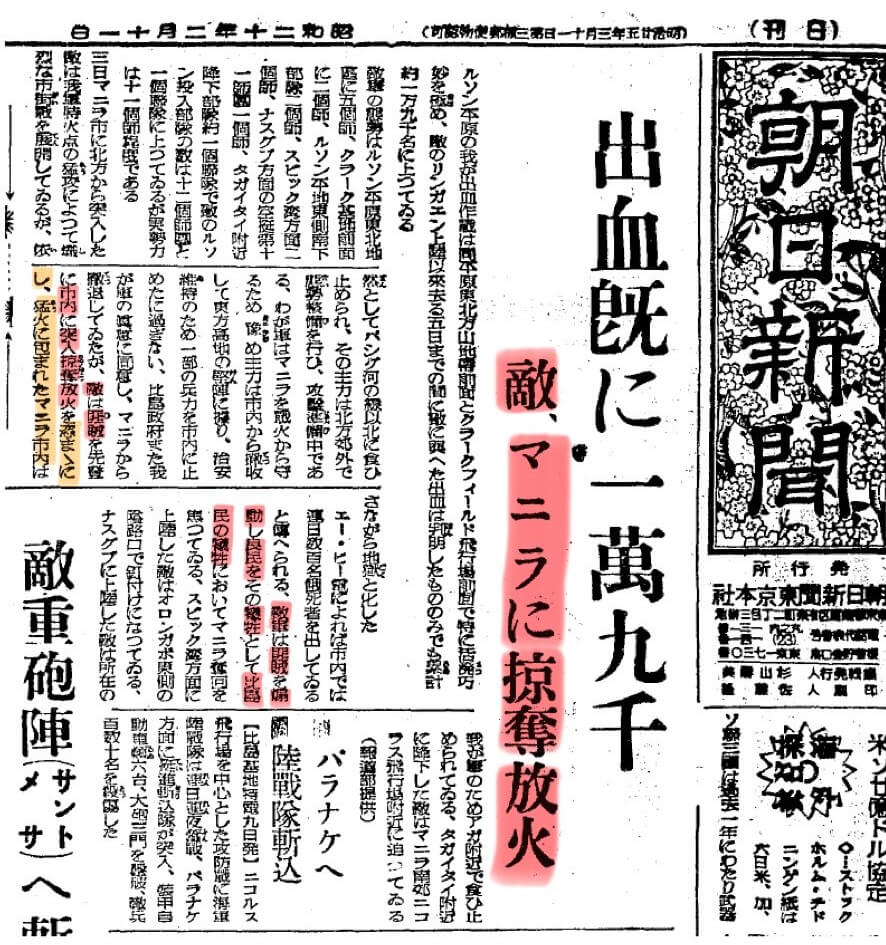
|
|
朝日新聞 東京 朝刊 1945/02/16 比島民を矢面に立つ 米軍、出血の急所を覆う わがルソン出血作戦の本格化とともに、敵は、戦線の至る所で比島民匪賊を扇動して、わが攻撃の矢面にたてている。マニラ侵入の時も、匪賊を先頭に潜入し、それに続くマニラ市街戦にも敵に呼応する匪賊が跳梁し、盛壯を極めるマニラ市街戦のなかから比島民の骨肉相食む地獄の相が伝えられる。大東亜戦争以来、各戦場でみられた敵のやり口から、敵がその最も恐れる出血の急所を比島民の犠牲によって補わんとしていることは明らかで、今後戦局の進展につれてこの比島民の犠牲をさらに大規模化にし、かつての米比軍の本格的再建にまで進めることは当然予想される。わが軍のバターン攻略の時、数万に上った捕虜は当時の現地軍の発表によると、総数五万三千四百で、うち米兵は、九千五百三十三名に過ぎなかった。この数字が示す比島兵と米兵の割合は、当時の比島戦線至るところで見られたのである。わが攻略軍が戦火を交えた敵兵の大多数は米兵に指揮された比島兵であった。大東亜戦争直前の陸軍約五千で、これに比島兵約六千が土民軍として直接その指揮下に入って、この約一万一千が米比軍の基幹となり、ほかに比島陸軍の正規兵約一万があった。比島陸軍の創設は一九三五年十二月二十一日の比島国防法に基づくもので、マッカーサーが米人顧問団の主席となり、ケソンが、その総司令官で年に二回、二万人づつ計年に四万人の壯丁に米式軍事教練を行い、その中の優秀者を正規兵に採用していた。従って、開戦当時に米式軍教をうけた予備群は、約二十万に上り、そのうち正式に在郷軍人会員として登録されたものは、兵約十万、将校四千八百名を数えていた。 わが軍は比島兵捕虜のなかから優秀者を選抜して、日本式再訓練を施して、警察官を養成し、卒業者を全比島に配置して、新生比島共和国の治安維持の中核体として再生させた。しかるに、残存米比軍の一部は、中北部ルソンの山岳地帯、ビサヤ、ミンダナオ地区に遁入して米軍が計画的に残置した諜報班を中に通報、治安攪乱行為を行って来た。これら残存米比軍の唯一の希望は、マッカーサーが比島逃亡に際して残した、「われ再び比島に還らん」の一語に繋がるものであるが、これとともに一般民衆もまたアメリカが数十年に亙って植えつけた親米感情、さらに開戦後も、「食糧、繊維製品を満載した大船団とともにやがて我等は比島を訪れるであろう」と躍起のサンフランシスコ放送によって呼び掛けを忘れなかったことによって、陰に陽に、その胸に親米感情をもっていたものが多いという事実を軽視してはならない。マッカーサーの軍がルソン平原を南下し、マニラ攻防戦がいまや酣である今日、残存米比軍の存在と一般民衆に潜在する親米感情は、敵にとって比島民扇動と米比軍再建への絶好の手がかりとなる。敵は膨大な産業動員のほかに、第一線兵員の補充に漸く困却し、後方の非戦闘勤務の兵員を月平均一万の割合で歩兵部隊に編入し、米本土駐屯兵も続々と海外へ補充されていると伝えられる。米の軍事評論家ハンソン・ボールドウィンも「総体的かつ、長期の見通しをつけて、人的資源問題を処理することが絶対に必要である。米軍の損害は過三、四万に上がっている」と述べている。わが出血作戦が、米国内に測り知れぬ恐怖を巻き起こすことは当然であるが、それよりも更に、米軍にとっては大きな打撃は、このような人口資源問題の実相に対するわが出血作戦の斬込みである。 わが矛先を比島民の犠牲によって防ぐことは、米軍の喫緊の戦法である。敵がすでにルソン島に注ぎ込んだ兵力は、十一個師団余であるが、わが出血作戦の矢面には、このほかに、米軍に扇動される多数の比島民があり、出血作戦の本格化と戦局の進展につれ、敵が残存米比軍を中心に、かつての米比軍再建の挙に出る可能性は大きい。ルソンに敢闘するわが精鋭の前には敵米兵とともに多数の親米比島民があり、しかも彼等の多くは、かつて米式軍教をうけた軍隊であることを忘れてはならない。 女子供を使嗾 卑劣な敵軍 【ルソン前線報道班員十五日発】今や敵の砲撃により、大半廃墟と化したマニラ市は、至る所、焼け残りの鉄骨が立ち、一切の緑は姿を消し、敵味方とも飲料水の欠乏に苦しみながら、砲煙と汗にまみれ、息づまる死闘を展開している。 うづ高く廃墟のかげに隠された敵地には、なお、わが将兵の銃剣と鋭い目がらんらんと燃え、鉄骨のかげから、廃墟の中から、至る處で敵中に潜入して敵を斬り殺し、射ち殺し、甚大な出血を強要する。かくて敵は卑怯にも盲爆のため住むに家を失い、食うに食糧を失って、自暴自棄となった比島人をかり立て、甚だしいのは無理じいに、女子供に至るまで、銃をとらせ、物からわが斬込みの将兵を狙撃させ、或いは米軍の楯として、第一線に弾防ぎにかり立てている。わが軍は、この狂った無残な比島人の流血を悲しみながらも、われに抗する者は断じて許さず、灰色と化したマニラの街を米軍の汚れた毒血彩ってゆくのである。 [English translation of above] Asahi Newspaper Tokyo Morning edition , 1945/02/16 ¶ Putting Filipinos on the front lines U.S. forces shield vital bleeding pointsAs our Luzon bleeding operation intensifies, the enemy incites Filipino bandits across the front lines to bear the brunt of our attacks. During the Manila invasion, bandits infiltrated ahead of our forces. In the ensuing urban warfare, bandits collaborating with the enemy ran rampant. Reports from the fiercest fighting in Manila describe a hellish scene of Filipinos devouring their own kin. From the enemy's tactics observed across battlefields since the Greater East Asia War, it is clear they seek to compensate for their most feared vulnerability—blood loss—through the sacrifice of the Filipino people. As the war progresses, it is only natural to expect this sacrifice to escalate further, potentially leading to the full-scale rebuilding of the former US-Philippine forces. During our army's capture of Bataan, the number of prisoners taken, according to local military announcements at the time, totaled 53,400. Of these, only 9,533 were American soldiers. This ratio of Filipino to American soldiers was evident throughout the Philippine front at that time. The vast majority of enemy soldiers our assault forces engaged were Philippine troops commanded by Americans. Immediately before the Greater East Asia War, the Army numbered about 5,000, with approximately 6,000 Philippine troops directly under their command as native troops. This force of about 11,000 formed the core of the US-Philippine forces, alongside about 10,000 regular Philippine Army soldiers. The Philippine Army was established under the Philippine National Defense Act of December 21, 1935. MacArthur served as chief of the American advisory group, while Quezon was its commander-in-chief. Twice a year, 20,000 conscripts each time—totaling 40,000 annually—underwent American-style military training, with the most outstanding recruits being enlisted as regular soldiers. Consequently, by the outbreak of war, the reserve force trained in the American military system numbered approximately 200,000. Among these, those formally registered as members of the Veterans Association numbered about 100,000 enlisted men and 4,800 officers. Our forces selected outstanding individuals from among the Filipino prisoners of war, provided them with Japanese-style retraining to cultivate police officers, and deployed the graduates throughout the Philippines. They were reborn as the core force for maintaining public order in the newly established Philippine Republic. However, remnants of the U.S.-Philippine forces retreated into the mountainous regions of central and northern Luzon, the Visayas, and Mindanao. There, they collaborated with intelligence units deliberately left behind by U.S. forces to report on activities and disrupt public order. The sole hope of these remnant US-Philippine forces lay in the single phrase MacArthur left behind when fleeing the Philippines: “I shall return.” Alongside this, the general populace also retained the pro-American sentiment cultivated by the United States over decades. Even after the war began, “We shall soon visit the Philippines with large convoys laden with food and textiles,” broadcast fervently from San Francisco. This fact—that many harbored pro-American sentiments, whether openly or secretly—must not be underestimated. As MacArthur's forces advance south across the Luzon plains and the Battle of Manila rages fiercely today, the presence of residual US-Philippine forces and the latent pro-American sentiment among the general populace provide the enemy with an excellent opportunity to incite the Filipino people and rebuild US-Philippine military forces. In addition to massive industrial mobilization, the enemy is reportedly struggling to replenish frontline troops, incorporating an average of 10,000 non-combat personnel from the rear into infantry units each month, and sending troops stationed in the United States overseas one after another. American military commentator Hanson Baldwin also stated, “It is absolutely necessary to deal with the human resource problem from a comprehensive and long-term perspective. American military casualties have risen to over 30,000 or 40,000.” It is only natural that our bloody operations would cause immeasurable fear within the United States, but even more than that, the greater blow to the American military is the impact of our bloody operations on the reality of this human resource problem. The U.S. military's immediate tactic is to block our spearhead by sacrificing Filipino civilians. The enemy has already poured over eleven divisions into Luzon Island, but beyond this, numerous Filipinos incited by the U.S. forces stand at the forefront of our bleeding operation. As this bleeding operation intensifies and the war progresses, the enemy is highly likely to attempt rebuilding the former U.S.-Filipino forces, centered on the remaining U.S.-Filipino troops. We must not forget that facing our elite forces fighting valiantly on Luzon are not only enemy American soldiers but also numerous pro-American Filipinos, many of whom were once trained in the American military system. ¶ The cowardly enemy forces incite women and children[Luzon Frontline Correspondent, 15th] Manila, now largely reduced to ruins by enemy bombardment, is strewn with charred steel beams. All greenery has vanished. Both sides suffer from a shortage of drinking water, engaged in a suffocating, desperate struggle amid the smoke of artillery and sweat. Deep within the shadows of the towering ruins, our soldiers' bayonets and piercing eyes still burn fiercely. From behind steel beams, from within the rubble, they infiltrate enemy positions everywhere, slashing and shooting down foes, inflicting massive casualties. Thus, the enemy, cowardly exploiting blind bombing to deprive Filipinos of homes and food, incites these desperate people. Worst of all, they forcibly arm even women and children, making them snipe at our charging soldiers or use them as human shields on the front lines to absorb bullets. Our forces, while grieving the senseless bloodshed of these desperate Filipinos, show no mercy to those who resist us. Thus, the grayed city of Manila is stained with the filthy poison blood of the American forces. 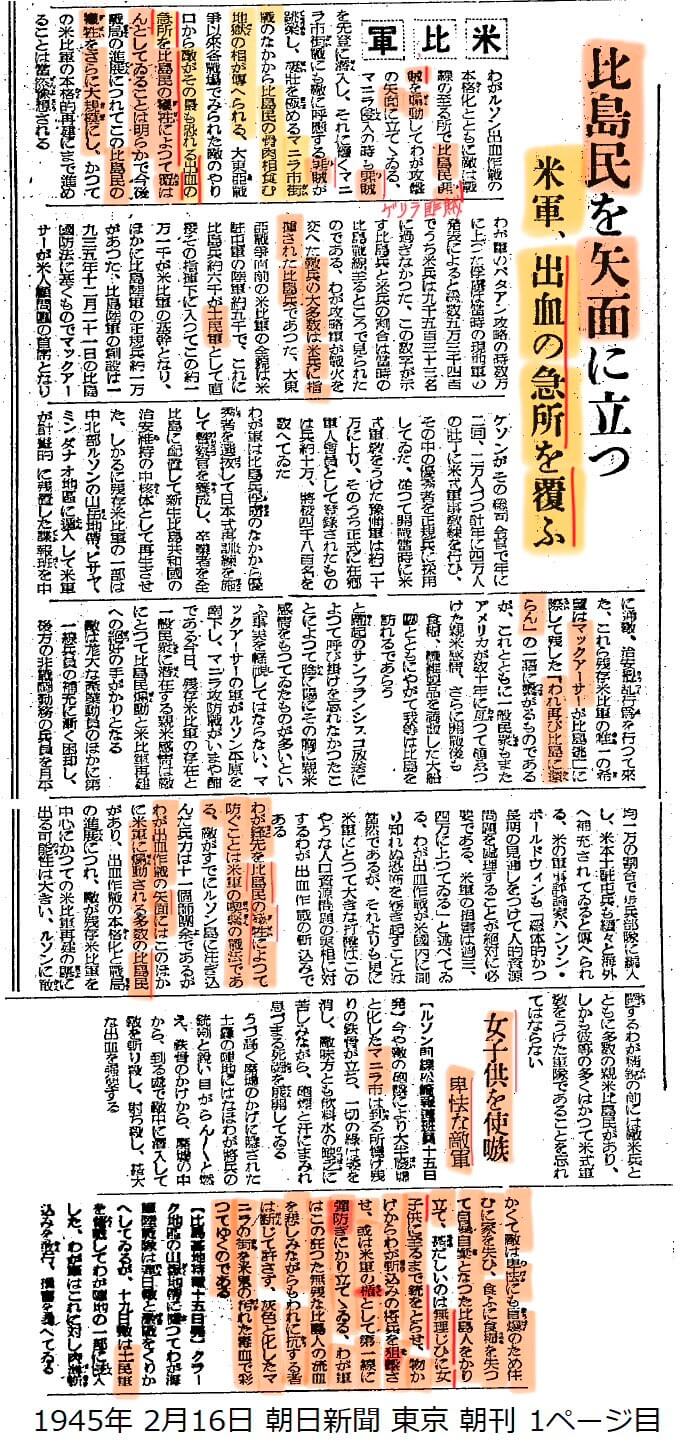
|
¶ War Winner Trial
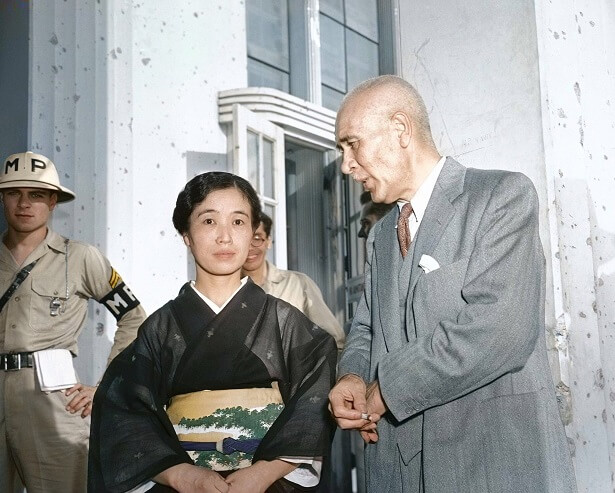
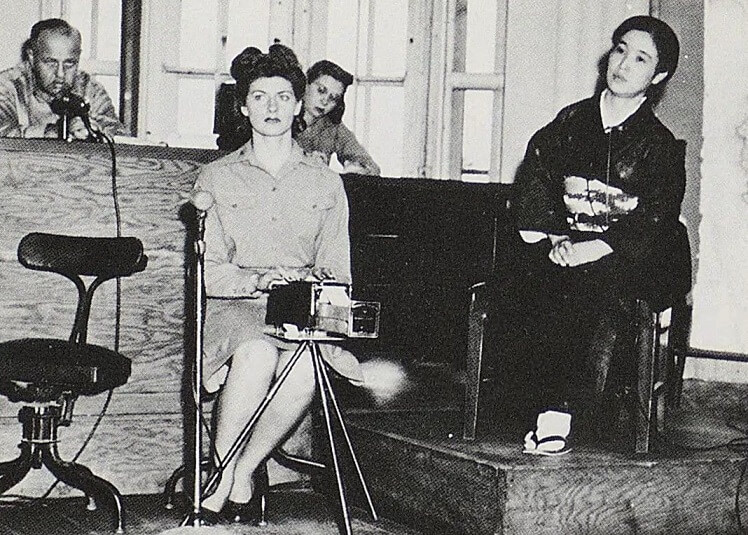
Winner can get to write a history and who is good/bad. Lieutenant General Masaharu Honmma was put on trial and executed by the US, I believe as a retaliation by the US.
During the trial of Honma, his wife, Fujiko, flew to Manila to testify as a witness defending her husband and stated the following: “I am still proud to be Honma’s wife. I am grateful to my husband, Honma. I hope to see my daughter marry a man like Honma. I teach my son to become a man like his father, a loyal servant of Japan. That is all I have to say regarding Honma.”
 |
 |
¶ After WW2, US puppet regime
Source: The Country's Puppet Regime Exposure
|
The Philippine history will never be completed if there is no presence of puppet regimes. In the work of Guerrero, he mentioned the historic Philippine President regimes, how they play as a puppet of other nations. The first is the puppet regime of Roxas, whoch lasted from 1946 to 1948. In 1946, Manuel Roxas was elected as the puppet commonwealth government's final president, and he became the first president of the puppet republic of the Philippines. Roxas, as a puppet president, signed the U.S.-R.P. treaty. He also signed the Treaty of General Relations, which invalidated our country's independence, as well as other treaties and agreements that gave America more power to manipulate our land. Aside from that, this regime was also responsible for the brutality against the peasant masses, including the Maliwalu and Masico massacres, in order to give the and lords more power. During the years 1948-1953, Elpidio Quirino succeeded Roxas after his death. The Hukbalahap was granted a pardon by the Quirino puppet regime, but one of the conditions was that he surrender his arms. When Quirino's term expired in 1949, he ran against Laurel on a platform of complete loyalty to US imperialism. The worst graft and corruption occurred during this regime, and the entire system of foreign exchange controls was used to prevent the puppet government's financial resources from being depleted in 1953. Despite the fact that the Central Intelligence Agency considered replacing Quirino with Magsaysay as their puppet president, Quirino remained an ardent supporter of American imperialism until his term expired. Ramon Magsaysay received credit from American imperialism and received their support for the presidency as a result of his significant role in defeating the revolutionary movement. Yes, against Quirino, Magsaysay became the puppet republic's third president. In 1954, the Magsaysay puppet regime sabotaged the unwavering popular demand for the repeal of the Bell Trade Act by negotiating its revision. This resulted in the creation of a new treaty known as the Laurel-Langley agreement, which granted US monopolies rights in various businesses in the Philippines. Carlos P. Garcia became the puppet republic's president after Magsaysay died in 1957. Foreign exchange and import limits, according to Guerrero, were the cause of the middle bourgeoisie being politically aggressive in favor of nationalist industrialisation. The Treaty of Amity, Commerce, and Navigation is a treaty that was signed between the United States and the United Kingdom. Diosdado Macapagal defeated Garcia in the presidential election in 1962 and became the sixth puppet regime in 1962-1965, thanks to financial and political assistance from US monopolies.
|